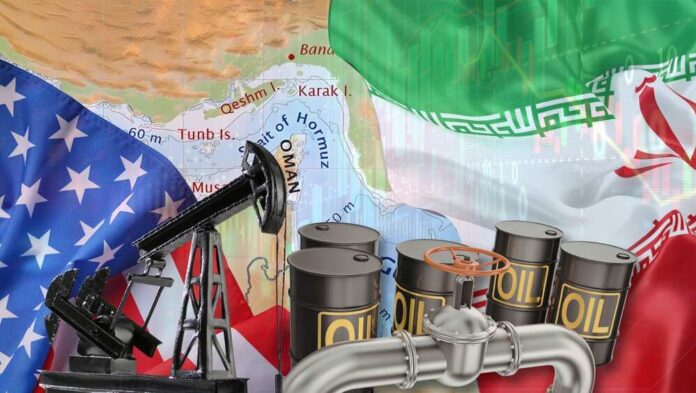
A U.S.-Israel military strike on Iran has triggered the largest oil supply disruption in history, sending global crude demand into its steepest quarterly collapse since the COVID-19 lockdowns and threatening Americans with surging energy costs from a conflict Washington helped ignite.
Story Snapshot
- Global oil demand plummets 1.5 million barrels per day in Q2 2026 after Iran closes Strait of Hormuz in response to February bombings
- IEA warns this is the largest-ever oil supply shock, with March demand down 800,000 bpd and April projected to drop 2.3 million bpd
- Prolonged closure could trigger 5 million bpd year-over-year demand crash from Q2 to Q4, depleting 2 billion barrels from global stockpiles
- American consumers face skyrocketing fuel prices and economic recession risks as Middle East war upends energy security
War-Induced Energy Crisis Eclipses Pandemic Shock
The International Energy Agency released its April monthly oil market report confirming global crude oil demand is experiencing its sharpest quarterly decline since the 2020 COVID-19 pandemic. The collapse stems directly from the February 28, 2026 U.S.-Israel bombing campaign against Iran, which prompted Tehran to effectively close the Strait of Hormuz, choking off approximately 20 percent of global oil trade. Unlike the pandemic’s demand crash from economic lockdowns, this crisis reflects geopolitical supply shock causing price-driven conservation across industries and households worldwide.
Strait Closure Creates Unprecedented Supply Disruption
The Strait of Hormuz closure represents the largest oil supply disruption ever recorded, dwarfing even the 1970s Arab oil embargoes and the 2020 pandemic collapse. OPEC+ output plummeted 7.9 million barrels per day in March alone as shipments ground to a halt through the critical chokepoint. The IEA’s base-case scenario assumes shipments will resume in May 2026, limiting Q2 demand destruction to 1.5 million bpd. However, a protracted closure could devastate global markets with 5 million bpd year-over-year losses from Q2 through Q4, forcing economies to draw down 2 billion barrels from strategic reserves.
Americans Bear Costs of Foreign Entanglements
This energy crisis underscores growing frustration across the political spectrum with Washington’s interventionist foreign policy. The Trump administration’s support for Israel’s military actions against Iran has boomeranged onto American families facing soaring gasoline, heating oil, and diesel prices just as inflation was beginning to stabilize. The Middle East and Asia-Pacific regions are experiencing the deepest demand cuts for naphtha, LPG, and jet fuel, but American consumers aren’t spared. This development vindicates concerns that endless foreign wars and globalist entanglements serve elite interests while ordinary citizens foot the bill through diminished prosperity and energy security.
Demand Destruction Spreads Across Global Economy
The IEA warned that “demand destruction will spread as scarcity and higher prices persist,” urging economies to “brace for significant disruptions.” March 2026 confirmed an 800,000 bpd contraction, with April’s projected 2.3 million bpd drop reflecting how surging prices force cutbacks in transportation, manufacturing, and heating. Airlines, refineries, and shipping industries face mounting costs and idled capacity. This contrasts sharply with the IEA’s March report, which anticipated 640,000 bpd demand growth before the conflict thoroughly upended forecasts. The agency has slashed its 2026 demand growth projection by 80,000 bpd from earlier estimates.
Geopolitical Gamble Risks Economic Fallout
The clash between OPEC’s relatively optimistic full-year outlook and the IEA’s stark warnings highlights uncertainty surrounding this manufactured crisis. While OPEC maintained its annual demand forecast despite lowering Q2 projections on April 13, the IEA’s data suggests prolonged disruption could trigger global recession through energy shocks. Russia and Saudi Arabia gain strategic leverage as U.S. alliances strain under economic pressure. For Americans tired of Deep State military adventurism enriching defense contractors and foreign governments while destroying middle-class prosperity, this crisis offers a painful reminder: when Washington plays global policeman, ordinary people pay the price at the pump and in their pocketbooks.
Sources:
Oil demand to see biggest quarterly slump since pandemic: IEA – Daily Sabah
Crude oil demand to see biggest quarterly dip since Covid – RTE
IEA: Global crude oil demand set for sharpest quarterly crash since Covid – Gulf News
Crude oil demand to see biggest quarterly plunge since Covid: IEA – CGTN
Crude oil demand to see biggest quarterly plunge since Covid – L’Orient Le Jour