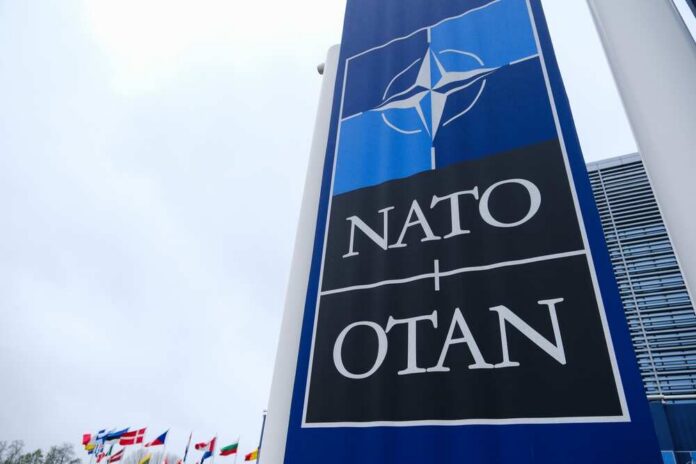
Trump’s NATO threat over Iran has exposed a brutal reality many Americans have suspected for years: allies who demand U.S. protection often disappear when U.S. interests take a hit.
Quick Take
- President Trump warned NATO he could walk away after many European allies refused to help clear the Strait of Hormuz following the U.S.-Israel conflict with Iran.
- Iran’s blockade has kept oil markets jittery, while Europe faces higher energy costs yet remains reluctant to use force to reopen the shipping lane.
- Trump and top officials signaled the U.S. may rethink troop deployments and the alliance’s one-way expectations—even without a formal NATO withdrawal.
- Analysts disagree on whether the threat is reckless or strategically useful, but both sides acknowledge NATO’s political commitments are being stress-tested.
Trump’s NATO Warning Ties Alliance Politics to a Real-World Oil Shock
President Donald Trump escalated his long-running criticism of NATO after European allies declined to materially support efforts to clear the Strait of Hormuz during the latest U.S.-Israel-Iran crisis. According to reporting and commentary, the standoff followed U.S.-Israel strikes that began February 28, 2026, and Iran’s subsequent disruption of the chokepoint that is central to global energy shipping. Trump publicly argued that allies complaining about oil prices should help address the cause.
Trump’s messages were not subtle. After a tense exchange with NATO Secretary General Mark Rutte, Trump posted that NATO “wasn’t there when we needed them” and later blasted allies as “cowards,” portraying the alliance as dependent on U.S. power while offering little in return when the U.S. faced immediate strategic and economic pressure. The immediate dispute centered on whether NATO members would participate in robust operations to restore commercial traffic through Hormuz, rather than limited patrol concepts.
Europe’s Reluctance Highlights the Limits of “Automatic” Commitments
European governments have their own political constraints, and the research describes them as viewing the Iran operation as reckless, catastrophic, and even illegal, which helps explain their reluctance to join a new fight in the Middle East. Even so, the result is politically combustible in the U.S.: Americans are asked to subsidize Europe’s security through troops and a nuclear umbrella, while European leaders hesitate when a crisis affects U.S. interests directly. Britain’s posture appeared narrower, reportedly allowing limited base access framed as “defensive.”
Several analysts point to NATO’s founding bargain and the long-running debate over what it truly obligates members to do. Article 5 is often treated as a sacred guarantee, but its wording gives each member discretion to take “such action as it deems necessary,” leaving room for political maneuvering and differing risk tolerances. In practice, the alliance has relied heavily on U.S. military dominance since 1949, creating expectations that Washington will carry the hardest burdens when events turn dangerous.
Rubio’s Message: If the Deal Is One-Way, Washington Will Renegotiate
Secretary of State Marco Rubio added an explicit policy edge to Trump’s public pressure campaign by questioning whether NATO makes sense if it functions mainly as a standing U.S. obligation to defend Europe. That line of argument fits a broader “America First” demand: alliances should be mutual and measurable, not treated as permanent entitlements. In the research, the administration’s implied leverage includes reconsidering basing arrangements and rebalancing troop deployments away from nations viewed as uncooperative.
This is where the story intersects with frustrations shared by many voters across party lines. Conservatives often argue that endless overseas commitments and global policing drain resources that should strengthen domestic prosperity and security. Many liberals, while disagreeing with Trump’s approach, also say Washington’s foreign policy class too often acts without accountability. Either way, a NATO clash tied to oil prices and shipping disruptions lands hard at home, where families feel energy costs quickly.
Why Some See the Threat as “Stupid”—and Others See It as Leverage
One prominent view in the research calls Trump’s NATO threat misguided because it ties alliance stability to a crisis sparked without the traditional consultation that often precedes major military action. Another view says the threat is “potentially useful” because it forces Europe to confront an uncomfortable question: if Europe is wealthy enough to fund expansive social programs, it is wealthy enough to provide serious conventional defense and shoulder more responsibility for nearby threats. Those positions reflect an old debate now supercharged by Hormuz.
Important uncertainties remain. The ceasefire described in the research is characterized as shaky, and the situation in the Strait of Hormuz appears unresolved enough to keep energy markets on edge. The sources also describe European commitments as vague, ranging from talk of patrols to continued resistance to forceful clearance operations. Additionally, reporting about potential U.S. troop shifts is presented as an idea under consideration rather than a fully confirmed plan, limiting what can be concluded beyond the administration’s signaling.
What This Means for Americans Watching Government Fail to Deliver
The deeper significance is less about one burst of Trump rhetoric and more about whether U.S. foreign commitments match U.S. interests in an era of high debt, public distrust, and constant economic pressure. For conservatives wary of globalism and “forever wars,” the episode reinforces the argument for a narrower mission and fewer blank checks. For skeptics on the left who distrust elite institutions, it reinforces the sense that big international systems often protect insiders while ordinary people absorb the costs.
For now, Trump’s NATO threat functions as a stress test: it measures what allies will do when the U.S. is not just defending Europe, but asking Europe to act when a crisis hits global energy supply and U.S. strategic credibility. Whether that ends in a formal break or a quieter “Irish goodbye” style pullback, the political direction is clear from the research: the administration wants a renegotiated alliance where commitments are reciprocal, not assumed.
Sources:
Threatening NATO Over Iran Is Stupid, but Potentially Useful
Trump calls NATO ‘cowards’ over lack of support for US-Israel war on Iran
Will Iran War End NATO Alliance?
Before striking Iran, Trump should answer these six questions