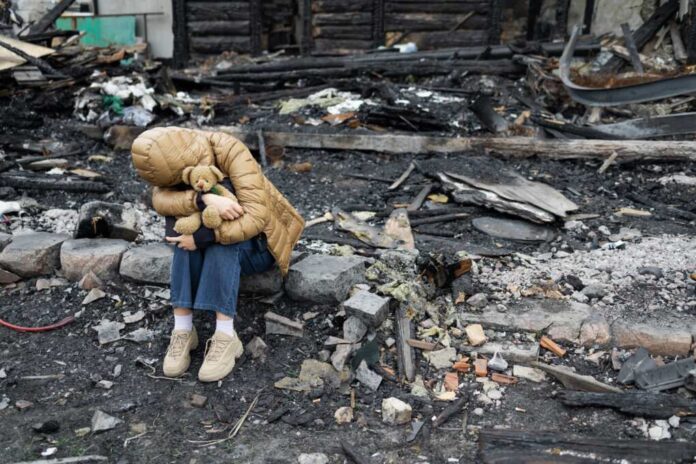
Ordinary families across the Middle East are trapped in a widening war they didn’t choose, as strikes on schools, hospitals, and homes leave over 3,000 civilians dead and millions displaced in what experts call a “reckless” assault on innocent lives.
Story Snapshot
- Over 1,600 Iranian civilians killed and 3 million displaced as U.S.-Israeli strikes target infrastructure, including 498 schools and 236 health facilities
- Israeli invasion of Lebanon forces 1 million from their homes while Hezbollah involvement escalates regional conflict into six-week spiral
- UN experts condemn attacks on civilians caught between foreign bombardment and regime repression, with no shelters or early warning systems
- Gulf states face water crises as Iranian missiles target desalination plants providing 90% of potable supply
- Civilian voices reveal pervasive fear: “Nowhere is safe” as daily strikes destroy neighborhoods from Tehran to Beirut
War Engulfs Defenseless Populations Across Region
Operations Epic Fury and Roaring Lion, launched by the United States and Israel on February 28, 2026, transformed the Middle East into a multi-front battleground where civilians bear the heaviest costs. The Iranian Red Crescent reports 82,000 civilian residential units damaged alongside 67,000 critical sites, while human rights monitors document at least 1,600 Iranian deaths. In Lebanon, Israel’s ground invasion displaced over one million people and killed 1,422 civilians as Hezbollah’s involvement widened the war. Families in Tehran endure daily bombardments without sirens or shelters, leaving residents like one woman to text friends: “Nowhere is safe. But don’t worry, we are okay.”
Strikes Devastate Essential Services and Cultural Heritage
The bombing campaign systematically targets infrastructure essential to civilian survival. Iranian facilities destroyed include 498 schools, 236 health centers, and multiple UNESCO World Heritage sites, according to UN Special Rapporteur Mai Sato. The strike on a Minab school killed 168 people, predominantly girls, symbolizing what the Soufan Center calls deliberate pressure on populations through “collateral damage.” Gulf states face existential threats as Iranian retaliatory missiles hit desalination plants crucial for water supply in arid nations dependent on such technology for ninety percent of potable water. Oil refineries, steel plants, and transportation hubs lie in ruins, crippling regional economies already strained by years of sanctions and conflict.
Families Caught Between Regime Repression and Foreign Bombs
UN official Sara Hossein describes Iranians as “caught between” external aerial assaults and internal government crackdowns on dissent. Tehran witnesses simultaneous pro-government rallies and sit-in protests as residents fear essential services may collapse under relentless strikes. Israeli border communities shelter from Hezbollah shelling, with residents expressing hope the war “ends fast” even as their government expands operations. Lebanese displaced persons crowd into overwhelmed aid facilities, uncertain if they can ever return home as Israeli Defense Minister seeks permanent buffer zones. This traps ordinary people in a war they neither started nor can escape, eroding any semblance of normalcy or safety across borders.
International Community Struggles to Respond
UN Security Council Resolution 2817, adopted March 11 with support from 136 states, condemned Iranian attacks on neighboring nations but has done little to halt the violence. UN High Commissioner for Human Rights Volker Türk labeled the conflict a “reckless war” on civilians during a March briefing in Geneva, highlighting destroyed hospitals and cultural sites as evidence of disregard for international humanitarian law. Gulf states and Jordan rejected Iranian claims of justified retaliation, emphasizing no justification exists for assaults on civilian infrastructure. Yet aid organizations report regional systems at capacity, unable to accommodate millions of refugees fleeing bombings in Iran and Lebanon. The Trump administration has hinted at expanding the bombing campaign, raising fears of further escalation with no diplomatic resolution in sight.
Civilians Across the Middle East React to the Iran War: 'A Fear That Settles in Your Heart': "Now they are hitting everything. Nowhere is safe. But don't worry, we are okay," one Iranian woman texted her American relative. https://t.co/rEB8K6IGbf ➡️Spotted for you
— News by Amanda (@amandasome) May 3, 2026
Experts note this war targets civilians to pressure governments and populations into submission, a strategy that undermines the principles of limited warfare and respect for non-combatants. The environmental toll compounds human suffering, with oil spills and toxic debris contaminating water and soil across conflict zones. As the war enters its sixth week with no end visible, the deep-seated fear referenced in civilian accounts reflects a grim reality: millions live under bombardment with nowhere to turn, their governments focused on military objectives while ordinary families pay the ultimate price. This represents a failure of leadership on all sides to prioritize the lives and dignity of the people they claim to protect.
Sources:
UN News – March 2026 Briefing on Civilian Toll
The Soufan Center – IntelBrief April 7, 2026
Middle East Council – Humanitarian Impact Analysis
Reason – Civilians Across the Middle East React
OHCHR – Press Release on Civilians Bearing the Brunt