Claims of Hezbollah infiltration in Tyre’s Christian quarter collided with strikes that critics say lacked proof and hit civilians.
Story Snapshot
- Israel says it struck Hezbollah sites in Tyre using precise intelligence, but offered limited public proof [2].
- Rights groups and media question military necessity for several strikes, including near a hospital [9].
- Lebanon’s leaders denounce the attacks while Iran issues warnings, raising risk of wider conflict [2][4].
- The fight over evidence fuels a broader information war that shapes global opinion on Israel’s actions [1][2][3].
Competing Claims Over Targets Inside Tyre
Israeli officials said fighters from Hezbollah infiltrated Tyre’s Christian quarter and used civilian buildings to hide weapons and tunnels. Israeli commanders described “localized, limited, targeted” raids guided by precise intelligence under Operation Northern Arrows. They framed the goal as stopping attacks and letting Israelis return home safely. The Israeli military also said structures it hit were tied to weapons storage or tunnels, and that Hezbollah was rebuilding capabilities in and around Tyre [1][2][10].
Israel’s chief of staff said forces were still operating in southern Lebanon to dismantle Hezbollah infrastructure. The military pointed to strikes on what it called Hezbollah military sites in Tyre. These statements suggest planners believed the threat justified action in dense urban areas. But officials did not release public evidence to prove infiltration of the Christian quarter, leaving a gap between their claims and what the public can verify today [2][10].
Civilian Harm Allegations And Evidence Gaps
Investigations reported a strike near a Tyre hospital that destroyed wards and cut power, finding no evidence of a legitimate military target there. Amnesty International assessed broader destruction in southern Lebanon and said it did not appear “limited, localized, or targeted,” challenging Israel’s stated precision standard. These findings add pressure for transparency about what was hit in Tyre, why, and how planners weighed civilian risk against military need [1][9].
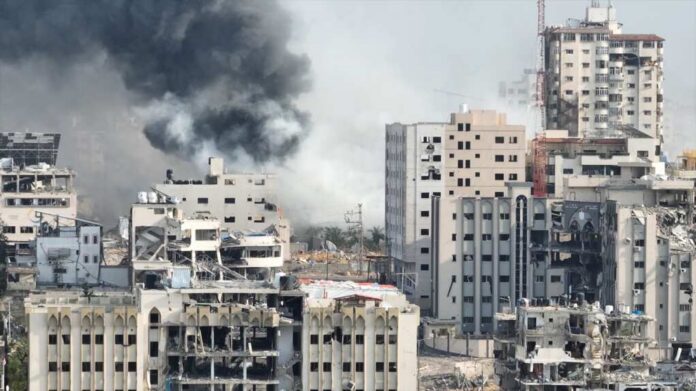
Media coverage documented damage across Tyre and highlighted a pattern seen in past Lebanon fighting: Israel asserts it hit militants embedded in civilian areas, while critics argue that strikes were disproportionate or lacked proof of a clear military objective. That clash is familiar and intense because terrorists often hide among civilians, which blurs lines. Yet without shared evidence, the public is left to choose a narrative based on trust rather than verifiable facts [1][2][3].
Regional And Political Pressure Around The Battlefield
Lebanon’s prime minister said nothing justifies the attacks on Tyre and nearby cities, branding them collective punishment. Iran warned about continued hostilities if strikes on Hezbollah persist. These statements push a diplomatic story that paints Israel as the aggressor and can drive calls for outside limits on Israel’s military choices. That pressure grows when pictures of wrecked buildings circulate before any intelligence release from Israel [2][4].
The dust has barely settled in #Tyre after weeks of Israeli airstrikes on the ancient city along Lebanon's Mediterranean coast.
Despite the relative calm, life remains largely at a standstill. pic.twitter.com/U7j2HtIjai
— ALI IMRAN BANGASH (@aibangash) June 22, 2026
U.S. leadership urged steps to avoid a wider war while Israel kept operations focused on southern Lebanon. International outlets tracked evacuations and cross-border fire as both sides tested red lines. For Americans, the stakes include deterring Iran, keeping allied cities safe, and stopping a terror group that targets civilians. The challenge is balancing those aims with respect for civilian life and hard proof for each strike that risks harm [2][3][25].
What Readers Should Watch Next
Israel’s case rests on its “precise intelligence” about Hezbollah in Tyre, including the Christian quarter. The strongest way to settle doubts is to release declassified imagery, intercepted orders, or forensic proof from the strike sites. Without that, rights groups and opponents will drive the news cycle and shape global views. Transparent evidence would help show that militants used protected areas and that Israel took real steps to limit harm while hitting lawful targets [1][2].
Conservatives value truth, rule of law, and the right to self-defense. Those standards demand proof when civilian areas are struck. They also demand honesty about how terrorists hide behind families, schools, churches, and hospitals. Clear evidence can defend Israel’s actions, expose Hezbollah’s tactics, and cut through media spin. Until then, skepticism will grow, and pressure will mount for outside controls that could tie the hands of an ally fighting a terror movement [1][2][9].
Key Takeaway For U.S. Policy
American backing should tie support to verifiable targeting discipline and fast, public evidence when strikes hit near protected sites. That approach protects civilians, strengthens an ally’s moral case, and pushes back on propaganda. It also denies Iran and Hezbollah the information edge they seek. Voters should expect clear answers: what was targeted, why it was necessary, and what steps reduced risk to bystanders. Facts, not slogans, should guide support in this fight [1][2][3][9].
Sources:
[1] YouTube – Reactions as Israeli strikes leave Lebanon’s ancient coastal city of …
[2] Web – Israel’s extensive destruction of Southern Lebanon
[3] Web – Israeli air strikes hit Lebanese city of Tyre despite Iranian warning …
[4] Web – Israel’s offensive in southern Lebanon – El Pais in English – EL PAÍS
[9] Web – In the southern Lebanese city of Tyre, Israeli airstrikes continue to …
[10] Web – An Israeli strike near a hospital in Tyre destroyed wards and caused …
[25] Web – Israeli strikes kill at least 47 amid intense fighting in southern …