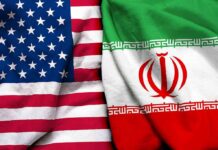
As Washington and Tehran trade promises and threats over nuclear talks, a deeper problem stands out: neither side can prove it deserves America’s trust.
Story Snapshot
- Iran promises limits on nuclear work and signs a new war-ending memorandum, but doubts remain about its past secrecy and future intent.
- Clare Lopez and other hawks warn that Iran’s leaders use delay, deception, and regional chaos to gain leverage against the United States.
- United States intelligence and many experts say Iran is not actively building a bomb, yet they admit key questions about enriched uranium and inspections are still unanswered.
- Growing mistrust of government and “deep state” elites on both the right and the left makes Americans question every claim coming out of Washington and Tehran.
Trump’s Nuclear Talks With Iran: Promises On Paper, Distrust In Practice
President Donald Trump is now deep into a fresh round of nuclear talks with Iran, years after walking away from the original Joint Comprehensive Plan of Action nuclear deal. These new talks began in 2025 and continued through a deadly war between Israel and Iran that pushed the region close to the edge. By June 2026, the United States and Iran announced a memorandum of understanding to end the war and pledged that Iran would not produce or acquire nuclear weapons. On paper, that sounds like a win for peace, but the trust problem runs much deeper for many Americans.
Iran’s leaders have offered several technical steps to calm fears about their nuclear program, yet each step comes with questions. Reports say Iran has more than 400 kilograms of uranium enriched to 60 percent, material that could be turned into bomb fuel if pushed further. Iranian officials floated plans to dilute that uranium, cut enrichment levels down near civilian-use ranges, and allow inspectors from the International Atomic Energy Agency to watch each stage. At the same time, Iran insists it has a right to enrich uranium at home, and says “zero enrichment” is no longer up for debate, directly clashing with Trump’s position.
Why Many Americans Still Do Not Trust Iran Or Washington
Former Central Intelligence Agency officer Clare Lopez argues that Tehran has a long record of breaking nuclear rules and playing for time. She says Iran’s rulers delay talks to exploit United States election cycles, betting that pressure around the 2026 midterms will push Washington into a softer deal. She also claims Iran’s security forces hold real power over the Strait of Hormuz, even as war has cut shipping to a fraction of past levels. These warnings tap into a deep frustration in the United States, where many voters on the right and left already feel foreign regimes and globalist elites take America for a ride.
Some of Lopez’s more sweeping claims, like the idea that “all faithful Muslims are obligated to lie to infidels,” lack clear support from recognized religious texts or mainstream scholars. That gap makes her easy for mainstream media and policy experts to dismiss as biased or extreme. Yet even critics admit Iran has pushed past past nuclear limits in response to United States sanctions, boosting enrichment and cutting cooperation with inspectors. A wave of studies describes a “wall of mistrust” between Washington and Tehran, built by years of half-truths, secret files, and broken promises on both sides. For ordinary Americans watching from the outside, it can look like two untrusted governments bargaining over risks that could change the world.
Intelligence, Inspectors, And The Missing Hard Proof
The United States intelligence community’s public assessment adds another twist to the story. Analysts say Iran is not currently building a nuclear weapon and that its old weapons program, halted in 2003, has not been restarted. That sounds reassuring, but they also admit they cannot fully explain where all highly enriched uranium is stored or how every site is used. Inspectors from the International Atomic Energy Agency report rising stockpiles and unanswered questions about past hidden work, warning that any future deal will be hard to verify unless those gaps are fixed first. This mix of partial comfort and lingering doubt feeds the belief that insiders know more than they are telling the public.
Meanwhile, Trump’s own track record adds fuel to the fire for both sides of America’s political divide. His “maximum pressure” campaign after leaving the original nuclear deal brought harsh sanctions but did not stop Iran’s advanced enrichment or aggressive activity across the Middle East. In the current talks, his team demands zero enrichment on Iranian soil and sweeping oversight, while critics say United States negotiators were poorly prepared for serious technical bargaining. For conservatives, this looks like proof the old establishment never truly backed Trump’s America First goals. For liberals, it confirms that a hardline stance without expert planning can push the world closer to war without making Americans safer.
Shared Fears About Elites, War, And The American Dream
Underneath the debate about centrifuges and uranium levels lies a broader crisis of faith in government. Many older conservatives blame years of globalist deals, weak borders, and elite corruption for putting American lives and jobs at risk while hostile regimes like Iran gain cash and power. Many older liberals resent endless wars, reduced social support, and what they see as a widening gap between wealthy insiders and everyone else. Both groups suspect that Washington’s foreign policy decisions, including nuclear talks with Iran, are shaped more by donors, think tanks, and career bureaucrats than by the safety and prosperity of normal families.
Experts warn that neither the new memorandum with Iran nor any future deal will solve this deeper mistrust. Iran’s promise not to seek nuclear weapons sits alongside its push to keep enrichment rights and its history of secret work and proxy conflicts. The United States promises strong inspections and tough red lines, yet its own record includes sudden policy shifts, hidden intelligence, and mixed messages to allies. For Americans who already feel shut out of the American Dream by a distant “deep state,” the lesson is grim but clear: when trust is gone, even the best-written agreements cannot guarantee that powerful players, foreign or domestic, will put ordinary citizens first.
Sources:
youtube.com, rferl.org, afr.net, ticketmesandhills.com, centerforsecuritypolicy.org, aljazeera.com, bbc.com, reuters.com, en.wikipedia.org, unitedagainstnucleariran.com, english.news.cn, facebook.com, stimson.org