When a global pop star uses a stadium microphone to call a war “catastrophic and unjustifiable,” he isn’t adjudicating international law; he’s exposing how cultural platforms have become battlegrounds over who gets to describe human suffering — and at what commercial cost.
At a Glance
- Ed Sheeran, typically apolitical on stage, described the Gaza war as “catastrophic and unjustifiable,” while condemning Hamas’s Oct. 7 attacks as “horrific.”
- The flashpoint followed the removal of Macklemore from Sheeran’s tour after the rapper’s “Free Palestine” remarks; Sheeran said venues and promoters drove that decision.
- The dispute illustrates how venue owners, sponsors, and promoters shape what political speech reaches mass audiences.
- Humanitarian language (“scale of devastation and loss of civilians’ lives”) dominated Sheeran’s framing; legal proportionality questions remain distinct, complex, and contested.
What Sheeran Actually Said — And Why It Resonated
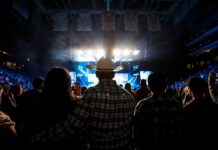
In Philadelphia, opening a solo show after days of tour turmoil, Ed Sheeran told the crowd that what happened in Israel on Oct. 7 was horrific, and that what is happening in Gaza is catastrophic and unjustifiable. The power of the moment wasn’t forensic proof — it was moral vocabulary, delivered by an artist who has long avoided political commentary. Sheeran anchored his remarks in civilian harm, citing “the scale of devastation and loss of civilians’ lives, of children’s lives,” and framed the issue explicitly as humanitarian rather than partisan sloganeering. Multiple outlets captured the same core message and venue, placing it at Lincoln Financial Field in mid-September 2026.
For audiences accustomed to Sheeran’s meticulously uncontroversial shows, the choice to foreground civilian suffering registered as a break in pattern — the kind of rupture that forces listeners to re-sort their priors about music, morality, and the public square. He did not argue a legal case; he made a human one.
How a Tour Became a Test of Speech Power
Sheeran’s words landed in the shadow of a separate but entangled fight: Macklemore had been dropped as an opener after onstage calls to “Free Palestine” and a protest song tied to Gaza. Sheeran said the decision was “not my decision,” attributing it to promoters and to pressure from venue owners who threatened to pull shows if Macklemore stayed on the bill. Reuters, the BBC, and others reported the cascade: in solidarity, the remaining opening acts and Sheeran’s own traditional backing band withdrew. The episode surfaced an often-hidden layer of the live business — how stadium owners, corporate partners, and promoters can constrain what political expression reaches a mass audience on private stages.
That leverage is not abstract. New York Times reporting summarized on-air by industry reporters described named owners, including Robert Kraft, objecting to Macklemore’s place on the tour. The inconsistency critics seized upon — controversial performers with other kinds of offensive speech still booking venues — sharpened the point: the Gaza war has become the hardest edge in American entertainment gatekeeping, not because everyone agrees on the facts, but because the perceived downside risk has few equals.
Humanitarian Judgments Versus Legal Proportionality
Sheeran’s “unjustifiable” is, in substance, a moral claim rooted in images of devastated neighborhoods and civilian death. Under international humanitarian law (IHL), however, proportionality is not decided by body-count arithmetic; it asks whether, at the time an attack was planned, the expected incidental civilian harm would be excessive compared to the concrete and direct military advantage anticipated. That is a context-heavy, ex ante inquiry — one reason neutral analysis warns against compressing legality into casualty ratios or single iconic strikes. UN and scholarly references consistently describe proportionality in these terms.
This distinction matters for readers who reflexively translate cultural condemnation into legal verdicts. A singer’s grief over dead children can be wholly sincere and societally valuable, while still being analytically different from an evidence-weighted IHL assessment. Indeed, most responsible legal work on Gaza emphasizes that proportionality cannot be inferred from destruction alone; it turns on target value, available alternatives, intelligence reliability, expected civilian presence, and commanders’ feasible precautions at the time. That complexity is not a dodge; it is how the law is built to constrain violence without collapsing war into crime by default.
What The Dispute Reveals About Cultural Institutions
The Sheeran-Macklemore saga demonstrates three structural realities of modern entertainment. First, tours are not sovereign democracies; they are itinerant enterprises dependent on private or quasi-public venues with their own reputational and political risk calculus. When owners believe a message could trigger boycotts, protests, or sponsor flight, they exercise leverage upstream — sometimes decisively. Second, artists’ public statements, even when framed as humanitarian, are metabolized through polarized narratives; supporters call it conscience, detractors call it activism. Third, audiences are increasingly fluent in this meta-game — they look past the lyric to see the hand on the venue switch.
None of this answers the moral question Sheeran tried to hold up. It does explain why such statements arrive freighted: the gatekeepers who decide who gets the mic must themselves navigate political backlash, security planning, and insurance. In that environment, speech is not just content; it is a liability line item, priced daily.
ED SHEERAN CALLS GAZA CATASTROPHIC AT PHILADELPHIA CONCERT
Ed Sheeran opened his concert in Philadelphia with comments about Gaza -: “What happened in Israel, and at the MoMA Music Festival on October 7th was horrific and compounded centuries of Jewish pain. What is happening in…
— Worldwide News Network (@WorldwideNNX) September 20, 2026
Where Reasonable People Disagree — And What To Watch
Reasonable observers can affirm Sheeran’s humanitarian concern and still insist that legal judgments about Gaza require granular evidence that concert stages are ill-suited to provide. Others will argue that moral clarity about large-scale civilian suffering should not wait for tribunal-grade dossiers. Both instincts can be true in different registers. The most productive through-line is to keep the categories straight: a cultural voice can name tragedy; the law must test violations.
Going forward, watch two fronts. On the facts, independent humanitarian and legal analyses will continue to examine civilian harm, targeting decisions, and blockade effects under IHL’s proportionality and distinction rules; that work, not celebrity testimony, will shape any ultimate legal reckoning. On the platforms, expect tighter backstage negotiations — contract clauses on political speech, venue-specific approvals, and sponsor vetoes — as tours pre-empt the next flashpoint by codifying who decides what can be said, and where. That may chill some speech; it will certainly make the cost of saying certain things more explicit.
Bottom Line
Ed Sheeran’s Philadelphia statement did not settle the Gaza debate; it clarified the arena in which much of that debate now lives. Cultural institutions are arbiters of access as much as stages for art, and their decisions — sometimes made by people you never see from the floor — determine which moral claims scale to 60,000 listeners. Sheeran used that scale to mourn civilian loss and to call Gaza unjustifiable; venues used theirs to decide which voices could stand beside him. Both were acts of power. Understanding the difference between moral witness and legal adjudication is how the rest of us keep our bearings.
Sources:
theguardian.com, ynetnews.com, bbc.com, newsnow.co.uk, foxnews.com, 6abc.com