

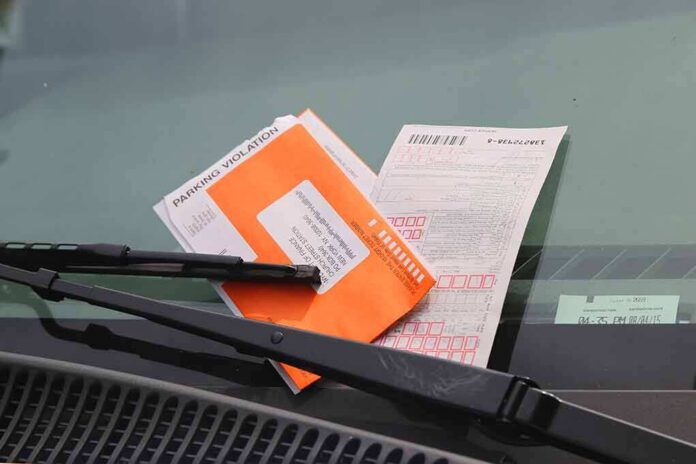
Parking drama makes headlines because it is petty yet universal, but the durable story underneath is civic: when drivers treat curb rules as suggestions—whether by ignoring alternate-side parking or flashing unofficial symbols of status—cleaner, safer streets lose to private convenience.
The Short Version
- The core facts reported are concrete: 83 violations totaling $7,587.79 since 2020, including 17 alternate-side infractions; the balance was reportedly paid.
- Street cleaning depends on compliance, not heroics; when cars don’t move, sweepers underperform and blocks look worse.
- Cones and placards are operational tools, not curbside exemptions—using them to reserve space or imply privilege distorts a scarce public resource.
- This episode is a case study in a broader New York pattern: limited curb space, inconsistent enforcement, and media incentives that inflate behavior into scandal and reduce governance to spectacle.
What the record supports—and what it does not
The strongest, least-contested facts come from tallies repeated across outlets: a total of 83 violations and $7,587.79 in fines since October 2020, with 17 tickets tied directly to alternate-side parking—a rule designed to clear the curb so sweepers can work. These numbers are reported as paid in full. The public claim does not hinge on unpaid debt; it turns on conduct and its cumulative effect on a system that only works when many people cooperate at once. The reporting also describes an expired FDNY union placard displayed in a 1998 Jeep and two Con Edison cones visible in the vehicle; neither detail, on its own, proves preferential treatment, but both signal the broader New York language of parking privilege. The available reporting does not reproduce summons-by-summons records or a documented instance in which a specific sweep failed because this one vehicle stayed put. Those are real gaps. But they do not erase what the numbers already show: recurring noncompliance, including 17 instances when the posted sanitation rule was the point.
Radziwill’s public posture narrows, rather than negates, the case. She says she paid everything and stands with the Department of Sanitation, and she quips that oversleeping 17 times in six years is the “most shocking” part. Humor can defuse a tabloid frame; it doesn’t convert the conduct into compliance. Payment closes the ledger, not the loop of cause and effect that alternate-side rules depend on.
How alternate-side parking actually keeps a city clean
Street sweeping is industrial hygiene scaled to dense neighborhoods. Mechanical brooms can pick up remarkable volumes of grit and litter, but only when the curb lane is clear; the brush path is blocked by stationary cars, leaving the dirtiest gutter strip untouched. The critical variable is not the heroism of sanitation crews but the predictability of driver behavior. New York has tested what happens when the rules soften: a recent Crown Heights/Prospect Heights pilot that cut enforcement frequency saw compliance and cleanliness decline; when people did not have to move as often, fewer of them moved at all, and the neighborhood got dirtier. That finding mirrors the core premise of alternate-side systems elsewhere—compliance erodes fast when signals weaken.
This is why the 17 alternate-side violations matter more than the raw count of 83. Not every ticket impairs cleaning; standing too close to a hydrant, for instance, is a safety issue. But failing to move during the posted window is directly in the sweep path. You do not need a block-by-block litter assay to understand the mechanism. In aggregate, noncompliance degrades results—and signals to neighbors that the rule is optional.
Cones, placards, and the informal economy of curb privilege
New Yorkers know the theater: an orange cone in the gutter, a laminated card on the dash, a vest on the seat. Each is a claim, however flimsy, that this space is different. The city’s own rules are unambiguous—double-parking and other common “just a minute” tactics are illegal regardless of purpose—and utility equipment like Con Edison cones exist to create safe work zones, not personal parking reservations. Treat them as talismans and you distort a public resource toward private convenience while blurring the line for legitimate work crews who actually need the signal to mean something.
Placards are more fraught because some are real; that makes their misuse more corrosive. City investigators have documented uneven enforcement against placard abuse, particularly among agencies with the authority to police it—an institutional failure that breeds cynicism. Even without proof that an expired union placard conferred a single advantage here, its display participates in a language of implied exemption that ordinary drivers read clearly and resent. Enforcement that is both visible and evenhanded is the antidote.
Media heat versus municipal light
The Post framed this as a front-page morality tale because that sells; the entertainment press will always convert a municipal story into a celebrity narrative if it can. The risk is that the civic question—do our curb rules work and are we enforcing them fairly—gets lost in the celebrity skirmish. The answers are not mysterious. The sanitation case for alternate-side compliance is strong, supported by observed declines when enforcement eases. Payment of fines closes accounts but does not repair the compliance signal. And props—cones, placards, uniforms—are not harmless when misused; they are counterfeits of authority that make the public realm feel rigged.
There are limits to what these articles establish. We do not see the summons file that would verify each violation code and location; we do not have DSNY operations logs tying a missed pass to a particular parked Jeep. A careful reader should hold that distinction. But the absence of a smoking gutter does not void the pattern. Seventeen times, the vehicle reportedly did not move for sweeping. In a system that relies on thousands of micro-cooperations, each miss adds friction the broom cannot overcome.
Exclusive: ‘Real Housewives’ star Carole Radziwill vows to buy ‘every copy’ of The Post front page exposing her scofflaw parking https://t.co/01YuEA5OK2
— Bernie Zilio (@berniezilio) October 17, 2026
What accountability looks like for the curb
Three things, none of them glamorous, keep curb governance honest. First, rule clarity and credible enforcement: alternate-side schedules that are consistent, signage that is legible, and tickets that follow when cars do not move. Second, institutional housekeeping: audits of placard issuance, digital verification of privileges, and zero tolerance for expired or misused credentials—public or private. Third, operational integrity around work-zone signals: utility cones and barricades tracked to work orders, and penalties when equipment is used as a personal placeholder. The city has piloted, measured, and adjusted; it should keep doing so—because the evidence shows that compliance is elastic and drifts when attention wanes.
Bottom line
This story is not really about a Bravo personality’s parking karma. It’s about whether the city can maintain a shared standard for how scarce curb space is allocated and cleaned. The enforcement data points that are public—especially the 17 alternate-side tickets—align with what we already know about the sanitation system’s dependence on compliance. Pay the fines if you break the rules; better yet, move the car and leave the cones to the crews who need them. That is not prudishness; it is how a crowded city stays livable.
Sources:
nypost.com, entertainmentnow.com, us.headtopics.com, theblast.com, newsbreak.com, nyc.streetsblog.org, bkreader.com, nydailynews.com