The enduring dispute over Abbey Gate is not whether the day was chaotic or the troops were brave; it is whether a specific, actionable warning was ignored in a way that made a preventable catastrophe inevitable — and the official record to date squarely contests that claim.
The Short Version
- Marine Sgt. Tyler Vargas-Andrews testified he spotted a likely suicide bomber before the Abbey Gate attack and could not get engagement authority.
- CENTCOM’s original and supplemental reviews concluded the bombing was not preventable at the tactical level without degrading the evacuation mission and that the bomber was not identified beforehand.
- Conditions at Abbey Gate were extreme: a single blast killed 13 U.S. service members and about 170 Afghans in a tightly packed crowd.
- The clash of accounts reflects a recurring pattern after battlefield disasters: visceral eyewitness claims against institutional findings grounded in broader evidentiary sweeps.
What the strongest evidence establishes
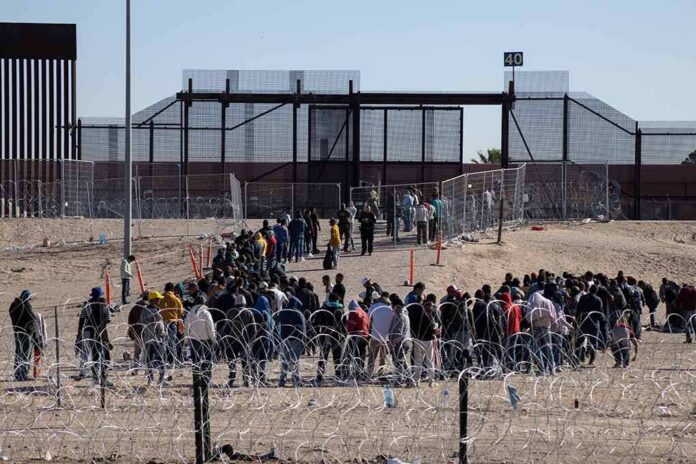
On August 26, 2021, a suicide bomber detonated an improvised explosive device at the Abbey Gate entrance to Kabul’s airport, killing 13 U.S. service members and at least 170 Afghan civilians in a packed, high-risk corridor. The U.S. military’s public brief characterized the event as a single-bomber attack whose lethality owed to dense crowds and ball bearings propelled into personnel holding the line at the gate. The official investigation emphasized both the speed and brutality of the event and the mission context: leaders on scene were managing an evacuation under persistent threat and overwhelming throughput demands.
Central Command’s subsequent statements framed the key operational judgment succinctly: at the tactical level, the attack was not preventable without degrading the evacuation mission — a tradeoff they were unwilling to accept amid the imperative to move as many people as possible through a single chokepoint. That conclusion was not a late revision; it is the through-line from the original review into later summaries and briefings.
The survivor’s account and the allegation of a missed shot
Against that institutional through-line stands a searing eyewitness: Marine Sergeant Tyler Vargas-Andrews. Under oath before the House Foreign Affairs Committee in March 2023, he called the withdrawal a catastrophe, described dire humanitarian conditions at the wire, and, most consequentially, testified that his team identified a likely suicide bomber before the blast, requested permission to engage, and never received it. He recounted that operations at the gate briefly halted after their warning, then resumed despite the threat; “we were ignored,” he said — a claim that, if corroborated, would reframe the day from unavoidable tragedy to preventable failure.
The weight of his testimony is not merely rhetorical. Congressional materials show he was assigned as a reconnaissance and observation asset at Abbey Gate; he spoke as a frontline observer, not a distant commentator. He also described the scene in terms no official report disputes: crowds in medical distress, heat casualties, and infants dying at the fence — details that fix the moral stakes of every tactical choice made there.
How the official record rebuts the missed-engagement thesis
The institutional counter-case is specific and direct. CENTCOM’s supplemental review — undertaken after survivor and family concerns surfaced — reaffirmed the earlier findings: leaders on the ground made sound tactical decisions; the bomber had not been identified in the crowd prior to detonation; and the attack was not preventable at the tactical level without undermining the evacuation’s throughput. The new material gathered did not materially alter those conclusions.
Two elements matter for readers weighing these claims. First, scope: the military inquiry drew on more than a hundred witness interviews across multiple locations, reconstructing not only one vantage point but the full command-and-control picture. Second, mechanism: when threat warnings were flagged, investigators say the force repeatedly adjusted posture — lowering profile, seeking cover, and at times ceasing gate operations — behaviors consistent with a unit responding to alerts under pressure while still attempting to push evacuees through. That procedural picture does not confirm perfect performance; it does assert that what could be done, was done, within the mission’s constraints.
The unresolved gap: singular testimony versus multi-source reviews
The sharpest tension is evidentiary. A single, sworn eyewitness says he fixed on a suspect and could not get a shot; a broad, document-heavy investigation says the bomber was not previously identified and no opportunity to engage existed. Both cannot be true in the same way. One way to reconcile part of the gap is to recognize line-of-sight asymmetries: what a sniper sees through a glass at one angle may not be positively targetable under rules of engagement and deconfliction procedures in a seething civilian mass. Another is communications friction: a warning passed to a ground force may not translate into immediate, distributed engagement authority when collateral risk is extreme. But those plausible frictions do not, by themselves, prove a preventable shot was denied or that an identified bomber escaped notice across the command net.
Congressional follow-on actions underscore that this is not settled emotionally, even if the official findings are settled institutionally. Committee leaders pressed for interviews with relevant commanders and flagged that Vargas-Andrews had not been included in the original investigative interviews, arguing that first-hand evidence may have been missed at the outset. That is a process critique — important for legitimacy — but it does not, in the absence of corroborating records, overturn CENTCOM’s central conclusions.
Veterans and lawmakers are criticizing the handling of the U.S. withdrawal from Afghanistan, citing the chaotic evacuation, abandoned assets and the deadly Abbey Gate bombing. pic.twitter.com/y78DAvCpG0
— Kabul Times (@kabultimes01) August 31, 2026
Mechanism, tradeoffs, and why the “not preventable” finding persists
Abbey Gate concentrated risk by design. Evacuation doctrine accepts tactical exposure to achieve throughput: screening points, canalized approaches, and dense holding areas all create opportunity for a suicide bomber. In such environments, prevention often depends less on spotting a particular attacker and more on structural measures — standoff distance, barriers, screening in depth, and pace control — many of which were constrained by the physical layout of Hamid Karzai International Airport and the political requirement to move people as fast as possible. When investigators say “not preventable at the tactical level,” they are making a systems claim: given the mission definition, terrain, crowd density, and time pressure, closing the window enough to stop a single bomber would have required slowing or pausing the evacuation in ways leadership judged unacceptable.
What accountability can still mean
Accountability after battlefield disasters tends to bifurcate into two questions: Was there a discrete, avoidable error proximate to the event; and were there upstream planning decisions that loaded the dice toward failure? The official record resists the former — it rejects the notion of a missed, green-lit shot. Congressional critics press the latter, arguing the withdrawal suffered from failures to plan for contingencies that culminated in the gate’s vulnerability. That is a strategic indictment more than a tactical one, and it is supported politically rather than by a neutral inspector general’s verdict; still, it frames why survivor testimony resonates even when operational reviews demur on preventability.
How to read competing narratives with rigor
Three heuristics help. First, privilege specificity over vibe: names, times, and communications logs carry more truth-weight than evocative adjectives. Second, separate valor from verdict: award upgrades and solemn tributes rightly honor conduct; they do not, by design, adjudicate process failures or causation. Third, respect both vantage points: the sniper on the wall and the operations center see different slices of the same chaos. Mature judgment holds those slices together without forcing them to say the same thing.
Bottom line
The best available official evidence says the Abbey Gate bombing, in that place and at that tempo, was not tactically preventable without sacrificing the evacuation mission. The most compelling eyewitness insists a preventable shot was there and went untaken. Until full communications records and additional first-hand accounts bridge that gap, the fairest reading is this: extraordinary courage in an inherently exposed design, catastrophic loss inflicted by a single bomber, and a continuing, legitimate argument over whether tactical prudence or institutional self-protection best explains the “not preventable” label.
Sources:
chrissmith.house.gov, npr.org, taskandpurpose.com, standard.co.uk, war.gov, foxnews.com, cbsnews.com, yahoo.com, congress.gov, stripes.com, linkedin.com