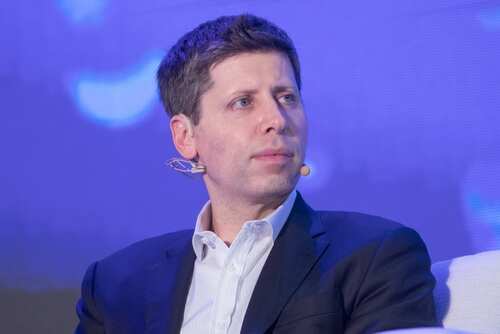
Sam Altman’s warning that the AI market is caught in a speculative bubble echoes the excesses of the dot-com era, raising serious questions about the risks facing American investors and innovators as capital pours into unproven technology.
Story Snapshot
- OpenAI CEO Sam Altman publicly compares today’s AI investment mania to the dot-com bubble, cautioning that current enthusiasm far exceeds reality.
- OpenAI’s record-breaking $40 billion raise and $500 billion valuation fuel concerns about overvaluation and sustainability in the AI sector.
- Major tech firms, venture capitalists, and new competitors are driving historic spending, but experts warn of a looming correction if hype outpaces results.
- Industry insiders and economists are split: some see a real risk of collapse, while others argue leading firms may weather the storm.
Altman’s Bubble Warning: Echoes of Past Market Manias
On June 2, 2025, OpenAI CEO Sam Altman issued a stark warning at the Snowflake Summit in San Francisco, likening the current surge in artificial intelligence investment to the dot-com bubble of the late 1990s. Altman, a central figure in AI’s explosive growth, cautioned that while the technology is genuinely transformative, investor enthusiasm and capital inflows are far outpacing the sector’s real fundamentals. His remarks follow a series of record-breaking funding rounds and rapid product launches, including OpenAI’s GPT-5, which have fueled both optimism and mounting concerns among industry leaders and economists.
Altman’s comparison to the dot-com era is not an idle observation. In early 2025, new entrants like DeepSeek claimed to match leading AI models at a fraction of the cost, setting off a frenzy among investors eager to back the next big breakthrough. In March, OpenAI raised $40 billion at a $300 billion valuation—the largest private tech funding round in history. By August, a $6 billion secondary stock sale pegged OpenAI’s value at $500 billion, all while user backlash forced the company to restore access to its previous GPT-4o model for some customers. This sequence of events has drawn scrutiny from seasoned analysts and market veterans who remember the painful lessons of past market bubbles.
Record Capital Inflows and the Threat of Overvaluation
The current AI boom is occurring against a backdrop of global economic instability, trade disputes, and shifting regulatory pressures. Major tech companies—including Google, Amazon, Meta, and Microsoft—are expected to spend a combined $364 billion on AI in 2025 alone. Investors, from venture capitalists to sovereign wealth funds, see AI as a safe haven amid broader market uncertainty. This has led to a surge in startup funding, with valuations and capital raises reaching unprecedented levels. Yet, the disconnect between soaring valuations and actual business fundamentals has become increasingly difficult to ignore, with some experts warning that the industry’s rapid commercialization may not be sustainable.
Industry observers point to a familiar pattern: hype, rapid capital inflows, and bold claims of innovation, reminiscent of the dot-com and crypto bubbles. While leading firms like OpenAI continue to draw massive investment and user growth—reportedly 700 million weekly ChatGPT users—the sector remains largely unprofitable. OpenAI itself is not yet turning a profit, despite projecting $20 billion in annual recurring revenue. This raises questions about the sustainability of current valuations and the potential fallout if expectations are not met.
Expert Opinions: Bubble Risk Uneven, but Systemic Threats Loom
Sam Altman’s warning is echoed by other influential voices. Analysts like Ray Wang argue that while some leading AI firms have strong fundamentals, speculative capital is flooding into weaker players, creating uneven risk across the sector. Torsten Slok of Apollo suggests the current AI bubble may even surpass the scale and risk of the 1990s technology bubble. Not all experts agree on the immediacy or scale of the risk; some maintain that AI’s long-term economic impact could justify high investment, but most caution that a correction is likely if the hype continues to outpace real-world results. The debate underscores the complexity of the market and the need for vigilance among investors and policymakers.
Altman’s remarks have lent credibility to growing calls for regulatory scrutiny and more rigorous evaluation of AI business models. The risk of a market correction, reminiscent of the dot-com bust, is real. If the bubble bursts, the consequences could ripple through the broader technology sector and the economy, affecting investors, startups, and end users alike. Industry leaders, investors, and policymakers will need to balance the transformative promise of AI with the risks of speculative excess to avoid repeating history’s mistakes.
OpenAI's Sam Altman sees AI bubble forming as industry spending surges https://t.co/Y6gaKckNbW
— Meimeiangu (@meimeiangu) August 18, 2025
The current situation remains fluid, with OpenAI continuing to expand into new areas such as consumer hardware and brain-computer interfaces. Meanwhile, the debate over AI’s true value and the sustainability of the sector’s meteoric rise continues to intensify. As history has shown, unchecked bubbles threaten not only investors but also the broader principles of responsible innovation and market stability that underpin American prosperity.
Sources:
OpenAI CEO Sam Altman believes we’re in an AI bubble
Sam Altman warns AI stocks may be in a dot-com style bubble
Sam Altman Warns AI Stocks May Be in a Dot-Com-Style Bubble