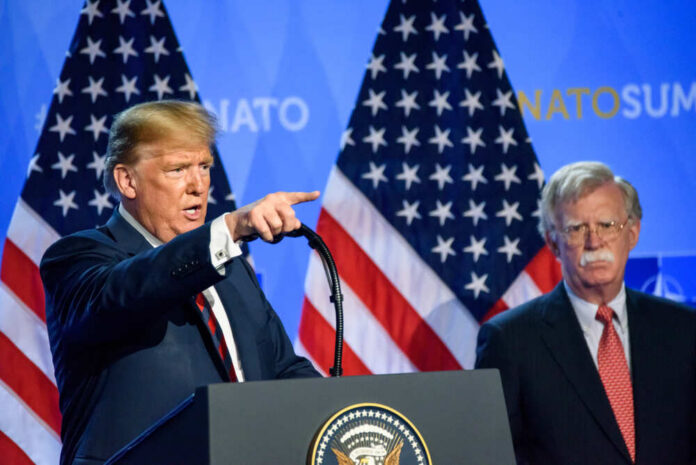
When Trump and Zelensky share a stage, the real story is rarely the soundbite; it is the way their exchanges expose the tensions between deal-making theatrics, hard military realities, and the increasingly fraught role of the press in wars fought under constant public scrutiny.
Key Points
- Trump’s push to broker peace between Russia and Ukraine has repeatedly mixed ambitious claims with limited concrete outcomes, creating fertile ground for skeptical, confrontational press questioning.
- Zelensky’s public posture balances gratitude for U.S. support with blunt demands for specific weapons and security guarantees, often undercutting Trump’s more triumphant narratives.
- Viral clips of “humiliated” reporters and combative press conferences are typically fragments of longer, more complicated exchanges that social media distorts and mislabels.
- Turkey’s evolving role as a summit host and its restrictive media environment add another layer of pressure and risk for journalists covering Trump’s diplomacy.
Trump, Zelensky, and the Politics of Public Peace-Making
The repeated meetings and joint media appearances between Donald Trump and Volodymyr Zelensky are not incidental; they sit at the center of Trump’s effort to cast himself as the indispensable broker of an eventual settlement to the Russia–Ukraine war. From early phone calls with Vladimir Putin that Trump described as “productive” to negotiations in Riyadh and high-profile NATO summits, the White House has been keen to project momentum toward a deal, even when actual battlefield and diplomatic conditions remain stubbornly resistant.
Zelensky, for his part, has used these moments to anchor Ukraine’s needs in specific, concrete terms: long‑range Tomahawk missiles, Patriot systems, drones, and durable security guarantees that would make any ceasefire more than a pause before the next assault. That mismatch—Trump’s preference for sweeping claims of progress versus Zelensky’s focus on hard capabilities—creates a natural friction every time they face cameras together. It is in that friction that reporters operate, challenging timelines, casualty figures, and the feasibility of Trump’s promises.
From Alaska to Ankara: Trump’s Mediation Narrative Under Strain
The dynamic at the Ankara NATO summit is easier to understand in light of earlier episodes. After a summit with Putin in Alaska, Trump began pushing hard for direct talks between Putin and Zelensky, portraying himself as the facilitator of a historic breakthrough. Yet Russia showed little enthusiasm, and Ukraine rejected frameworks that implied territorial concessions, a red line Zelensky has held consistently. Those failed initiatives weakened the credibility of Trump’s public assurances that both leaders “want to see a settlement,” even when he repeated that formula later alongside Zelensky at NATO.
In parallel, Trump’s rhetoric around Ukraine has tracked closely with Kremlin talking points at times, including claims that Zelensky’s legitimacy “expired” and labeling him “a dictator without elections” because wartime martial law postponed a presidential vote. Such language, amplified on Trump’s own social platform, clashes sharply with Zelensky’s portrayal in Western media as a leader defending his country under invasion. When these contradictions surface in press conferences, reporters are not merely nitpicking; they are testing whether Trump’s narrative aligns with the broader factual record of the war and his own prior statements.
Weapons, Guarantees, and the Gap Between Talk and Delivery
One recurring theme in Zelensky’s public remarks is the insistence that peace cannot be sustainable without meaningful changes in Ukraine’s defensive posture. At an October 2025 appearance outside the White House, Zelensky stated plainly that Ukraine “needs strong security guarantees” from the United States to deter future Russian aggression if a ceasefire is reached. He confirmed that discussions over long‑range Tomahawk missiles were unresolved but ongoing, underscoring that the weapons agenda was not a rhetorical flourish but an active, contentious negotiation.
Trump’s own comments often elevate that agenda rhetorically while sidestepping the practical constraints. At NATO, he spoke about licensing Patriot missile production to Europe, including Ukraine, and ambitious expansions of U.S. defense manufacturing. Yet, by his own admission, the companies involved had not been informed of some of these plans, and there was no accompanying treaty text or binding agreement in public view. Reporters pressing on these gaps—asking when, how, and under what authority such systems would be delivered—are probing whether the policy substance matches the showmanship.
Press Conferences as Stress Tests of Presidential Claims
The description of Trump “humiliating” an MS NOW reporter during an Ankara presser fits a well-established pattern of highly charged, confrontational exchanges between Trump and the press—particularly around foreign policy and national security. At a 2025 NATO summit press conference, for example, Trump sharply attacked CNN after a report suggested U.S. strikes had failed to fully cripple Iran’s nuclear program, branding the story “fake news” and insisting the operation amounted to “obliteration.” The clip, widely shared online, focused on Trump’s anger and dismissal of the journalist rather than the substantive dispute over what the strike had achieved.
What these episodes share is not isolated cruelty or spontaneous humiliation, but a deliberate communication strategy. Trump routinely frames skeptical questions as evidence of media bias, questions the motives of the reporters themselves, and redirects attention to his preferred storyline—success, strength, and unique deal‑making prowess. When a journalist presses on contradictions in his accounts of Putin’s intentions or the status of weapons negotiations with Ukraine, Trump’s counterattack is aimed as much at discrediting the question as at answering it. The result is viral footage of a clash, but a murkier picture of the underlying policy reality.
Social Media Distortion: Tears, “Humiliation,” and Mislabelled Clips
Not every viral “humiliation” clip comes from the event people think they are watching. After a contentious Trump–Zelensky encounter at the White House, social media users circulated a video of a cameraman in tears, claiming it showed a Ukrainian journalist crying as his president was humiliated. A simple reverse image search revealed the footage was nearly a decade old, taken from a Turkish television program unrelated to Trump or Zelensky. The emotional power of the mislabel—the sense of witnessing national dignity trampled—was entirely manufactured by context-free sharing.
This kind of misattribution matters because it shapes public perception of how Trump treats foreign leaders and the press. When viewers cannot distinguish between genuine confrontations and recycled, repurposed footage, they begin to rely on narrative cues—headline framing, partisan commentary—to interpret events. In that environment, a tough line of questioning from a reporter can be cast as either brave accountability or embarrassing overreach, and Trump’s aggressive responses can be viewed as either bullying or justified pushback, depending on which version of the clip they see.
Ankara, Media Pressure, and Turkey’s Restrictive Information Climate
The setting of these NATO encounters is not neutral. Turkey has become a regular stage for Trump’s diplomacy, and its domestic media environment is sharply constrained. A Turkish pro‑government broadcaster fired its Washington correspondent after a hot‑mic moment in which he said Turkey had “gained nothing” from an Erdoğan–Trump meeting, remarks captured by an Associated Press camera and shared widely online. The incident underscored how criticism of high‑level talks with Trump can carry professional risk for journalists linked to pro‑government outlets.
For foreign reporters covering Trump and Zelensky in Ankara, that background matters. They operate in a host country where critical coverage of the leadership’s diplomacy has already led to dismissals, and where access to events and internet platforms can be selectively restricted. Within that constrained space, Trump’s willingness to publicly attack journalists, combined with the symbolic stakes of Ukraine policy, amplifies the personal and institutional pressures on those asking the hardest questions. The claim that a reporter was “humiliated” by Trump taps into real vulnerability, even if specific viral depictions require careful verification.
What These Clashes Reveal About the Road to Peace
Stepping back from individual soundbites, the pattern is clear: Trump uses public encounters with Zelensky to reinforce his image as a transformative negotiator, even as the war’s structural drivers—Russian maximalist aims, Ukrainian security imperatives, European skepticism of Trump’s Kremlin-friendly rhetoric—limit what any single summit can achieve. Zelensky uses the same occasions to insist on concrete guarantees and capabilities, effectively pulling the conversation back from grand bargains to the minutiae of missiles, drones, and air defense networks.
Reporters, in turn, function as a stress test for that political theater. They scrutinize casualty figures, timelines, and treaty language; they surface discrepancies between Trump’s praise of “tremendous unity” and his willingness to echo narratives that weaken Zelensky’s political standing. Sometimes their challenges are met with detailed answers, sometimes with deflection or hostility. But the very intensity of those exchanges is a measure of how consequential the underlying issues are. When journalists risk professional sanction or public derision to ask whether a promised system has actually been delivered, or whether a ceasefire is backed by enforceable guarantees, they are not seeking viral “humiliation”—they are interrogating whether declarations of peace have substance.
Sources:
thegatewaypundit.com, nytimes.com, reuters.com, apnews.com, youtube.com, instagram.com, facebook.com
Donald Trump cites tremendous unity at NATO Summit
US President Trump praises Zelensky in Ankara@samikshaa3 gets you more pic.twitter.com/uc5V8LMxtM
— WION (@WIONews) July 9, 2026