
The real story behind the latest undercover EBT “bombshell” is not a single sting video, but the collision of three things: ambiguous benefit rules, vulnerable payment infrastructure, and a long-running battle over how much weight edited undercover footage should carry as evidence.
Key Points
- Undercover footage from O’Keefe Media Group appears to show New York City smoke shops and bodegas willing to run EBT cards for kratom and other non-food items, but it does not by itself prove completed illegal SNAP transactions or a citywide fraud rate.
- SNAP rules clearly prohibit using food benefits to buy drugs, alcohol, tobacco, or non-food items, yet separate “EBT cash” assistance can be legally withdrawn and spent however the recipient chooses, creating a legally gray cash pathway the video highlights.
- New York is already a hotspot for EBT-related crime—especially large-scale card skimming and unauthorized terminals—documented by federal prosecutions and Secret Service stings, which show that benefit theft is real even if the specific kratom episodes remain unverified.
- O’Keefe-style undercover videos sit in a contested tradition; past cases such as the ACORN controversy show that heavily edited footage can mislead, underscoring the need for raw video, transaction records, and official investigations before treating any single clip as systemic proof.
What the Undercover Video Claims to Show
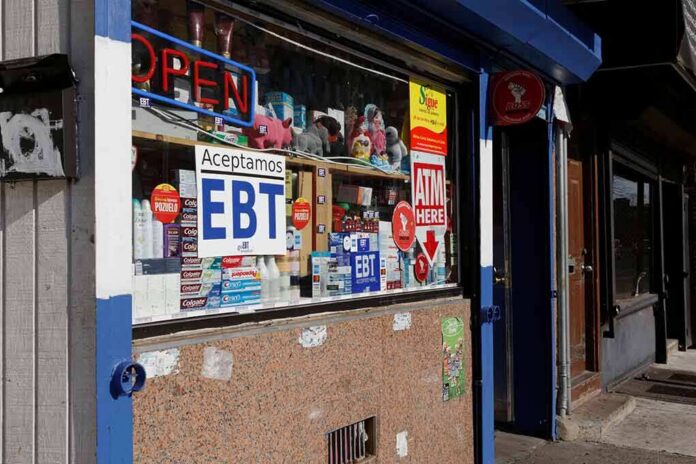
The O’Keefe Media Group investigation, heavily promoted by political outlets, presents edited undercover footage from multiple smoke shops and bodegas in New York City. In the video, clerks at locations including Smoke Shop Organics in Harlem, Fordham Los Cachitos Deli in the Bronx, and Lennox Convenience in Manhattan appear willing to swipe EBT cards to sell kratom and other non-food products to undercover reporters. Kratom, a psychoactive plant product, is framed in the narration as “drugs” and described as on the way to being a controlled substance, though the material provided does not document that it was federally scheduled at the time.
The narration asserts that these transactions violate federal SNAP rules, which bar the use of food benefits for alcohol, tobacco, drugs, and non-food items under 7 CFR 278 and 7 U.S.C. 2012, as well as parallel New York regulations. In one exchange, when the reporter calls kratom “drugs,” a clerk replies, “It’s legal, my friend,” underscoring the gap between regulatory classification for benefit eligibility and street-level perceptions of legality.
Crucially, the transcript itself concedes a core distinction: the EBT customer-service representative, reached by phone, confirms that drugs cannot be purchased directly with an EBT card, but also tells the reporter that once cash is withdrawn from an EBT account, the recipient can “do whatever you want with the money.” That admission does not legitimize drug purchases, but it accurately reflects how cash assistance works: once converted to cash, usage is not technologically constrained by the benefit system.
Where the Evidence Stops: Attempts Versus Proven Transactions
The key limitation of the video, if one treats it as evidence rather than advocacy, is that it documents willingness and apparent attempts, not settled transaction data. The producers themselves state that “the objective was merely to show that the smoke shop clerks are willing to make the attempt to sell these products using government-funded benefits,” rather than to present backend logs proving that specific SNAP food-benefit redemptions were completed for kratom or alcohol.
That distinction matters. A payment terminal flow labeled “EBT cash” may reflect a lawful withdrawal of cash assistance rather than a mischaracterized food purchase. The clip shows buttons, receipts, and swipes, but it does not supply transaction IDs, settlement records, or USDA/FNS audit findings for each featured store. Without merchant processor data and official enforcement files, an outside observer cannot definitively say whether the transactions were approved, declined, voided, or rerouted as cash withdrawals.
The segment that suggests “terminal cloning” and merchant identity fraud rests on a receipt from a smoke shop that carries the name and Brooklyn address of a different business. According to the narration, staff at that named business later denied any connection to the smoke shop. That mismatch is suspicious, and consistent with known patterns of unauthorized EBT terminals in other cases, but absent forensic analysis of the device and processor records it remains an inference rather than a proven fact.
How SNAP and EBT Benefits Actually Work
To understand what the video does and does not show, one has to separate two distinct benefit streams commonly loaded onto the same plastic card. SNAP benefits are food-only; by law they cannot be used for alcohol, tobacco, hot prepared foods, or non-food merchandise. EBT cards, however, can also carry cash assistance benefits—such as public assistance or certain other programs—which may be accessed at ATMs or point-of-sale terminals designated for “cash.” Once a recipient withdraws cash, the government does not track or constrain each subsequent purchase.
The EBT representative’s statement that cash can be spent at the recipient’s discretion is therefore not an admission of program fraud; it is a description of how cash assistance has long been structured. Policy critics argue that this design can indirectly subsidize illicit drug use, while defenders stress that recipients need flexible cash for rent, utilities, and other essentials. The undercover video leans heavily into that tension, but legally, the clear bright line is at the point of direct SNAP redemption for prohibited items, not at how cash is ultimately spent.
From a compliance standpoint, the most serious allegation would be a retailer knowingly accepting SNAP food benefits for kratom or alcohol—essentially treating drug sales as if they were groceries. Proving that requires more than footage of a clerk hitting an EBT button; it requires tying specific benefits codes to prohibited SKUs in transaction records or an agency investigation. None of that supplemental documentation appears in the material provided.
Documented EBT Fraud in New York: Skimming and Unauthorized Terminals
While the kratom episodes remain under-evidenced, there is no question that EBT-related crime in New York is significant—and in many respects more organized and technically sophisticated than a single shop clerk misusing a terminal. Federal prosecutions and local reporting describe networks that deploy hidden skimming devices, clone cards, and operate unauthorized EBT terminals at ineligible businesses, including smoke shops.
In one superseding indictment, prosecutors charged a USDA employee and five accomplices with a scheme that generated over $66 million in unauthorized SNAP transactions. Beginning around 2019, one defendant allegedly supplied roughly 160 unauthorized EBT terminals to stores across the New York area, illegally processing more than $30 million in benefits at locations that were not approved grocery retailers. Another defendant is accused of selling hundreds of EBT license numbers, enabling tens of millions more in fraudulent redemptions.
Separate from that case, the Secret Service’s New York Field Office has run repeated sting operations targeting skimming devices affixed to bodegas’ payment terminals. One operation across Brooklyn, the Bronx, and Queens reportedly uncovered dozens of illegal skimmers and prevented tens of millions of dollars in fraud. New York City’s Department of Social Services has documented tens of thousands of reimbursement claims for stolen EBT benefits, with reimbursements in the tens of millions of dollars.
These records show a city deeply entangled in EBT theft, but the predominant pattern is card skimming and unauthorized processing—not necessarily the direct sale of drugs and alcohol in exchange for food benefits. The undercover video plugs into this broader landscape, but its specific allegations occupy only one corner of a much larger fraud ecosystem.
Undercover Video as Evidence: The ACORN Precedent and Editing Skepticism
Any assessment of O’Keefe-style undercover footage has to be informed by history. In the 2009 ACORN controversy, edited videos appeared to show community-organization staff advising a fake pimp and prostitute on evading law enforcement. The clips circulated widely, drove political reaction, and contributed to ACORN’s loss of funding. Yet when the Brooklyn District Attorney later reviewed the unedited tapes, the office concluded that the videos had been “heavily edited” and found no criminal wrongdoing by ACORN staff.
That episode did two things. It cemented James O’Keefe and similar producers as influential undercover figures on the political right, and it simultaneously created a durable skepticism among journalists, prosecutors, and policy professionals about treating edited sting videos as self-sufficient proof. The core lesson is that context—what was said before and after an incriminating snippet, how many interactions were mundane rather than sensational, what was cut for narrative effect—can fundamentally alter the interpretation of what viewers see.
Applied to the EBT kratom footage, that precedent doesn’t disprove what the video shows; it simply raises the evidentiary bar. To move from “this clip is troubling” to “this pattern is conclusively documented,” one would want unedited footage, time stamps, audio logs, and corroborating paper trails from agencies or payment processors. Until those appear, the video is best understood as an allegation and a prompt for investigation, not as the final word.
Policy Stakes: Oversight, Program Design, and Public Perception
The stakes in this debate are higher than the retail dollar value of any single transaction. SNAP and related EBT-based benefits represent one of the central pillars of the modern safety net, distributing tens of billions of dollars annually to low-income households. Persistent stories of fraud—whether skimming, unauthorized terminals, or alleged drug sales—shape public attitudes toward these programs and influence legislative oversight, funding levels, and design reforms.
On one side, advocates for stricter enforcement argue that allowing smoke shops, delis with dusty shelves, or clandestine schemes to tap SNAP funds corrodes public trust and shifts money away from food-insecure families toward organized crime. On the other, anti-hunger organizations and legal service providers stress that the primary victims of skimming and benefit theft are recipients themselves, who may suddenly find their food budgets wiped out with little recourse, and they criticize the state for lagging in adopting more secure chip-based cards.
The uncovered tension around “EBT cash” adds another layer. Cash assistance is indispensable for many families; tightening its rules too aggressively risks preventing people from paying rent, utilities, or transportation costs. Yet as long as cash and food benefits share branding and card rails, it will be easy for critics to frame any misuse of cash withdrawals as “EBT buying drugs,” even when the legal violation lies elsewhere. Policymakers confronting this environment must decide whether to redesign benefit cards, differentiate programs more clearly, or invest more in merchant-level enforcement.
What Would Turn Allegations into Established Facts
Given both the gravity of the accusations and the contested history of undercover political videos, the path to firm conclusions about the specific bodegas and smoke shops featured in the O’Keefe clip runs through more conventional investigative tools. At minimum, a rigorous assessment would require:
Access to unedited video files, with metadata and audio intact, to verify that interactions are shown in full and that no exculpatory context was cut. Merchant processor records and EBT settlement data for each named store, tying particular transactions to benefit types (food versus cash) and product categories. Agency inspection reports or enforcement actions that address the alleged behavior directly, rather than EBT fraud in general. And, if kratom or other products are central to the claim of “drug sales,” expert analysis of their legal status relative to SNAP eligibility at the time of sale.
Short of that, what we have today is a vivid portrayal of potential abuse in a system already known to be vulnerable, framed by a producer with a track record that warrants scrutiny, set against a backdrop of documented large-scale fraud of other kinds. For an informed citizen or policymaker, the prudent stance is neither dismissal nor credulous acceptance, but a demand that this kind of footage trigger transparent, verifiable investigation rather than serve as the endpoint of the conversation.
How Concerned Citizens Can Respond
For readers who rely on SNAP or other EBT-based benefits—or who simply care about the integrity of public programs—the practical response is twofold. At the individual level, the most urgent threat is skimming and card theft, not undercover kratom sales. New York agencies and legal advocates recommend freezing EBT cards when not in use, changing PINs frequently, monitoring account activity, and checking terminals for loose or suspicious attachments before swiping. Victims are urged to report theft promptly, seek card replacement, and file reimbursement claims where eligible.
At the policy level, the conversation should focus on modernizing card technology, tightening authorization of merchant terminals, and improving the speed and clarity of fraud response. Robust oversight need not demonize recipients or frontline clerks, but it does require confronting how benefit dollars can be siphoned off—whether by organized skimming rings, illicit terminal networks, or any merchant willing to treat food assistance as a no-questions-asked revenue stream.
Sources:
thegatewaypundit.com, youtube.com, undercover.hosting.nyu.edu, instagram.com, abc7ny.com, en.wikipedia.org, foxnews.com, amny.com, reddit.com