Wisconsin just showed how billion-dollar politics can turn a “nonpartisan” court race into a de facto referendum on abortion, redistricting, and power.
Story Snapshot
- Susan Crawford, a Democratic-backed Dane County circuit judge, defeated Republican-backed Waukesha County judge Brad Schimel for a 10-year seat on the Wisconsin Supreme Court.
- The win keeps the court’s 4–3 liberal majority in place through 2035, rather than “expanding” it.
- Outside spending and national surrogates—from Donald Trump and Elon Musk to Barack Obama and George Soros—helped make the contest the most expensive judicial race in U.S. history.
- The court is positioned to weigh major disputes tied to abortion policy, labor rules, voting fights, and congressional and legislative maps in a key swing state.
Crawford’s win keeps Wisconsin’s court on a liberal track
Wisconsin voters elected Dane County Circuit Judge Susan Crawford to the state Supreme Court on April 1, 2025, defeating Waukesha County Circuit Judge Brad Schimel. Media projections put the result at roughly 55% for Crawford and 45% for Schimel, a margin that settled the central question of the race: whether conservatives could flip the court. Instead, Crawford’s victory preserved the existing 4–3 liberal majority for another decade, locking in the ideological balance through 2035.
The headline claim that the win “expanded” a Democratic majority doesn’t match the underlying structure of the court. The seat was held by a retiring liberal justice, so the election functioned as a hold-versus-flip contest, not an expansion. That distinction matters for both sides because Wisconsin’s high court has become a frontline institution where policy outcomes can change without legislation—especially when the legislature and governor’s office are politically divided or deadlocked.
Why the “nonpartisan” label no longer convinces many voters
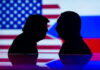
Wisconsin Supreme Court races are formally nonpartisan, but the 2025 contest underscored how that label increasingly fails to describe reality. National political figures and mega-donors treated the election like a proxy war. Reporting highlighted involvement by Trump and Musk on Schimel’s side and prominent Democratic-aligned figures such as Obama, Soros, and Minnesota Gov. Tim Walz backing Crawford. The result was a campaign environment that looked more like a U.S. Senate race than a judicial selection.
Turnout signals also pointed to a nationalized fight rather than a quiet spring election. About 600,000 early votes were reported before polls opened, an unusually high level of engagement for an off-cycle state judicial contest. Analysts described the race as a “big draw” precisely because the court is expected to decide high-stakes cases. For voters who feel “the system” is run by entrenched interests, the spectacle of massive outside spending reinforced the sense that even judgeships are now treated as political prizes.
The policy stakes: abortion, maps, labor, and election rules
The practical significance of a 4–3 liberal court is straightforward: it shapes what happens when political disputes land in court instead of being settled by legislation. After the U.S. Supreme Court returned abortion policy to the states, Wisconsin’s courts became central to questions surrounding old statutes and modern enforcement. The court is also positioned to influence labor-related cases and rules affecting unions and workplaces—issues that can ripple into the business climate, public-sector negotiations, and state budgeting decisions.
Redistricting remains another core flashpoint. Wisconsin’s court has already played a key role in battles over legislative maps, and future cases could affect congressional boundaries in a state that routinely decides national elections by narrow margins. For conservatives, that raises familiar concerns about courts functioning as policy engines rather than neutral arbiters. For liberals, it is often framed as “fair maps” and rights protection. Either way, control of the court can shape elections before the first vote is cast.
What this says about trust, “elite” influence, and the next fights
Crawford’s victory speech emphasized her background as a prosecutor, lawyer, and judge and her stated commitment to protecting rights and families. Schimel’s defeat, despite heavy support from Trump-aligned networks and Musk-linked spending, will likely fuel continued debate on the right about whether outside money can substitute for ground-level persuasion—especially in turnout-heavy urban strongholds like Dane County. At minimum, the race showed that cash and celebrity don’t guarantee wins in judicial elections.
The deeper takeaway is institutional. When state supreme court races become the most expensive in the nation’s history, Americans across ideologies see a system that looks less like blind justice and more like interest-group competition. Conservatives often worry this dynamic accelerates cultural change through courts rather than ballots and legislatures. Many liberals worry big donors distort democracy. Those complaints differ in policy goals, but they converge on a shared frustration: government—and increasingly the judiciary—feels captured by powerful players.
Sources:
Wisconsin Supreme Court result: Susan Crawford wins
Crawford wins the 2025 Wisconsin Supreme Court election