President Trump’s threat to cut off trade with Spain is exposing how quickly Europe rallies against U.S. leverage when an ally refuses to pull its weight on defense.
Story Snapshot
- President Trump warned Spain he could sever trade after Madrid refused to allow U.S. use of the Rota and Morón bases for strikes related to Iran.
- Spain also rejected a NATO push to raise defense spending to 5% of GDP, becoming the lone holdout mentioned in the reporting.
- French President Emmanuel Macron called Spain’s Prime Minister Pedro Sánchez to signal “European solidarity” against what Paris described as economic coercion.
- The European Commission said it is prepared to defend EU interests using the bloc’s common trade policy, escalating the risk of a wider trade dispute.
Trump’s Trade Warning Ties Base Access to Alliance Commitments
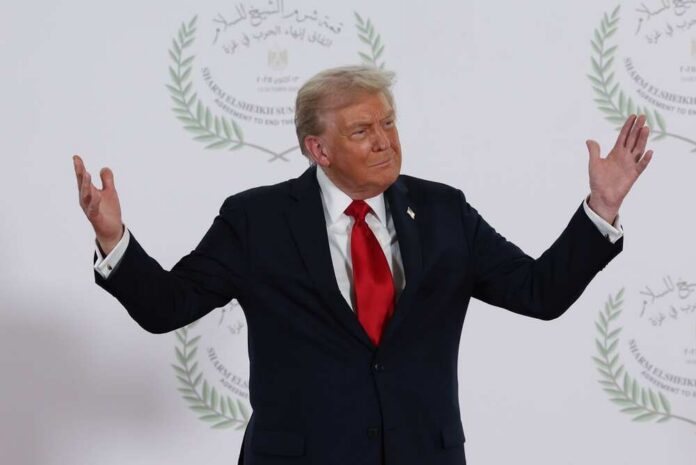
President Donald Trump delivered the warning on March 3 during a White House appearance with German Chancellor Friedrich Merz, criticizing Spain over two issues: Madrid’s refusal to allow U.S. forces to use the Rota naval base and Morón air base for operations connected to Iran, and Spain’s rejection of a NATO pledge to lift defense spending to 5% of GDP. Reporting indicates the threatened response was sweeping—cutting off “all trade with Spain”—though no action had been implemented as of March 4.
Spain’s stance matters because the bases have long been central nodes for U.S. and NATO activity in the region, and because the Iran crisis is already spilling into shipping and broader regional security. The available reporting does not provide a detailed Spanish legal rationale beyond refusal, but it does describe the decision as a break from past practice. For Americans watching NATO, the dispute lands on a familiar pressure point: whether every member will meet shared obligations when the stakes rise.
Macron Moves Fast to Frame U.S. Pressure as “Economic Coercion”
French President Emmanuel Macron spoke with Spanish Prime Minister Pedro Sánchez on March 4, with Macron’s office describing the outreach as “European solidarity” in response to U.S. threats of economic coercion. The call came after Macron delivered a televised address criticizing U.S.-Israeli operations against Iran as outside international law while still placing primary blame on Iran, according to the coverage. Macron also announced France would send its flagship aircraft carrier to the Mediterranean, signaling a French-led posture as tensions intensify.
That combination—criticizing the legality of U.S.-aligned strikes while deploying major French military assets—underscores how Europe’s top leaders are trying to balance domestic politics, regional security, and strategic autonomy. The reporting also ties the dispute to broader EU debates, including NATO nuclear-sharing discussions and Macron’s recurring push for a more independent European defense identity. For U.S. voters skeptical of globalism, the episode illustrates how quickly “solidarity” language can shift into coordinated opposition when U.S. pressure collides with European politics.
Brussels Signals It Will Use EU Trade Power if Trump Follows Through
The European Commission publicly aligned with Spain, stating it was ready to act to safeguard EU interests through the bloc’s common trade policy. That matters because trade retaliation is not a theoretical tool for Brussels; the EU is designed to respond collectively when a member state is targeted. Le Monde’s reporting notes last year’s EU-U.S. trade deal as part of the backdrop, raising the stakes if a bilateral threat against Spain triggers a bloc-wide response that drags the wider transatlantic economic relationship into the dispute.
The short-term risk is clear: uncertainty for exporters, investors, and supply chains—especially as markets react to Middle East instability. The research also describes shipping disruptions connected to the crisis, including major carriers halting services in the Gulf. From a constitutional, limited-government lens, trade brinkmanship is often justified as leverage, but it also concentrates power in the executive branch, making congressional oversight and clear objectives critical.
Germany’s Mixed Messaging Highlights Friction Inside Europe, Too
Spain’s foreign minister, José Manuel Albares, publicly expressed surprise at what he described as Germany’s lack of solidarity after Merz criticized Spain’s defense spending and did not publicly back Madrid during the White House moment. Albares contrasted Merz’s posture with what he said he could not imagine from former German leaders Angela Merkel or Olaf Scholz. Merz reportedly claimed privately that he stood up for Spain, but that account was not publicly verified in the coverage provided.
The larger picture is that Europe is not monolithic: France rushed to embrace Spain, Germany appeared more conflicted, and Brussels positioned itself to defend the bloc’s trade interests. Meanwhile, the U.S. message remains consistent with Trump’s long-standing NATO approach—alliances must be reciprocal, and defense commitments cannot be optional when the bill comes due. As of March 4, the dispute remained in the signaling phase, but the combination of base access, Iran escalation, and trade threats is a volatile mix.
Sources:
Macron expresses ‘solidarity’ with Spain after Trump threat: presidency
Madrid expresses surprise at Germany’s lack of solidarity with Spain over Trump threats
Macron voices solidarity with Spain after Trump trade threat
EU says ready to defend interests after Trump threatens Spain
Macron expresses solidarity with Spain after Trump threat: presidency