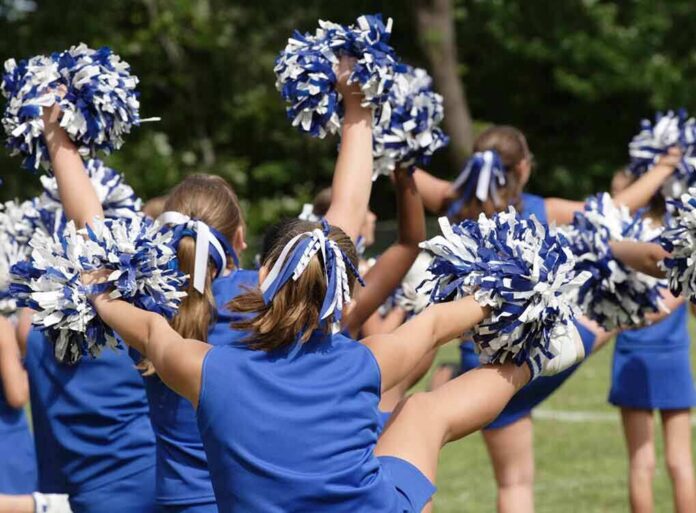
The controversy over “male NFL cheerleaders” isn’t about novelty; it’s about the public finally noticing what teams have been doing, in plain sight, for years—mixing dance and coed stunting to deliver a tighter, more athletic game-day product.
The Short Version
- Multiple NFL teams field men on their cheer rosters—as dancers and as stunt specialists—and have for years.
- The modern inflection point was 2018, when the Rams added male dancers; since then, participation has spread across the league.
- Counts vary by season, but credible reporting places dozens of men across roughly a dozen squads as of recent years.
- Backlash tends to be social-media driven; it does not overturn the fact that coed cheer is established, functional, and persistent.
What “male cheerleaders” actually do on NFL sidelines
Cheer is not monolithic. NFL squads blend two distinct performance skill sets. First, dance teams execute sideline choreography, quarter-break features, and sponsor activations with precision that looks effortless only because it is the product of daily training and meticulous rehearsal. Second, coed stunt groups—standard fare at the collegiate level—perform basket tosses, pyramids, and partner stunts that require significant upper-body strength, technical grips, and timing. Many NFL teams that roster men place them in stunt units for exactly this reason: their inclusion expands the vocabulary of skills a squad can safely perform, increases lift stability, and unlocks formations that are simply not feasible without male bases and spotters. Recent coverage has been explicit on this functional division, noting that a sizable subset of male roster spots are categorized as stunt performers—roles “utilized in ways that take advantage of their strength.”
Dance roles have also opened to men on some teams. The Los Angeles Rams broke that barrier in 2018 by adding Napoleon Jinnies and Quinton Peron as full dance-team members—classically trained performers who earned their places through the same audition gauntlet as the women. League media subsequently marked the moment as history-making when the duo appeared at Super Bowl LIII, cementing the fact that male dancers weren’t a tryout anomaly; they were part of the performance standard on the sport’s biggest stage.
How we got here: from “firsts” to a steady, expanding practice
The NFL’s coed evolution did not spring from a single press release; it built over years as individual franchises modernized their entertainment programs. The Baltimore Ravens integrated male stuntmen in the late 1990s, aligning their sideline product with the coed model long dominant in college cheer. Two decades later, the Rams’ 2018 decision to cast men as dancers provided a clear cultural marker—one amplified by network cameras, postseason exposure, and a wave of feature coverage that framed the shift as part of league history rather than a breach of it.
Since 2018, adoption has broadened. Roster snapshots vary by month and by outlet, but recent season previews and team-by-team lists consistently place male cheerleaders—both dancers and stunt personnel—across roughly a dozen NFL franchises, from the Ravens and Rams to the Saints, Eagles, 49ers, Buccaneers, Titans, Patriots, Colts, Chiefs, Panthers, Vikings, and Seahawks, depending on timing. One widely cited roundup characterized the cohort as a “fast‑growing group,” tallying several dozen men on 11 teams for a recent season. The exact counts fluctuate with tryouts, injuries, and midseason changes, but the structural point is stable: multiple clubs, across markets and competitive tiers, are now routinely coed.
Mechanism and selection: open tryouts, role clarity, and performance value
How do men make these squads? The same way anyone does: they show up and win the job. When asked why the Rams “added men,” team representatives were blunt—tryouts were already open; the first successful male dancers were the first men who showed up prepared to meet the standard. That matters. It reframes inclusion not as a carve‑out but as the predictable outcome of sex‑neutral auditions in a field defined by technique, musicality, stamina, and presence. In stunting, the value proposition is just as clear: coed units reduce injury risk by allowing proper basing mechanics and create crowd‑pleasing skills that go beyond synchronized pom. For entertainment directors under pressure to justify every minute of in‑stadium programming, capability expands, not politics, are the point.
It is also why language sometimes varies—“dancer” versus “cheerleader” versus “stunt.” Some clubs house all game‑day performers under one brand; others maintain discrete dance and stunt rosters. The taxonomy can confuse casual observers, but it reflects role specificity, not hedging. When you’re building a 20‑minute halftime feature, you need technicians in the lanes they were trained to occupy.
Backlash, noise, and what actually persists
Every August brings the same social theater: a team posts a training-camp clip featuring a male dancer; a tranche of commenters vows never to watch again; politicians or ex‑players weigh in; the news cycle churns. This is heat, not light. The strongest available evidence of dispute is largely a stack of social‑media reactions and commentary hits—angry posts, outrage segments, and the occasional broadside from a public figure—none of which rebuts the baseline facts about who is on rosters or what they do on the field. Meanwhile, squads that went coed years ago stayed coed through multiple seasons, lawsuits over cheer employment standards, and budget overhauls. Backlash made headlines; it did not reverse the practice.
Put differently, it is easier to measure decibels than decisions. Teams keep selecting men when they improve stunts, tighten formations, or raise the ceiling on choreography. The results are visible to any season‑ticket holder who looks past the discourse and watches the skills being thrown at the two‑minute warning.
Don't call me dear, Nick.
He's gay and feminine. So what?
Do you have any idea how difficult it is to become a cheerleader to begin with, and then manage to be selected to join an NFL cheer squad?
I most definitely wouldn't want a male in Miss America. And this ain't that.
— Caey Bari (@CaeyBari) September 1, 2026
What matters going forward
Two questions will define the next phase. First, role professionalization. The more teams specify audition tracks (dance, coed stunt), publish skill‑set rubrics, and showcase training blocks, the less room there is for culture‑war projection. The NFL is a production environment; production clarity is the antidote to performative controversy. Second, measurement. Instead of treating a viral clip as a proxy for fan consensus, franchises should benchmark fan response with actual data—sponsor recall, in‑stadium engagement metrics, and ticket‑holder surveys. If coed units lift those numbers—and in many markets they do by expanding the repertoire—then the entertainment strategy writes itself.
There is also a historical corrective worth keeping in view. Cheerleading began as a male activity before World War I and only later became synonymous with all‑female sideline dance in the professional era. What some deride as a break from tradition is, in fact, a return to a broader tradition: men and women using complementary strengths to create crowd energy and spectacle. The NFL’s version, adapted to the realities of televised sports and sponsor obligations, is simply the latest iteration.
Sources:
out.com, sports.yahoo.com, en.wikipedia.org, msn.com, nfl.com, sportskeeda.com, people.com