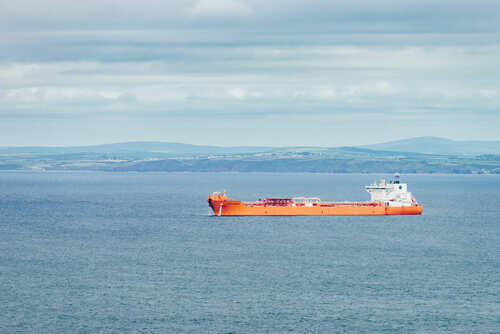
Trump’s seizure of the Venezuelan tanker Skipper marks a bold escalation in sanctions enforcement, using law enforcement authorities rather than wartime powers to physically seize sanctioned oil assets and send a clear message to America’s enemies.
Story Highlights
- U.S. Coast Guard seized Venezuelan oil tanker Skipper under FBI authority, not wartime powers
- Operation targeted shadow fleet vessel with history of Iranian oil smuggling and terrorism links
- Trump administration signals more seizures coming against sanctioned shipping networks
- Venezuela condemns action as “international piracy” while U.S. keeps seized oil cargo
Trump Deploys Navy Assets for Law Enforcement Operation
President Trump authorized a dramatic helicopter boarding operation on December 10, 2025, seizing the sanctioned tanker Skipper off Venezuela’s coast. U.S. Coast Guard personnel, supported by Navy helicopters from the USS Gerald R. Ford, conducted the operation under FBI authority rather than military combat powers. This distinction allows the administration to enforce sanctions through criminal and civil forfeiture laws while avoiding declarations of war against Venezuela.
The operation represents a significant escalation in maritime enforcement capabilities. DHS Secretary Kristi Noem described it as targeting a regime “flooding our country with deadly drugs,” linking the action to broader counternarcotics efforts. Attorney General Pam Bondi emphasized that Skipper had been sanctioned for years due to its role in an illicit network supporting foreign terrorist organizations, providing solid legal grounding for the seizure.
The FBI and “partners” executed a seizure warrant. A ship called
“The Skipper” had just left port in Venezuela when it was seized.The “operation” to seize started at about 6 a.m. today and involved
2-helicopters, 10-Coast Guard members, 10-Marines, and special ops forces. pic.twitter.com/P7tiaNPlml— Agent Applebutt 🍎 aka Jamie Blonde 007 (@8102ops) December 11, 2025
Shadow Fleet Networks Face New Enforcement Reality
Skipper belongs to a roughly 1,000-ship “shadow fleet” that transports sanctioned oil from Russia, Iran, and Venezuela while evading international sanctions through deceptive practices. The vessel, formerly known as Adisa, had engaged in AIS spoofing, broadcasting false location data claiming to be off Guyana while actually loading Venezuelan crude at the José terminal. This type of deception has become standard practice for sanctions-busting operations.
The seizure immediately impacted shadow fleet operations, with multiple tankers reportedly fleeing Venezuelan loading areas following the operation. U.S. officials indicate this may be the first in a series of physical interdictions targeting the estimated 30 sanctioned vessels among 80 tankers operating near Venezuela. This enforcement approach transforms sanctions from paper restrictions into physical risks for sanctions violators.
Constitutional Authority Versus Wartime Powers
The legal framework distinguishes this operation from recent kinetic strikes against drug cartels that killed 87 people under wartime self-defense authorities. Instead, the Skipper seizure relies on established criminal, sanctions, and civil forfeiture laws that allow property seizure without invoking Article II wartime powers. This approach provides stronger legal standing while avoiding escalation to formal military conflict with Venezuela.
Trump’s decision to describe the seized oil as “Well, we keep it, I guess” underscores the forfeiture aspect of the operation. The administration simultaneously imposed sanctions on six shipping companies, six additional vessels, and four individuals including three of Maduro’s nephews. This comprehensive approach targets the financial networks enabling sanctions evasion while maintaining legal boundaries that protect American constitutional principles and avoid unnecessary military escalation.
Sources:
Seizure of Venezuelan oil tanker opens more intense phase in Trump’s campaign against Maduro
Why did the United States seize Venezuelan oil shipment