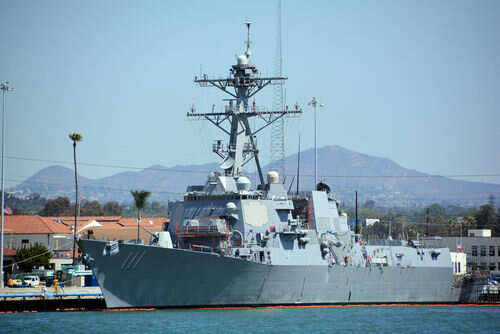
President Trump has abruptly paused a U.S. Navy mission to escort commercial ships through the Strait of Hormuz just one day after launching it, claiming “great progress” in negotiations with Iran despite Tehran’s denial that any talks are occurring—raising questions about whether Americans are being told the truth about a conflict that threatens global oil supplies.
Story Snapshot
- Trump halted “Project Freedom” escort mission on May 5-6 after Iran responded with missile and drone strikes on UAE and Oman
- Administration claims diplomatic breakthrough while Iran denies active negotiations exist, creating confusion about actual status of potential deal
- Dual blockade continues with U.S. Navy blockading Iran and Iran closing Strait of Hormuz, disrupting 21% of global petroleum trade
- Contradictory statements from Trump administration officials suggest internal disagreement over war strategy and objectives
Sudden Reversal Follows Iranian Military Response
The Trump administration launched Operation Project Freedom on May 4, 2026, deploying U.S. Navy vessels to escort commercial ships through the Strait of Hormuz. Within hours, Iran’s military warned the mission violated the existing ceasefire and reportedly launched missiles and drones targeting the United Arab Emirates and Oman. By May 5-6, Trump announced a pause in the escort operations, citing alleged diplomatic progress. The rapid reversal raises concerns about the administration’s strategic planning and whether adequate consideration was given to predictable Iranian countermeasures before initiating the mission.
Conflicting Claims About Negotiations Create Credibility Crisis
President Trump insists the pause reflects “great progress” toward a deal with Tehran, characterizing the war as “very complete, pretty much” and claiming the U.S. has “already won the war in many ways.” However, Iranian officials have previously denied any active negotiations are occurring and called Trump “deceitful” regarding claimed talks. This fundamental contradiction leaves Americans—and global markets dependent on Persian Gulf oil—unable to determine whether genuine diplomatic progress exists or whether the pause simply represents a tactical retreat following Iran’s military response to the escort mission.
Administration Sends Mixed Messages on War Status
While Trump claims the conflict is essentially over, Defense Secretary Pete Hegseth characterized the war as the “beginning of building a new country,” suggesting a longer-term strategic vision. Secretary of State Marco Rubio confirmed that “Operation Epic Fury” offensive phase has concluded and the U.S. is shifting to a “strategic, watch-and-wait approach.” These contradictory characterizations from senior administration officials indicate either deliberate confusion tactics or genuine internal disagreement about objectives. For ordinary Americans watching gas prices fluctuate with Middle East tensions, the lack of clear messaging from leadership undermines confidence that anyone in Washington has a coherent plan.
Dual Blockade Continues Despite Diplomatic Claims
Regardless of claimed negotiating progress, the fundamental military situation remains unchanged. The U.S. Navy maintains its blockade of Iran while Iran continues closing the Strait of Hormuz to commercial shipping. This dual blockade creates mutual economic pressure—severe hardship for Iran’s population and disrupted global oil markets affecting American consumers. Trump’s claim that the Strait is “open” directly contradicts the documented Iranian blockade, representing either deliberate misinformation or dangerous disconnection from operational reality. The continuation of both blockades suggests any diplomatic progress remains superficial rather than substantive.
Deep State Patterns Emerge in Crisis Management
The episode exemplifies troubling patterns that frustrate Americans across the political spectrum. The conflict began when the U.S. and Israel launched airstrikes on Iran on February 28, 2026, assassinating Supreme Leader Ali Khamenei during active nuclear negotiations—an escalation that bypassed normal diplomatic channels. Now, contradictory statements from administration officials, claims of negotiations Iran denies exist, and rapid policy reversals suggest decision-making driven by factors the public cannot see or understand. Whether viewed from right or left, citizens deserve straight answers about whether their government is leading them toward peace or stumbling toward expanded conflict that could spike energy costs and potentially require military commitment.
The Strait of Hormuz handles approximately 21 percent of global petroleum trade, making its closure a matter of international economic security extending far beyond U.S.-Iran relations. Regional allies including Saudi Arabia and the UAE face economic disruption, while global consumers experience oil price volatility and supply uncertainty. The unresolved status of Iran’s nuclear program, the role of regional proxies like Hezbollah, and the post-Khamenei Iranian leadership structure all complicate potential negotiations. Americans watching from home have legitimate reason to question whether their leaders possess either the competence or the candor to navigate these complexities without triggering consequences that ordinary families will bear through higher costs and potential military casualties.
Sources:
Latest Analysis: War with Iran – CSIS
UAE says it’s intercepting Iranian missiles and drones
Trump urges Iran to ‘do the smart thing’