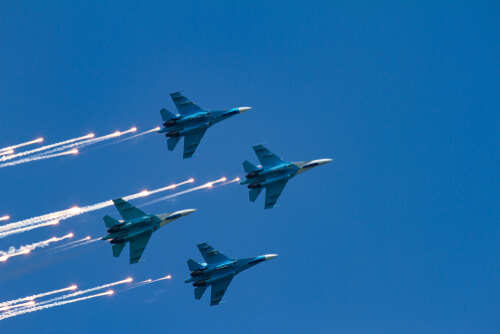
Pakistani fighter jets landing in Saudi Arabia signal a bold new mutual defense pact that could reshape Middle East power dynamics amid soaring energy threats from Iran.
Story Highlights
- Pakistani Air Force fighter jets and support aircraft arrived at King Abdulaziz Air Base on April 11, 2026, launching the first visible deployment under the September 2025 mutual defense pact.
- Saudi Defense Ministry cites joint military coordination and operational readiness to counter recent Iranian attacks on energy infrastructure.
- Deployment coincides with Islamabad’s diplomatic talks to end the Iran war, blending military resolve with peace efforts.
- Pakistan, a nuclear-armed ally, bolsters Saudi security while demonstrating strategic commitment in a volatile Gulf region.
Deployment Details
Pakistani military aircraft, including fighter jets and support planes from the Pakistan Air Force, touched down at King Abdulaziz Air Base in Saudi Arabia’s Eastern Province on April 11, 2026. The Saudi Defense Ministry confirmed this as the initial operational step under their bilateral mutual defense agreement signed in September 2025. That pact binds both nations to view attacks on one as assaults on both, elevating their decades-old security ties into concrete military action. This move underscores Pakistan’s role as a reliable partner providing tangible force projection.
Pakistani Warplanes Land In Saudi Arabia For Start Of Mutual Defense Pacthttps://t.co/4daOlf94Dj
— Saúl Morales (@WRSN101) April 12, 2026
Regional Tensions Driving the Pact
Iranian attacks in recent weeks targeted Saudi energy infrastructure, killing a Saudi national and heightening fears of broader Gulf instability. These strikes disrupted vital oil supplies, threatening global energy markets that Americans rely on for affordable fuel. Saudi Arabia, facing direct threats, turned to its longstanding ally Pakistan for enhanced defense. The deployment strengthens joint operational readiness exactly when regional actors like Iran test boundaries. Meanwhile, conflicts involving Israel and the United States add layers of uncertainty, making this alliance a prudent counterweight to aggression.
Strategic Implications for U.S. Interests
Pakistan’s nuclear capabilities and battle-tested air force now fortify Saudi defenses, signaling resolve to adversaries without immediate escalation. This “speak softly and carry a big stick” approach mirrors principles of deterrence that prioritize strength over endless negotiations. For President Trump’s America First agenda, stable Gulf energy flows remain critical to curbing high costs from past green energy overreach. Yet, as bilateral pacts proliferate amid federal government gridlock at home, Americans on both sides grow wary of distant entanglements that drain resources while elites prioritize power over people. This development highlights how nations act decisively when survival demands it— a lesson for Washington’s fractured leadership.
The Saudi-Pakistani axis sets a precedent for rotational forces and joint exercises, potentially stabilizing the region long-term. Energy security gains directly benefit global markets, including U.S. consumers battered by inflation. Pakistan balances this by hosting U.S.-Iran talks in Islamabad, proving military backbone complements diplomacy. Conservatives applaud such self-reliant alliances that sidestep bloated international bureaucracies, fostering stability through proven partnerships rooted in mutual interest.
Pakistani Warplanes Land In Saudi Arabia For Start Of Mutual Defense Pact https://t.co/Y0rVUBi0Hp #Money #Finance #Economics #Market
— Alen Karabegovic (@AlenKarabegovic) April 12, 2026
Broader Bipartisan Frustrations
Americans left and right share mounting distrust in a federal government more focused on elite self-preservation than securing the American Dream. As Saudi Arabia and Pakistan forge ahead with practical defense measures, the contrast sharpens: decisive action abroad versus domestic paralysis on borders, spending, and energy independence. This pact reminds us that strong bilateral ties, not globalist overreach, best safeguard interests. Voters demand leaders who prioritize citizen prosperity over reelection games, echoing founders’ vision of limited government serving the people.
Sources:
TRT World: Official Saudi Defense Ministry statement; historical context
RIA Novosti/NAMPA: Official announcement; specific date and location
Middle East Eye: Defense pact details; official statements
The Cradle: Deployment confirmation; strategic context
Bloomberg: Official ministry statement; nuclear-armed Pakistan context
Arab News: Comprehensive analysis; analyst perspectives; regional context
The True Story: Deployment characterization as “first visible move”