With California’s leaders invoking emergency powers to suspend housing law S.B. 9 after the Palisades wildfire, critics warn this government overreach undermines property rights and sets a dangerous precedent for local control.
Story Snapshot
- Governor Newsom and Mayor Bass halted S.B. 9, blocking duplexes and lot splits in fire-ravaged Pacific Palisades.
- Officials justify the move as necessary for fire safety and infrastructure, but pro-housing advocates see political motives.
- The suspension intensifies debate over state mandates, local control, and the use of emergency powers after disasters.
- Legal and political challenges are mounting, with broader implications for property rights and future housing reform.
Emergency Orders Freeze State Housing Law in Wildfire Aftermath
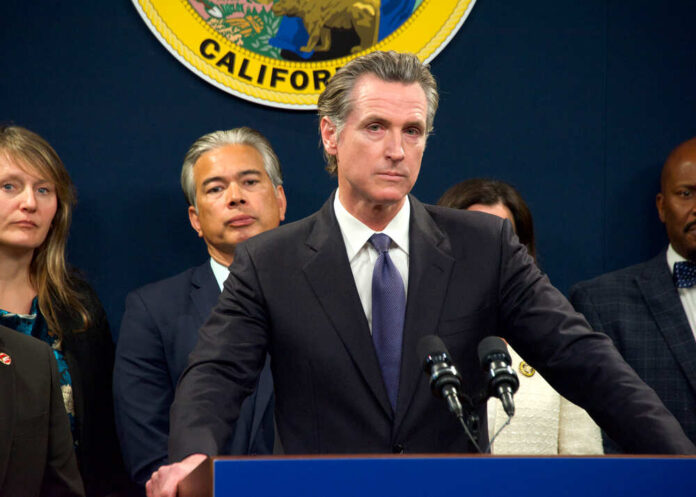
In July 2025, California Governor Gavin Newsom and Los Angeles Mayor Karen Bass signed executive orders suspending Senate Bill 9 (S.B. 9) in the Pacific Palisades, a community recently devastated by wildfires.S.B. 9, enacted in 2021, allows eligible single-family lots to be subdivided or developed with up to four units as part of California’s effort to ease housing shortages. The sudden pause, justified as a response to local infrastructure strain and fire danger, has left many residents and advocates questioning the true motivations behind the move.
Previous executive orders by Gov. Newsom following past wildfires suspended environmental review mandates under CEQA and the Coastal Act to accelerate recovery—rather than restrict rebuilding opportunities. The Palisades, a wealthy, low-density area with a notorious history of resisting densification, now stands as the epicenter of a high-stakes battle over who controls land use in disaster zones. Local officials, including Councilmember Traci Park, cite concerns about “opportunistic developers” and the risk of increased density worsening fire hazards. Yet, with only seven S.B. 9 applications filed out of 400 rebuilding efforts, critics argue that the threat is overblown and the orders amount to a political gesture, not a genuine risk mitigation strategy.
Stakeholders Clash Over Motives and Impact
The orders triggered immediate backlash from pro-housing advocates and legal groups. YIMBY Law, led by Sonja Trauss, denounced the suspension as a setback to much-needed reform, asserting that S.B. 9 already contains fire safety provisions and allows for local discretion on health and safety. Trauss contends the emergency orders simply bend to local NIMBY pressure, undermining the intent of state reform and burdening families seeking to rebuild. Newsom and Mayor Bass have cited the destruction of over 5,000 single-family homes in the Palisades fire, primarily in Very High Fire Hazard Severity Zones, as justification for limiting S.B. 9 density in the rebuild process.
Legal experts note that this use of emergency authority could establish a troubling precedent, enabling future leaders to sideline state laws after disasters under the guise of public safety. Critics warn that such actions erode property rights, diminish predictability for homeowners and builders, and threaten to chill reform efforts statewide. The tension between state mandates and local autonomy—especially in high-income enclaves—remains unresolved and is likely to grow fiercer as legal challenges advance.
Wider Implications for Property Rights and State Reform
The Palisades suspension may embolden other cities and counties to seek exemptions from state housing laws, especially after disasters. While local governments argue the pause is essential for safety and infrastructure recovery, housing experts caution that ongoing resistance only worsens California’s affordability crisis and exacerbates displacement. Economically, the restrictive rebuilding process could drive up costs, limit supply, and put additional pressure on already burdened families. Socially, the move sows division between disaster victims, new residents, and established communities, raising questions about fairness and long-term recovery priorities.
L.A. lost some 5,000 homes in this year's Palisades fire.
A grand total of 7 people have since tried to use S.B. 9, a state law allowing duplexes, lot splits, to rebuild their burnt properties.
Newsom and Bass have now suspended that law, citing fears of overdevelopment. https://t.co/58KZDUcYd8
— Christian Britschgi (@christianbrits) August 5, 2025
For conservative readers wary of government overreach, the episode highlights a broader trend: emergency powers intended for recovery are now weaponized to block property rights and slow reform. With the debate heating up, the outcome of current legal challenges and future legislative responses will shape not just the Palisades, but the future of housing and individual liberty across California.
Sources:
Inclusionary Zoning | Public Interest Law Project
Lawsuit takes aim at commonly used rule to create affordable housing in California | LAist
East Palo Alto Inclusionary Zoning | Pacific Legal Foundation
Family challenges California city’s unconstitutional zoning “extortion” | Pacific Legal Foundation
Affordable housing developer fees | CalMatters