A war-ending “peace” deal between Washington and Tehran has been signed in secret, takes effect immediately, and yet can still be walked away from in 60 days — raising real questions about who this helps and who is being played.
Story Snapshot
- The United States and Iran signed a 14-point memorandum to halt the war and reopen the Strait of Hormuz, with “immediate” effect.
- The text is still not fully public, was dictated anonymously to reporters, and can be abandoned by either side during a 60-day bargaining window.
- The deal promises sanctions relief and even a massive reconstruction plan for Iran, while offering thin details on enforcement and verification.
- Confusion over multiple signings and secret terms feeds the sense that powerful insiders are cutting quiet deals while ordinary Americans bear the costs.
What exactly did Trump and Iran just sign?
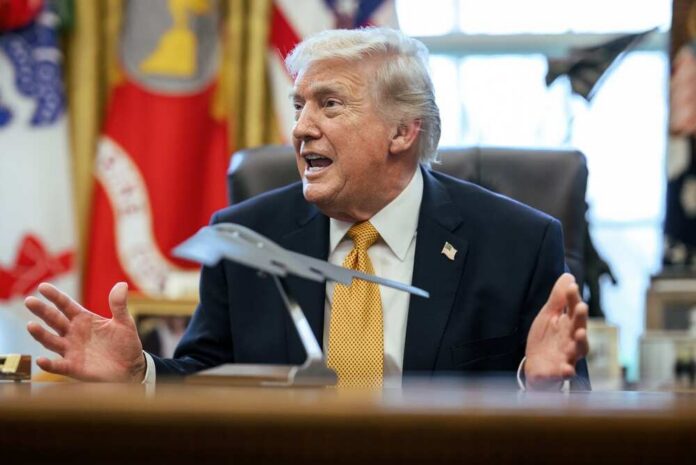
U.S. President Donald Trump says he signed a U.S.-Iran memorandum of understanding to end the war while at the Palace of Versailles in France, telling reporters, “It’s signed. Signed in Versailles. Just signed it.”[7] Pakistani Prime Minister Shehbaz Sharif said leaders of both countries have signed the accord and that it “shall enter into force with immediate effect.”[3] Officials describe a 14-point framework that stops military operations, reopens the Strait of Hormuz, and begins a 60-day period to negotiate a final agreement.[3]
Senior U.S. officials say the text was actually signed electronically first, then physically in Versailles during Trump’s dinner with French President Emmanuel Macron.[2][7] They told reporters the memorandum’s wording has not changed since that earlier digital signature and insisted it is “final” as a text.[4] At the same time, those officials admit either side can walk away at any point over the next 60 days if talks on a fuller deal collapse, underlining that this is a framework, not a permanent peace.[2]
The main promises: guns go quiet, oil flows, money moves
The memorandum calls for an immediate halt to military operations “on all fronts,” including in Lebanon, where fighting between Israel and Hezbollah has raged.[3] Iran is required to reopen the Strait of Hormuz right away, while the United States is to lift its naval blockade of Iranian ports so global shipping and energy flows can resume.[3] Toll-free passage through the strait is guaranteed for only about two months, which eases short-term pressure on oil markets but leaves long-term access unresolved.[2][3]
In exchange, the United States will “waive but not permanently end” some wide-ranging sanctions on Iran after the deal takes effect.[3] Officials and reporters describe moves to release billions of dollars in frozen Iranian assets and reopen Iran’s ability to sell oil abroad, steps that could pump major cash into Tehran’s economy.[9] Public briefings also reference a reconstruction or economic program for Iran worth at least $300 billion, backed by American allies, though no clear financing plan or oversight structure has been released.[9]
What about nuclear weapons and verification?
Trump has told audiences this arrangement will keep Iran from “ever” getting a nuclear weapon, framing it as a win that delivers everything Washington wanted and more.[9] Reporting on the 14-point outline says Iran is to dilute its stockpile of highly enriched uranium and recommit not to build or obtain nuclear arms, echoing language from past nonproliferation agreements.[2][3] For many Americans, especially after years of debate over the 2015 nuclear deal, stopping Iran’s bomb program sounds like a vital goal that should be spelled out in detail.
The problem is that key nuclear terms are still fuzzy, and the enforcement plan looks thin compared with earlier accords. Officials told reporters about “minimum standards” for downblending uranium and hinted at an inspection framework but have not published any full compliance or snapback mechanism.[2][3] Unlike the 2015 Joint Comprehensive Plan of Action, which tied sanctions relief to verified nuclear steps, this memorandum appears to front-load relief and leave much of the verification to future talks.[17] That fuels concern, on both left and right, that leaders are trusting promises from Tehran without the kind of tough, transparent checks ordinary citizens expect.
Why the secrecy and confusion over multiple signings matters
After days of silence, anonymous U.S. officials literally read the draft memorandum to journalists, saying Iran had not released the text and that a formal ceremony would follow.[4] They acknowledged that Trump and Vice President JD Vance had digitally signed the agreement on Sunday, before Trump later declared, on camera, that he signed it at Versailles on Wednesday.[2][4] Another ceremony is still scheduled in Switzerland, meaning the same “deal” now has at least three different signing moments, each described as important, which makes it harder for citizens to know when it truly became binding.
That confusion might sound like inside baseball, but it goes straight to questions many Americans already ask about the “deep state” and political elites. When the public is told the war is ending, sanctions are shifting, and hundreds of billions might move overseas, they reasonably expect clarity about what was signed, when, and by whom. Instead, they get anonymous briefings, changing timelines, and a promise that the full text will be released later, even as the agreement is said to be “in effect” right now.[3][9] This pattern feeds the belief that big decisions happen out of sight while voters on both sides are left to argue over partial information.
A fragile framework in a long, troubled history
Experts who study U.S.–Iran relations say this memorandum fits a long pattern: big headlines and hopeful language, followed by hard fights over enforcement, sanctions, and who gave up what.[15][16] For more than forty years, every U.S. president has tried, at some point, to reach out to Iran, often through secret or indirect channels, only to run into the same issues of trust, verification, and regional power politics.[16] Earlier deals, from the 1981 hostage accords to the 2015 nuclear agreement, mixed real gains with backlash at home from citizens who felt misled or cut out of the process.
The moment President Trump signs the Iran deal at the Palace of Versailles.
The agreement was finalized during a dinner hosted by French President Emmanuel Macron inside the historic palace. The signing marked a major diplomatic milestone after months of negotiations aimed at end pic.twitter.com/UF23i3to2u— Johnn Kennedy Jnr (@Real_johnFK_JNR) June 18, 2026
The Versailles memorandum could be a step toward ending a costly and dangerous war, which many Americans on both the right and left would welcome.[7][21] But its 60-day sunset, unclear enforcement tools, and heavy use of secrecy also make it look like another short-term fix negotiated by distant elites. With Congress skeptical, Iran’s own politics complex, and trust in Washington already low, the true test will be whether leaders finally show the public the full text and a credible plan to enforce it—before more lives and dollars are spent on promises that may not hold.
Sources:
[2] Web – Trump signed US-Iran deal at Versailles: Macron welcomes MoU …
[3] Web – US-Iran peace deal: Trump signs MoU at Versailles, confirms White …
[4] Web – Trump signs US-Iran deal in Versailles- reports By Investing.com
[7] Web – Trump signs US-Iran deal in Versailles- reports
[9] Web – The Latest: Trump says he signed an agreement on ending the war in …
[15] YouTube – Iran War Deal: Trump signs memorandum while dining at Versailles, …
[16] Web – Iran–United States relations – Wikipedia
[17] Web – Documenting Iran-U.S. Relations, 1978-2015
[21] YouTube – The history of US-Iran relations – from friendly to violent | The …