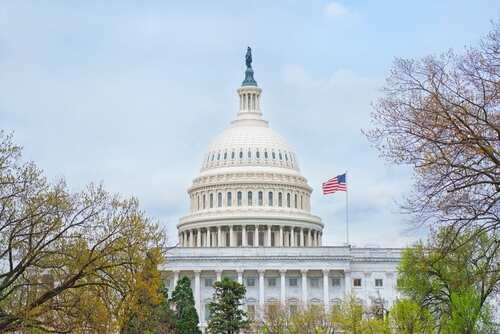
In the wake of Congressional gridlock, a government shutdown is causing mass layoffs and chaos across federal agencies, highlighting the urgent need for fiscal responsibility.
Story Snapshot
- The federal government shutdown began at midnight on October 1, 2025, following Congress’s failure to pass necessary funding legislation.
- Hundreds of thousands of federal workers face furloughs, and the private sector anticipates mass layoffs of federal contractors.
- The budget impasse is driven by partisan disagreements over spending priorities, with no immediate resolution apparent.
- The funding lapse is projected to disrupt essential public services and contribute to economic uncertainty.
Shutdown Impact on Federal Workers and Services
The U.S. government shutdown, initiated at midnight on October 1, 2025, marks a significant disruption in federal operations. With Congress unable to pass a funding bill for the new fiscal year, hundreds of thousands of federal employees were placed on furlough, and non-essential services ceased or were severely limited.
As the shutdown continues, private-sector federal contractors have begun announcing plans for workforce reductions, citing the immediate financial strain from halted government payments and project freezes. This economic consequence is expected to extend beyond the public sector, potentially impacting local economies reliant on federal employment and contracts.
Gov’t Shutdown Reality:
•HHS: 40%+ furloughed (NIH, CDC, research stalled)
•Defense: Nearly half of DoD civilians sidelined
•FAA: 11,000 furloughed, but air traffic keeps moving
•Parks: Open, but bare-bones pic.twitter.com/17JmVeAht9
— Sheri™ (@FFT1776) October 1, 2025
Political Standoff and Economic Consequences
The current shutdown highlights the contentious nature of budget negotiations within a divided government. Congressional leaders from both parties continue to leverage the funding impasse to advance their respective policy agendas. The White House has urged Congress to pass a funding bill to restore government functions.
Economic analysts have warned that a prolonged shutdown could negatively affect the national economy, with organizations like Moody’s Analytics issuing warnings about potential reductions in GDP growth. Federal employee unions and advocacy groups have expressed frustration, emphasizing the social and economic toll the lapse in appropriations imposes on workers facing missed paychecks.
Long-Term Implications and Public Trust
The political and economic fallout from the shutdown could have lasting implications. A sustained funding lapse risks eroding public trust in the government’s capacity for effective operation. Furthermore, repeated budgetary impasses contribute to instability, highlighting the systemic challenges in achieving consistent fiscal discipline and managing the annual budget process.
For local communities with high concentrations of federal employment, the economic impact is particularly severe due to reductions in consumer spending. As negotiations proceed, public focus remains on the need for Congress to reach a resolution that restores government functionality and addresses the broader issues of budgetary responsibility.
Sources:
Congressional Budget Office (CBO), “The Effects of the Partial Federal Shutdown,” 2019.
Moody’s Analytics, “Economic Impact of a Government Shutdown,” 2023.