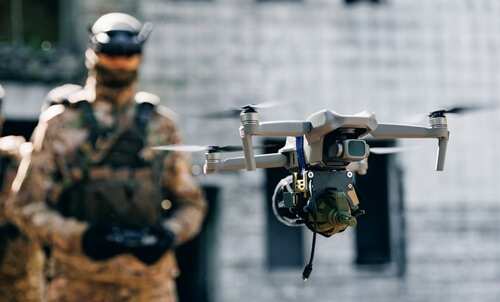
A new era of American air dominance has begun, and it’s about time the Pentagon put U.S. innovation—rather than foreign-made junk—back at the center of our defense, but will it be enough to finally put America first and keep our skies secure?
At a Glance
- The Trump administration launches “Unleashing American Drone Dominance,” prioritizing U.S.-made drones for military and civilian use.
- Pentagon accelerates approval of hundreds of American drone products, focusing on low-cost, attritable systems and counter-drone tech.
- Executive orders slash regulatory barriers and push aggressive support for domestic drone manufacturing, targeting supply chain security.
- American industry and jobs take center stage, with the Pentagon vowing to outpace foreign adversaries—especially China and Russia.
Trump’s Drone Revolution Finally Puts America First
The days of watching America’s adversaries leapfrog us in drone warfare are over. On June 6, 2025, President Trump signed two executive orders aimed at unleashing a new era of U.S. drone dominance and restoring sovereignty over American airspace. The Pentagon, under Secretary of Defense Pete Hegseth, wasted no time: the Department of Defense is now clearing hundreds of domestically produced drone systems for rapid deployment, a move designed to end America’s dangerous dependence on Chinese-made drones and foreign components. For over a decade, U.S. military and commercial drone programs were hamstrung by bureaucratic red tape and foreign supply chain vulnerabilities. Now, the new policy slashes those barriers, prioritizes American manufacturers, and launches pilot programs for next-generation electric vertical takeoff and landing craft. The message from the White House is clear: American jobs and national security come first.
The Executive Orders are more than political theater; they are a blueprint to reclaim American technological leadership. The Pentagon’s focus is on “low-cost, attritable” drone swarms and advanced counter-drone systems—the very tools that have shifted the balance of power on the modern battlefield, as seen in Ukraine. By empowering state and local authorities to manage UAS operations and giving U.S. manufacturers a homefield advantage, the administration aims to flood the skies with American innovation, not imported gadgets loaded with security risks.
🇺🇸 “Unleashing American Drone Dominance” — That’s the goal of a new executive order signed by Donald Trump, aimed at accelerating U.S. drone development and production.
🔗 Read the full breakdown on FW Mag 👇https://t.co/RaVje9B4NS
— FWMag (@FWMag_defence) June 18, 2025
Pentagon Moves Fast, Industry Responds
Secretary Hegseth’s marching orders are unambiguous: accelerate innovation and field new drone capabilities for U.S. warfighters now. The Pentagon’s July 2025 showcase unveiled eighteen autonomous prototypes under rapid development, including long-endurance drones and unmanned surface vehicles—systems designed to overwhelm enemy defenses in numbers and sophistication. Federal agencies are being forced to ditch foreign-made drones and prioritize American-built systems, a seismic shift for procurement that should have happened years ago. The administration’s “America First” industrial policy is breathing new life into domestic drone makers, who are seeing a surge in funding and contracts. The defense sector is abuzz as opportunities for high-tech manufacturing jobs multiply—and for once, it’s American workers, not overseas factories, benefiting from government spending. State and local governments, once sidelined, are now being empowered to track and manage drone activity, tightening security over critical infrastructure and public spaces.
White House officials and Pentagon leaders argue this breakneck pace is necessary. China and Russia have poured billions into drone swarms and autonomous systems—threatening to outmatch U.S. forces with sheer quantity and speed. The Trump administration’s plan is to out-innovate the competition, ensuring that American warfighters never face a technological disadvantage on any front. The long-overdue shift to domestic production is not only about security, but about American pride and economic resurgence. For too long, taxpayer dollars have subsidized foreign companies and adversaries. That era is ending.
Impacts: Security, Jobs, and the Woke Critics
The immediate results are striking: domestic drone production is ramping up, the Pentagon’s arsenal is expanding, and counter-drone capabilities are being sharpened to defend everything from power plants to military bases. U.S. manufacturers—starved for years by Washington’s globalist procurement policies—are now at the center of the action, and the defense industrial base is being revitalized. The administration touts job creation and supply chain security as top priorities, with spillover benefits expected in commercial fields like agriculture, logistics, and emergency response. Of course, critics on the left are already wringing their hands over “expanded authorities” and the supposed risks of autonomous warfare. Some academic voices fret about ethics and international “arms races”—as if letting China and Russia dictate the pace of innovation is a rational alternative. The facts are plain: the Ukraine conflict proved that mass-produced, low-cost drones are a battlefield equalizer, and the U.S. cannot afford to lag behind.
The administration’s approach is not without challenges. Regulatory and privacy debates are sure to intensify as drones become more common in daily life, and Congress will need to keep a close eye on funding and oversight. But the urgency is real, and the bipartisan consensus on reversing foreign dependency is stronger than ever. For families worried about national security, and for American workers tired of watching their jobs shipped overseas, this drone strategy is long overdue. The White House is betting that a revitalized drone industry will not only secure the homeland but restore American leadership in global technology markets.