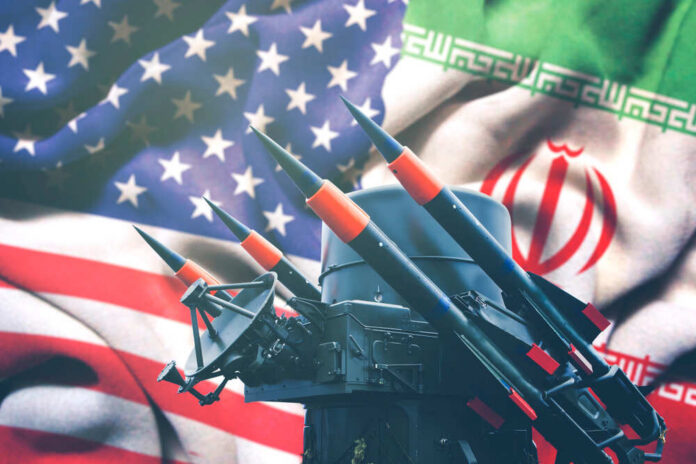
After a year of tough talk about “obliterating” Iran’s nuclear capabilities, U.S. intelligence now says the program’s clock may be ticking almost as fast as before.
Quick Take
- Recent U.S. intelligence assessments report only limited additional damage to Iran’s nuclear program since the June 2025 strikes.
- Officials still estimate Iran’s nuclear “breakout” window at roughly 9–12 months, largely because material and expertise can be reconstituted.
- Conflicting public claims—Trump administration optimism versus more cautious intelligence and international assessments—highlight the fog of war and the politics of messaging.
- Reduced IAEA access leaves a bigger verification gap, increasing uncertainty about where enriched uranium and key equipment may be located.
What U.S. intelligence is saying now—and why it matters
U.S. intelligence assessments circulating in May 2026 indicate there has been only limited additional damage to Iran’s nuclear program since the major U.S. strikes in June 2025. That distinction—“additional” damage—matters because it implies the primary disruption happened during the initial attack window, with less measurable degradation afterward. Intelligence estimates also reportedly keep Iran’s breakout timeline at around 9–12 months, a sobering metric for policymakers focused on deterrence.
Iran’s ability to recover is tied to fundamentals that bombs do not easily erase: trained personnel, dispersed know-how, and stockpiles that can be moved or hidden. Reporting referenced in the research also notes roughly 440 kilograms of near-weapons-grade uranium as a key concern, because enrichment from high levels to weapons-grade is faster than starting from low-enriched material. When verification is limited, uncertainty itself becomes a strategic asset for Tehran—and a political liability in Washington.
June 2025 strikes: real destruction, but not guaranteed dismantlement
The June 22, 2025 operation targeted major nodes—Natanz, Fordow, and Isfahan—using B-2 bombers, bunker-busting munitions, and Tomahawk missiles. Subsequent assessments described severe damage at struck sites, and the IAEA later said “almost all sensitive equipment” at Fordow was destroyed. Even so, the broader question has never been whether the facilities were hit, but whether the program was dismantled in a way Iran could not rebuild quickly.
History suggests why that’s hard. Past nonproliferation strikes—such as Israel’s 1981 Osirak attack and the 2007 Al-Kibar operation—delayed adversary programs but also incentivized dispersal and hardening. The same logic appears in the current case: the research describes Iranian “special measures” and likely dispersal steps taken ahead of the June 2025 strikes. If enriched material and some production capacity were moved early, later efforts would naturally yield limited “additional” damage.
The messaging gap: bold political claims versus cautious assessments
The research highlights a stark contrast between administration messaging and intelligence community caution. The Trump administration publicly characterized Iran’s nuclear facilities as “obliterated,” while Pentagon statements suggested a 1–2 year setback. Meanwhile, leaked or reported intelligence assessments portrayed a shorter delay—months in early reports—and more recently concluded that the breakout window remains roughly unchanged. Those competing narratives shape public trust, especially when Americans already suspect Washington is selling a storyline.
This dynamic also feeds a broader, bipartisan frustration: the sense that government institutions communicate for advantage first and clarity second. For conservatives, the concern is not simply whether the strike was justified, but whether Washington is leveling with the public about results and risk. For many on the left, skepticism runs toward secrecy, war powers, and accountability. The facts available here point to a central problem shared across ideologies: opaque verification and politicized interpretation.
Reduced IAEA access increases the danger of “unknowns”
International inspectors matter because they reduce guesswork—yet the research indicates IAEA access has been reduced, widening uncertainty around Iran’s stockpiles and the status of key infrastructure. The IAEA’s public assessments can describe damage at known sites, but they cannot confirm what they cannot see. That makes “breakout time” estimates less about precise measurement and more about informed judgment based on incomplete visibility and assumptions about hidden facilities or relocated material.
US Intelligence Only Sees Limited Additional Damage To Iran Nuclear Program Since Last June https://t.co/yjhEyVYDP6
— zerohedge (@zerohedge) May 5, 2026
For the U.S., Israel, and regional partners, the policy implications are practical rather than rhetorical: deterrence depends on credible intelligence, and credible intelligence depends on access and verification. If the newest assessments are correct that additional damage has been limited since June 2025, Washington faces an uncomfortable menu of choices—stronger pressure campaigns, tougher enforcement of sanctions, renewed diplomacy with stricter verification, or further military action—each with real costs, risks, and political blowback at home.
Sources:
2025 United States strikes on Iranian nuclear sites
Disruption or Dismantlement? Diverging Assessments of Iran Nuclear Strikes
Iran’s nuclear facilities have been obliterated—and suggestions otherwise are fake news
US Intelligence Reports Limited Damage to Iran’s Nuclear Program
US Intelligence Sees Limited Damage to Iran Nuclear Program