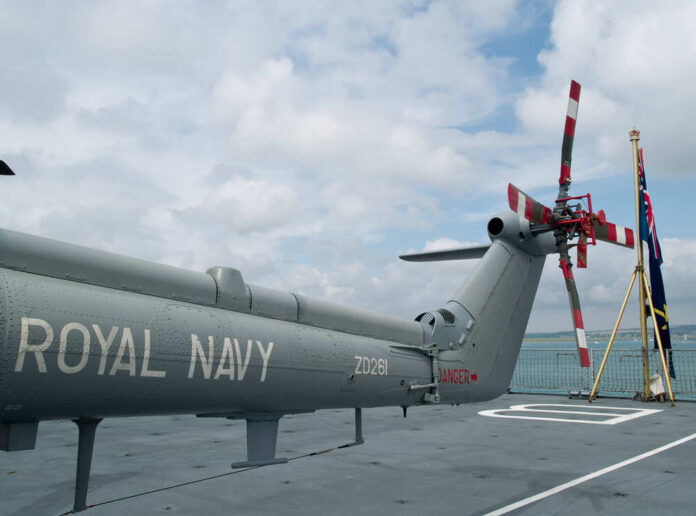
Modern carrier operations are conducted in a thin band between routine strategic “probing” and genuine escalation, and the recent interception of a Russian Tu‑142 near HMS Prince of Wales shows how quickly a familiar pattern can edge toward dangerous instability when underwater surveillance and close‑quarters flying are involved.
Key Points
- A Russian Tu‑142 “Bear‑F” maritime patrol aircraft repeatedly approached the UK carrier strike group led by HMS Prince of Wales in the Norwegian Sea and dropped sonobuoys close to the carrier.
- The UK Ministry of Defence publicly branded the behaviour “unsafe and unprofessional,” citing low‑altitude flying, close proximity to the carrier, and ignored radio calls on international safety frequencies.
- Two F‑35B Lightning II jets from the carrier were scrambled to intercept and escort the Russian aircraft away, demonstrating the deterrent and air‑policing role of the UK Carrier Strike Group.
- Independent technical data on altitude, buoy type, and radio communications has not been released, so the “unsafe” judgment rests largely on UK MoD testimony amid a broader pattern of Russian probing near NATO forces.
Routine probing and why this particular intercept stands out
To understand why this incident has attracted such pointed language from the UK Ministry of Defence, you have to start with the baseline. Russian long‑range aviation and maritime patrol aircraft have for years conducted regular flights near NATO airspace and naval task groups—especially in the High North and North Atlantic—as part of a strategy that blends routine surveillance with deterrence signalling. NATO officials and open‑source tracking consistently show multiple Tu‑142 and Tu‑95 “Bear” flights each month near UK and allied assets, often prompting intercepts by Quick Reaction Alert fighters or carrier‑based jets.
Most of those episodes follow a familiar script: Russian aircraft operate in international airspace, often without responding to civilian air traffic control, UK or allied fighters launch, visually identify and escort them, and both sides call the interaction “professional,” even when politically tense. The difference this time lies in a specific combination of factors: the dropping of sonobuoys near the UK’s flagship carrier, the repeated close approaches at low altitude described by the MoD, and the allegation that the Russian crew ignored international safety radio calls.
What the UK says happened: sonobuoys, proximity, and ignored calls
According to the UK Ministry of Defence account, a Russian Tu‑142 Bear‑F maritime patrol aircraft approached the HMS Prince of Wales carrier strike group in the Norwegian Sea during NATO operation FIRECREST. The aircraft is said to have flown at low altitude and “unnecessarily close” to the carrier, repeatedly closing in on the strike group. At some point in this sequence, the Russian crew dropped a pattern of sonobuoys—disposable underwater acoustic sensors—into the water near the carrier.
MoD releases and subsequent reporting describe these buoys as devices used to track ships and submarines, framing the deployment as an intelligence‑gathering move aimed at assessing the carrier group’s underwater defences and perhaps nearby submarines. Sonobuoy drops in contested waters are not novel: Russian and NATO anti‑submarine aircraft routinely seed buoys to monitor submarine traffic or undersea infrastructure. What elevates this case is their proximity to a NATO flagship during an ongoing deterrence mission focused explicitly on protecting undersea cables and pipelines from Russian activity.
The UK states that repeated radio calls were made to the Tu‑142 on international safety frequencies—standard practice when one aircraft is judged to be flying in a way that endangers others—but that these calls went unanswered. In MoD language, combining low‑altitude, close proximity, sonobuoy deployment and silence on the radio crosses the line from routine probing to behaviour that is “unsafe and unprofessional.” Visual imagery released by the MoD and carried by outlets such as Portsmouth News shows the Bear‑F in close visual range of the carrier, reinforcing the impression of a deliberate approach rather than a distant observation flight.
The UK Carrier Strike Group’s role and the F‑35 interception
HMS Prince of Wales leads the UK Carrier Strike Group, a formation built precisely to operate in contested environments like the High North. The group combines the carrier with a Type 45 destroyer, frigates, a nuclear‑powered attack submarine, and Royal Fleet Auxiliary support ships, along with Merlin Mk2 and Wildcat helicopters tailored for anti‑submarine and surface threat detection. Under Operation FIRECREST, the strike group’s mission includes deterring Russian naval activity and guarding critical undersea infrastructure such as fiber‑optic cables and energy pipelines in the North Atlantic.
When the Tu‑142 approached and dropped sonobuoys, two F‑35B Lightning II jets embarked on Prince of Wales—drawn from 809 Naval Air Squadron and 617 Squadron—were scrambled to intercept. Carrier‑borne F‑35Bs are central to the UK’s modern deterrent posture: with advanced sensors, stealth characteristics, and networked data links, they can rapidly detect, identify, and shadow aircraft like the Bear‑F while feeding targeting and surveillance information back to the strike group.
Reports indicate that the F‑35s intercepted the Tu‑142 and escorted it away from the carrier group, effectively pushing the Russian aircraft out of the most sensitive zone surrounding the carrier. The interception itself followed the familiar choreography of NATO air policing—launch, intercept, visual escort, and gradual separation—yet the MoD chose to underscore the incident publicly, arguably to demonstrate both capability and resolve ahead of a NATO summit and a Defence Secretary visit to the carrier.
How dangerous was it, really? Separating doctrine from political framing
From a tactical perspective, several elements reasonably justify concern. Low‑altitude flying close to a large warship complicates collision‑avoidance margins and leaves less room for human error or mechanical failure. Ignoring radio calls on international safety frequencies undermines the layered communication that is meant to prevent misunderstandings from escalating. Deploying sonobuoys near a carrier during a deterrence mission can, in doctrine terms, be read as probing that carrier’s underwater screen and reaction profile—behaviour that defense analysts have long catalogued as part of a Russian “intelligence‑cum‑deterrence” toolkit.
At the same time, the hard evidence available to the public is limited. No raw radar telemetry, ADS‑B data, or precise altitude tracks have been released to substantiate the “low altitude” characterization. There is no public technical breakdown of the sonobuoy types, frequencies, or deployment pattern to demonstrate that they targeted specific submarines or sensor networks rather than conducting more generic area surveillance. Nor has the MoD published audio recordings or transcripts of the alleged unanswered radio calls, leaving that claim grounded solely in official testimony.
On the Russian side, there is near‑total silence. No Ministry of Defense statement, flight logs, or telemetry have been released to challenge or contextualize the UK account. Russian channels have not offered a competing narrative describing the flight as routine, clarifying altitude or buoy purpose, or disputing the “unsafe” label. In evidentiary terms, that means the UK framing stands largely unchallenged, but also largely uncorroborated beyond MoD and allied media reporting.
Patterns of Russian behaviour: from close passes to missile incidents
This episode sits within a broader pattern of increasingly assertive Russian aerial behaviour around UK and NATO assets. In recent years, the UK has reported multiple cases where Russian aircraft flew close enough to trigger emergency systems or raise genuine fears of miscalculation. One notable case involved a Russian pilot over the Black Sea firing a missile near an RAF Rivet Joint surveillance plane, an act initially dismissed publicly as a “technical malfunction” but later revealed to have been an attempted shoot‑down after a misinterpreted order.
More recently, the UK Defence Minister described another intercept of a Rivet Joint by Russian Su‑35 and Su‑27 fighters as “dangerous and unacceptable,” with a Su‑27 reportedly passing within about six meters of the British aircraft’s nose and a Su‑35 flying close enough to disable its autopilot—behaviour the MoD said created “a serious risk of accidents and potential escalation.” These interactions illustrate how, even when weapons are not employed, aggressive flying around reconnaissance or high‑value assets can brush up against thresholds that planners worry about: inadvertent collision, misread signals, and spiralling retaliation.
Against that backdrop, a Tu‑142 flying close to a carrier and dropping sonobuoys while ignoring calls is likely to be interpreted in London not simply as routine collection, but as part of a broader Russian pattern of testing NATO resolve, reaction times, and tolerance for risk near its forces. That perception is reinforced by think‑tank reporting cited by UK commentators linking Russian drone sightings near nuclear and military sites, spy ship activity around undersea infrastructure, and episodes like this into a coherent “probing” narrative aimed at NATO’s seams rather than its front line.
🇬🇧 British fighter jets intercepted a Russian military aircraft after it repeatedly flew close to a Royal Navy carrier strike group in the Norwegian Sea.
The UK said the Russian Bear-F patrol aircraft approached HMS Prince of Wales at low altitude, flew unnecessarily close, and… pic.twitter.com/190keNV9ya
— NewsForce (@Newsforce) July 6, 2026
What we know, what we don’t, and why transparency matters
So where does the evidence leave us? It supports several core points with reasonable confidence: a Russian Tu‑142 operated near HMS Prince of Wales during Operation FIRECREST; sonobuoys were dropped in the vicinity of the carrier group; UK F‑35Bs launched and intercepted the aircraft; and the UK MoD chose to publicly characterize the behaviour as “unsafe and unprofessional.” It also places the episode firmly within a documented pattern of Russian maritime patrol aircraft probing NATO carrier strike groups and undersea infrastructure in the High North.
Yet important details remain unverified outside official channels. The exact distance between the Bear‑F and the carrier at closest approach, the altitudes and speed involved, the specific model and acoustic profile of the sonobuoys, and the full content of any radio exchanges have not been disclosed. Without those technical datapoints, independent analysts cannot definitively judge whether the encounter would meet an objective aviation‑safety threshold for “unsafe” conduct, as opposed to sitting at the aggressive end of routine surveillance practice.
For an incident that is being used to illustrate Russian risk‑taking and to reinforce arguments for NATO deterrence posture and defence spending, that asymmetry matters. Transparency—through carefully redacted radar logs, buoy specifications, and communication records—would allow external scrutiny of both the UK characterization and Russian behaviour, strengthening public confidence in official assessments. The same is true on the Russian side: if Moscow wishes to argue that such flights are routine, safe, and compliant with international norms, it has the capacity to release telemetry and mission profiles to support that claim. To date, it has chosen not to.
Implications for future carrier operations in contested regions
Looking ahead, incidents like this are likely to become more, not less, common. The UK has committed to more frequent deployments of its carrier strike group into the High North and North Atlantic under operations like FIRECREST, framed explicitly as demonstrations of resolve against Russian naval pressure and as guardians of critical undersea infrastructure. Russia, for its part, will continue to use aircraft like the Tu‑142 to monitor, probe, and at times, challenge those deployments, particularly as its own undersea capabilities and economic reliance on Arctic routes deepen.
For practitioners, the lesson is not that carrier operations are untenable, but that they require robust, rehearsed protocols for handling close approaches and underwater surveillance in ways that minimize miscalculation. That means clear red lines internally—what constitutes “unsafe” in measurable terms—paired with communication strategies that are credible to allies and intelligible to adversaries. It also suggests a role for multilateral mechanisms, perhaps under NATO auspices, to catalogue and review such incidents with more technical transparency, reducing the gap between political rhetoric and operational reality.
The interception near HMS Prince of Wales was not the first time a Russian aircraft has tested a UK carrier group, and it will not be the last. What distinguishes the episodes that fade into routine from those that risk escalation is a mix of behaviour and perception. In the absence of shared data, perception tends to dominate. That is the real danger—and the real opportunity—for those shaping policy around the next time a Bear‑F flies “unnecessarily close” to a NATO flagship.
Sources:
insiderpaper.com, instagram.com, thetimes.com, navylookout.com, telegraph.co.uk, facebook.com, x.com, perspectivemedia.com, aol.com, thebarentsobserver.com, youtube.com