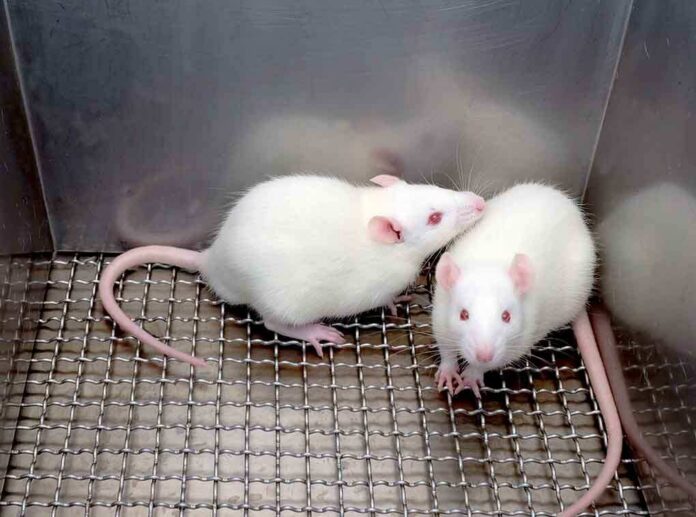
Los Angeles’s rat problem matters less as a civic embarrassment than as a public-health amplifier: in the right ecological conditions, rodents help sustain the flea cycle that turns a nuisance into disease. The evidence in Los Angeles shows exactly that pattern — a long rise in flea-borne typhus, a record case count in 2025, and a county health department that explicitly names rats among the main reservoirs involved.
Intro Header
- Los Angeles County reported 220 flea-borne typhus cases in 2025, the highest total on record.
- County public health says infected fleas are most commonly found on rats, free-roaming cats, and opossums.
- The disease has been rising in the county since 2010, which makes this a sustained trend rather than a one-off flare-up.
- The dispute is not over whether typhus exists; it is over how much of the burden should be laid at the feet of rats, trash, and weak urban pest control.
Los Angeles Is Dealing With a Real Typhus Surge
Los Angeles County public health officials have confirmed a steep and persistent rise in flea-borne typhus, a bacterial disease transmitted by infected fleas rather than by rats directly. The county says cases have increased since 2010, reached a record 187 in 2024, and climbed again to 220 in 2025. That is not a statistical blip. It is the signature of an endemic urban disease that has found a durable ecological niche in Southern California.
The seriousness of the count matters because typhus is not treated as a trivial rash-and-fever illness by clinicians who see it. County and local reporting describe severe illness, and ABC7 reported that nearly 90% of 2025 patients required hospitalization. That kind of utilization places pressure not just on emergency departments, but on the public-health systems expected to detect clusters, trace exposure patterns, and intervene before cases spread further.
How the Transmission Chain Actually Works
The central biological fact is simple but often misunderstood: rats do not spread typhus by touch or proximity alone. Fleas do the transmitting, and they feed on infected reservoir animals before biting humans. Los Angeles County’s own guidance says infected fleas are most commonly found on rats, free-roaming cats, and opossums. LAist likewise explains that typhus is spread by infected fleas and that those fleas are most commonly found on those same animals.
That indirect chain is why rat control and disease control are inseparable in practice, even though they are not identical mechanisms. If rats are abundant, if trash and debris provide shelter and food, and if flea-bearing animals move through the same neighborhoods where people live, sleep, or work outdoors, the odds of human exposure rise. FOX 11’s reporting on Los Angeles’s rodent problem described exactly those conditions: warmer shelter-seeking behavior, climate-related pressure, and gaps in building and infrastructure defenses. In public-health terms, rats are not the sole cause; they are a reservoir and a multiplier.
Why Los Angeles Keeps Reaching the Same Failure Point
This story did not begin with the latest count. Los Angeles has been living with a widening rodent-and-typhus problem for years. The Los Angeles Times reported that officials were investigating typhus around City Hall as far back as 2019, after earlier cases linked the disease to vermin infestation, and that California had been seeing rising typhus activity for more than a decade. County public health later formalized the trend in its own surveillance notes, which show a steady climb since 2010 and an all-time high in 2025.
The reason the issue endures is that urban typhus is rarely just a medical problem. It sits at the intersection of waste management, encampment conditions, housing density, building maintenance, vector ecology, and municipal capacity. Some local and opinionated coverage argues the city has under-treated the underlying rat problem, focusing instead on advisories for pets and trash handling. Even where that critique overstates certainty, it reflects a broader truth: if the food, shelter, and nesting conditions for rodents remain intact, the transmission ecology remains intact too.
What the Debate Is Really About
There is no serious dispute that rats are part of the typhus ecosystem in Los Angeles. The more precise disagreement is about emphasis and responsibility. County health officials identify infected fleas on rats as a common part of the chain, but they also name free-roaming cats and opossums. That matters, because it prevents the error of treating typhus as a one-species problem. It is an urban reservoir problem, and reservoirs become dangerous when sanitation, animal movement, and human exposure converge.
Critics of the response argue that the city and county are too slow to act on the environmental conditions that allow the disease to circulate. Reporting from NBC Los Angeles and other outlets has tied outbreaks to trash, dense rat activity, and the kinds of neglected spaces where rodents thrive. The strongest version of that argument is not that rats alone “cause” typhus, but that rat pressure is a visible marker of deeper breakdowns in urban maintenance. That is the correct public-health frame, and it is also the hardest one for cities to solve quickly.
Los Angeles, America’s Most Rat-Infested City, Now Battles Medieval Disease – Typhus
— Lois Levine Fishman (@FishmanLevine) August 6, 2026
Why the “Medieval Disease” Label Misleads
Typhus sounds archaic because it is historically associated with crowded, unsanitary conditions, but the label can obscure the modern reality. This is not a disease returning from some vanished era; it is a present-day vector-borne illness thriving in a metropolis large enough to generate all the conditions vectors need. The disease is old, but the ecology is contemporary. That distinction matters, because it shifts the problem from myth to management.
Los Angeles’s rat infestation has become more than a nuisance precisely because it is one component of a broader transmission system. Orkin’s annual rodent rankings, Yelp’s rodent-service searches, and repeated local coverage all point in the same direction: Los Angeles has become one of the country’s most visible rodent-pressure cities. But the public-health consequence is not about titles or rankings. It is that once rodent abundance, flea vectors, and human exposure overlap, a city’s sanitation weaknesses become a disease story.
The Real Measure of Success Going Forward
The standard for success is not whether Los Angeles can declare victory over rats in the abstract. It is whether the city and county can reduce the ecological conditions that keep flea-borne typhus circulating. That means better waste control, tighter rodent exclusion, faster response around known hot spots, and a more realistic understanding that vector control is environmental work as much as it is medical work.
For residents, the practical lesson is equally clear. Typhus risk rises where fleas, reservoir animals, and people overlap; pets, trash, sheltered debris, and unmanaged outdoor spaces all matter. County health has urged residents to take precautions, and that advice is sensible because disease ecology follows the habits of city life. What makes Los Angeles notable is not that it has rats. It is that the rats are now part of a measurable disease burden, and the burden is still rising.
Sources:
redstate.com, nypost.com, publichealth.lacounty.gov, nationaltoday.com, smobserved.com, youtube.com, christopherrufo.com, reddit.com, nbclosangeles.com, abc7.com, yahoo.com, cbsnews.com, veterinaryentomology.org, euronews.com, latimes.com