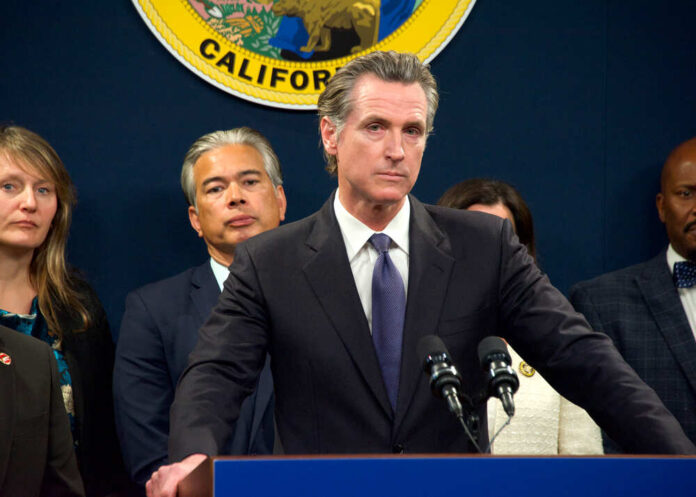
Gavin Newsom just used his final State of the State to paint Trump as a danger to democracy while ignoring the very real chaos progressive policies have unleashed on everyday Californians.
Story Snapshot
- Newsom’s final State of the State doubled as a 2028 campaign preview built on attacking President Trump.
- He framed California as a national “model” despite deep problems with crime, homelessness, costs, and out‑migration.
- He accused Trump of abusing federal power while boasting about dozens of lawsuits against the administration.
- His narrative clashes sharply with the lived experience of many families and small businesses in California.
Newsom’s Farewell Speech Aims Well Beyond Sacramento
Gavin Newsom’s final State of the State address before the California Legislature was less a routine report to lawmakers and more a national political audition. He used the Sacramento stage to test‑drive themes clearly designed for a 2028 presidential run, casting himself as the progressive defender of “democracy” and Trump as the embodiment of fear politics. For conservative readers, the key takeaway is simple: this was not about fixing California’s problems, but about exporting them.
By repeatedly describing California as a “beacon” and “national engine with a conscience,” Newsom insisted his state offers the template for America’s future. He pointed to tech growth, climate policy, and a surprise revenue windfall to argue that high taxes and heavy regulation can coexist with innovation and prosperity. Yet this glossy framing sidesteps basic questions many taxpayers are asking: if California is the model, why are so many families and businesses choosing to leave it behind?
We will be live posting Gavin Newsom’s FINAL state of the state address now.
He opened by bragging about filling 52 lawsuits against President Trump at the taxpayers expense.
Money better spent improving education, solving actual problems. pic.twitter.com/VrkdGUgCWb— California Republican Party (@CAGOP) January 8, 2026
Trump As Foil In A Progressive Campaign Narrative
Newsom devoted a significant share of the speech to portraying President Trump and “Trumpism” as threats to democratic norms and constitutional checks. He accused the administration of governing by fear, abusing federal power, and neglecting vulnerable communities, especially in blue states like California. He highlighted clashes over federal disaster aid, social programs, and immigration enforcement, presenting his own legal and rhetorical resistance as a heroic defense of the rule of law against executive overreach.
Central to that resistance narrative was Newsom’s boast about filing 52 lawsuits against the Trump administration, which he claimed preserved vast sums in federal resources for California programs. He framed these court battles as evidence that states can and should stand up to Washington when they dislike federal priorities. For conservatives, that raises hard questions about selective federalism: California’s leaders reject “overreach” when it comes from a conservative White House, yet proudly wield state power to impose expansive mandates on businesses, landlords, parents, and gun owners at home.
California’s Reality vs. Newsom’s Rosy Storyline
While declaring that California offers a model for the nation, Newsom also had to defend a legacy marked by stubborn homelessness, soaring housing costs, wildfire risk, and widening inequality. He argued that investments in education, climate policy, and social programs prove progressive governance works. However, countless residents see something different: high taxes, suffocating regulations, crime concerns, and a cost of living that pushes working families to flee. Those lived realities undercut his claim that Sacramento’s approach should be scaled nationally.
Newsom’s handling of federal disaster aid for Los Angeles wildfires illustrated this tension. He attacked Trump for resisting a multibillion‑dollar recovery package and accused the administration of punishing blue states. Yet voters outside California see a pattern of Sacramento demanding ever more federal money while refusing to rein in spending, address mismanagement, or tackle policies that intensify fire risk and housing shortages. For people frustrated with bailouts and runaway budgets, that looks less like responsible leadership and more like political theater.
Progressive Ambitions And The Stakes For Constitutional Governance
Beyond specific disputes, the speech pushed a broader vision of California as counterweight to a conservative federal government. Newsom championed aggressive climate rules, AI regulation, education restructuring, and restrictions on large housing investors as moral imperatives. He cast these moves as necessary corrections to federal failings. Conservatives hear something different: a blueprint for expanding state power over markets, schools, and family life, with little regard for property rights, parental authority, or the unintended costs borne by working people.
As Trump’s second term advances, this clash of models matters far beyond California. Newsom’s address signals that the left intends to use deep‑blue states as laboratories for policies that sidestep or resist federal priorities on immigration, energy, education, and law enforcement. For readers who value limited government, constitutional balance, and local control, the speech is a reminder that the battle is not just in Washington. It is playing out in state capitals poised to export their experiments to the rest of the country.
Sources:
Newsom rips Trump, offers a presidential preview in California speech
In final State of State speech, Gov. Newsom says California offers model for the nation
Newsom touts successes, swipes at Trump in final State of the State speech