

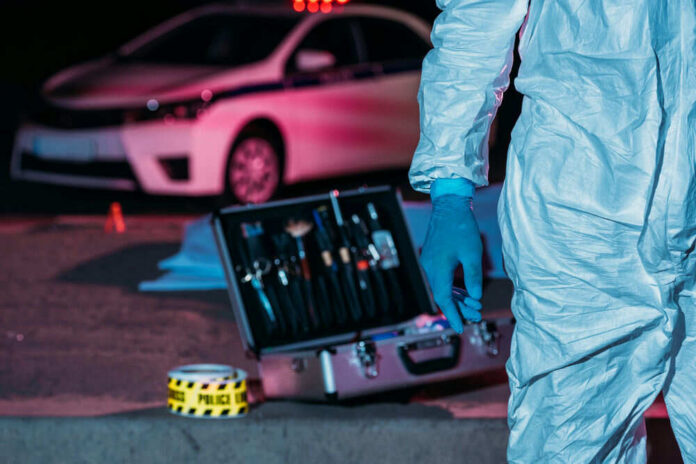
The center of this case is not the speculation; it is the disciplined fact pattern of a confirmed homicide, a recorded emergency call, and an investigation that—because it is serious—has publicly named no suspect while it sorts signal from noise.
The Short Version
- Brooke Hanlon, 35, was killed by multiple sharp force injuries; the medical examiner classified her death as a homicide.
- A 911 call from the home around 4:29–4:30 p.m. reported a medical emergency and severe bleeding; the caller sought CPR guidance.
- More than a month on, investigators have not announced any suspect or arrest and have released limited details to protect the case.
- Public scrutiny has focused on the spouse-as-caller dynamic common in intimate partner homicide probes, but the official posture remains methodical and noncommittal.
What is established and what is not
Start with the uncontested record. Authorities in Morris County confirmed that licensed psychotherapist and new mother Brooke Hanlon was found fatally wounded at her home in Chester Township on June 6, 2024. The county medical examiner determined the cause of death as multiple sharp force injuries and ruled the manner of death a homicide. That classification anchors everything that follows; it is not a media label but an official forensic finding.
There is a contemporaneous 911 call from the residence, logged around 4:29–4:30 p.m., in which a man reports a life-threatening emergency and requests CPR instructions, consistent with severe bleeding. Portions of the audio have been published and discussed widely. What the call proves is timing and presence: someone was at the scene, recognized a medical crisis, and engaged emergency services. What it does not prove is motive or authorship of the crime. Police have not announced a suspect, a person of interest, or an arrest; they have repeated that the investigation is active and ongoing.
How homicide investigations actually proceed
When a killing occurs in a private residence in daylight hours, investigators follow a predictable sequence built by decades of casework. They secure the scene; they document bloodstain patterns to reconstruct movement and sequence; they collect trace and biological evidence—fingernail scrapings, touch DNA on door hardware and weapon surfaces; they vacuum the house for fibers; they cast footwear impressions and document latent prints. Parallel digital forensics pull cell-site location information, Wi-Fi association logs from the router, vehicle telematics, smartwatch telemetry, and any nearby private or municipal video to lock down an exact timeline.
That evidentiary lattice dictates when, and whether, names are publicized. Silence to the press is not indifference; it is often an indicator that investigators are building a clean chain of custody and corroborating times, movements, and contact patterns before they lodge an accusation that must survive cross-examination. In cases like this, where the medical classification is homicide but the suspect is not obvious, experienced detectives conserve details—number of wounds, weapon characteristics, ligature or binding evidence—to preserve “hold-back” facts known only to the offender and law enforcement. Those specifics are currency in later interviews and, if necessary, in the plea or trial posture.
The 911 call: what experts listen for—and what the law requires
Public fascination with emergency calls is perennial because they feel like unmediated truth. Investigators do mine them for substance: background noises, audible timing (when CPR begins, when the caller moves rooms), and statements that can be tested against physical evidence. Voice stress “analysis,” by contrast, is not a forensic silver bullet; courts accept content and timing, not machine-scored stress readings. The central legal value of a call is as a timestamped contemporaneous account to compare with scene reconstruction. If the call says CPR occurred, the autopsy and blood spatter should agree; if it says the door was found ajar, the lock hardware and alarm logs should as well. Where the account and the physics diverge, interviews tighten.
In the Hanlon case, the published audio excerpts capture a caller urgently requesting CPR guidance and emphasizing the need for immediate response. That aligns with a discovery scenario, not necessarily with perpetration or alibi crafting. The only safe conclusion is the narrow one: the call documents presence and crisis, and it furnishes investigators a chronology to test against the forensic record.
Why spouse-centered scrutiny emerges—without presuming guilt
In intimate partner homicide (IPH), the investigative lens naturally prioritizes those with proximity and opportunity. That often includes the surviving partner—particularly when they are the discoverer and the caller—not because of a trope but because proximity statistically overlaps with risk in domestic settings. Media coverage frequently collapses that nuance into insinuation; professionals cannot. A disciplined IPH probe screens for patterns (prior threats, financial stressors, infidelity, coercive control), but it also acknowledges that many domestic homicides present without a well-documented escalation curve—no police reports, no restraining orders—leaving forensics and digital records to do the heavy lifting.
That is the tension on display here. Commentators point to the absence of a public warning about a random assailant as suggestive; investigators point back to standard practice: you do not alarm a community absent evidence of a continuing public threat, and you do not name a suspect before your evidence is trial-rigid. The result feels like opacity from the outside and prudence from the inside. Both things can be—and often are—true simultaneously.
Victimology and scope: when the circle widens beyond the home
Serious teams do not stop with the household. Victimology—the granular mapping of a victim’s routines, relationships, and stressors—branches outward methodically. In a case involving a licensed psychotherapist, that map includes colleagues and personal acquaintances but must handle client information with legal care; courts commonly use special masters to screen confidential records and release only what is strictly relevant to a criminal inquiry. Tradespeople, delivery personnel, past intimate partners, and anyone with recent access to the property form the next concentric rings. Digital exhaust—doorbell cams up and down the road, parcel scan logs, license-plate readers on feeder routes—tightens or expands those rings by timestamp.
Geography matters. An isolated home reduces the noise floor: fewer passersby and fewer plausible unknowns. That can help; it also means a likely offender either belongs to the inner circle or had a reason to be there. Multiple sharp force injuries, in turn, often reflect a personal, emotionally charged attack rather than a property crime gone wrong—an inference investigators weigh against all the other data, not in isolation.
Why public timelines and naming lag behind reality
Families and communities understandably want rapid resolution. Prosecutors, however, live with the downstream consequences of premature disclosure: tainted witness memories, compromised lineups, defense claims of pretrial prejudice, and lost hold-back leverage. In some homicides, authorities even delay confirming identity publicly to complete next-of-kin notifications, secure sensitive interviews, or run down time-sensitive digital leads before they go stale. That restraint can look like inertia until the day probable cause is filed.
None of that forecloses pressure on an agency to communicate well. The best practice is purposeful minimalism: affirm the homicide classification; specify the tip lines; assure the public when evidence does not indicate a broader threat; and release only the details that are tactically useful. In the Hanlon investigation, officials have met the first three marks and sought tips, while declining to color outside the facts already established.
🚨💔 BREAKING: The investigation into the murder of New Jersey therapist Brooke Hanlon continues as friends speak out, remembering the 35-year-old mother as a kind and compassionate person. Authorities have not identified a suspect or person of interest in the fatal stabbing.… pic.twitter.com/BFrxD0Vzgt
— DNA GLOBAL News (@DNA_NEWS_24) July 11, 2026
What it means going forward
The path to resolution is narrow but well worn. Forensics will either harmonize with the 911 chronology and the accounts of those close to the victim, or it will diverge in ways that point to a specific individual. Digital timelines—cell pings, app use, vehicle and camera hits—will anchor who could have been where, and when. If the weapon is recovered, trace evidence and purchase trails can attach it to a hand; if it is not, the absence itself can be probative when matched against opportunity and behavior in the critical hours after the killing. Prosecutors need a theory that survives the rules of evidence; investigators know it. That is why silence persists until a charging document does not just accuse but persuades.
Sources:
nypost.com, foxnews.com, youtube.com, facebook.com, allianceforhope.org, vkpp.org.uk, assets.publishing.service.gov.uk