
The central lesson is brutally simple: in borderlands seeded with cluster munitions and other unexploded ordnance, a single overlooked bomblet can turn a school outing into mass casualties—exactly what happened on an organized religious-school hike in northern Israel near the Lebanon frontier.
At a Glance
- Israeli police and emergency services responded to a blast on a permitted hiking route involving students and staff from a religious high school; one teenager was killed and roughly two dozen were injured.
- Authorities’ initial assessments point to unexploded ordnance, with the Israel Defense Forces indicating it was likely a Hezbollah cluster submunition left from recent hostilities.
- Casualty figures varied across early reports—typical of fast-moving incidents—but all accounts describe a fatality and many injuries consistent with an explosive-ordnance accident.
- The route was reportedly open and approved for passage, underscoring the persistent risk of residual munitions even in areas cleared for civilians.
What happened on the hike, and why it fits a known pattern
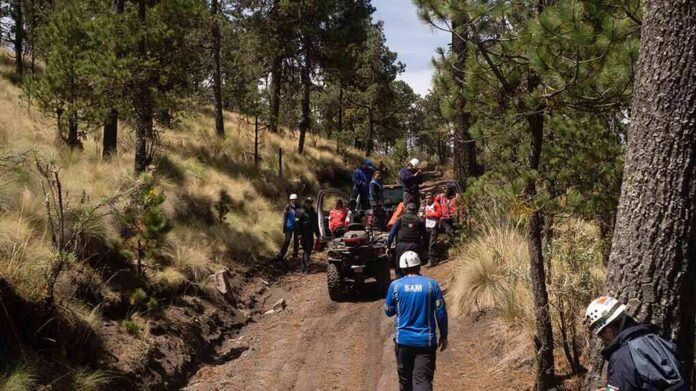
Students and teachers from a religious high school were hiking near Israel’s northern border when an explosion tore through the group. Police on scene identified unexploded ordnance as the initial suspected cause. Medical services and subsequent press tallies recorded one teenage fatality and approximately 19–24 injured, several seriously and moderately wounded—injury patterns entirely consistent with a small submunition detonating at close range. The Israel Defense Forces’ preliminary account attributed the blast to a likely Hezbollah cluster submunition, an assessment aligned with years of cross-border rocket and munition contamination in that terrain, though investigators had not yet specified the precise triggering sequence.
The group was on a route that authorities had reportedly approved for passage, a point that magnifies, rather than resolves, the core hazard: cluster submunitions are designed to disperse over a wide footprint, they fail at nontrivial rates, and the survivability of their fuzes means lethal items can persist for years in soils and brush frequented by civilians.
How cluster submunitions maim long after the fighting stops
Cluster munitions function by scattering dozens to hundreds of submunitions over a target area; each “bomblet” carries its own fuze and explosive charge. Because failure rates compound across large salvos, even conservative dud percentages leave behind extensive contamination. The humanitarian record in the Levant is unambiguous: after the 2006 Lebanon war, mine-action reporting recorded 20 post-conflict fatalities and 120 injuries by early October 2006, in nearly all cases from cluster submunitions. Subsequent United Nations and humanitarian assessments documented hundreds of thousands of items requiring clearance and more than a hundred civilian casualties in Lebanon attributable to leftover bomblets—evidence of the long tail of risk such weapons impose on communities and anyone moving through contaminated ground.
Mechanically, the danger is unforgiving. Impact- or time-fuzed submunitions can be triggered by minimal handling, foot pressure, or jostling; many are small enough to be mistaken for scrap or curios by teenagers. In the constrained space of a hiking group—people clustered, bags on the ground, someone kneeling or reaching—any disturbance of a sensitive fuze can produce a lethal fragmentation burst across several meters, precisely the injury geometry responders described in this case.
Why an “approved” route can still be dangerous
Clearance and approval are not absolutes; they are snapshots in time constrained by survey coverage, access, resources, and evolving contamination. Even well-run programs face blind spots. Vegetation growth, soil movement after rains, and human activity can shift or newly expose items that eluded earlier sweeps. Overlapping strike footprints from different events complicate technical survey, and removing visible ordnance can disturb the pattern in ways that complicate later detection. Humanitarian practice literature has long cautioned that incomplete surveying and the very nature of cluster footprints make it impossible to guarantee total clearance across wide areas—especially along borders experiencing intermittent fire over multiple seasons.
Against that backdrop, the reporting that authorities had opened the route to the public sits alongside the IDF’s preliminary attribution to a Hezbollah submunition without contradiction. Both can be true: a route can be permissibly open and still harbor a single lethal outlier—missed in an earlier sweep, newly exposed, or deposited by more recent strikes—that tragically intersects with civilian movement.
The specific claims that are established—and what remains procedural
The core facts are solid. Police on scene suspected unexploded ordnance. The victims were an organized school group. One student died and many others were injured in a pattern consistent with a small munition. The IDF’s initial read points to a Hezbollah cluster submunition. These anchors are reported across multiple outlets, including casualty figures within a narrow range typical of early response windows. As in any serious incident, investigators will refine details such as exact fuze type, detonation sequence, and fragment provenance, but those procedural steps do not alter the evidence-based conclusion that a leftover munition is the likeliest cause.
It is also established, via education and municipal authorities, that the outing was formally organized and the route was open, which is precisely why emergency managers emphasize sustained risk communication and recurring survey in post-strike environments. Those institutional efforts mitigate risk; they cannot drive it to zero in terrain affected by periodic cross-border rocket fire.
🟦 EVENING RECAP:
October 12, 2026⭕️ BREAKING
• IDF launches investigation after deadly Hezbollah munition explosion: A 14-year-old Israeli boy was killed and 24 students and teachers injured during a school hike near Lebanon. IDF Chief of Staff Eyal Zamir ordered an… pic.twitter.com/unO7OHAIoe
— DEFENDERS OF ISRAEL (@Israeli_Sniper) October 12, 2026
Lessons for risk management on contaminated frontiers
Events like this do not call for novel doctrine so much as disciplined execution of known best practices. First, seasonal re-survey of popular trails and school-trip venues near strike zones should be standard, not exceptional; interval-based checks capture ordnance newly revealed by erosion or vegetation die-back. Second, targeted risk education—age-appropriate, graphic, and repeated—must be mandatory pre-briefing for youth groups operating anywhere near historic or current strike footprints. Third, reporting pipelines need to be effortless: a single recognized hotline and app for flagging suspicious objects, with geotagging, photo intake, and rapid EOD follow-up, reduces the odds that a curious adolescent becomes an unwitting handler.
Finally, clearance authorities and education ministries should coordinate published “green maps” that are dynamic rather than static PDFs—layers that update with new strikes, finds, and clearances. Transparency is not just good governance; it is an operational safety tool that helps planners choose itineraries with a clearer picture of residual risk. None of these measures eliminate danger in contested borderlands. They do, however, narrow the window in which a single bomblet can upend a community, a school, and a family in a matter of seconds.
Sources:
zerohedge.com, israel.com, aljazeera.com, aa.com.tr, ynetnews.com, themedialine.org