A suburban teen’s chemistry experiments triggered an FBI response—raising fresh questions about where legitimate public-safety vigilance ends and heavy-handed government suspicion begins.
Story Snapshot
- Irvine police said a juvenile mixing unknown chemicals inside a home triggered a hazmat response at the Altair Community.
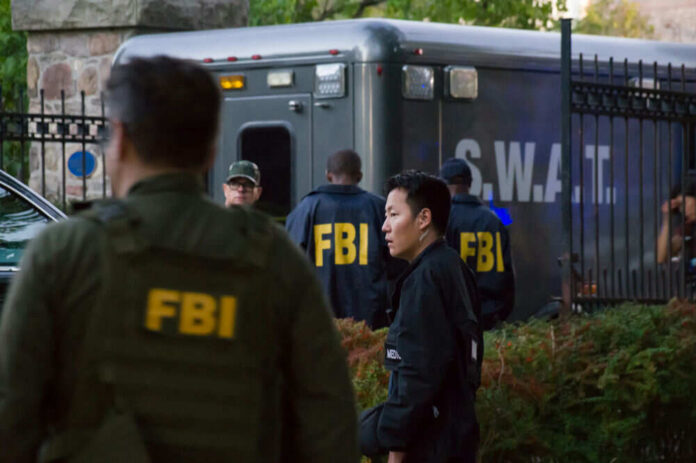
- Authorities cleared the scene after a precautionary investigation, but the incident escalated into broader law-enforcement attention.
- Available public reporting confirms the hazmat call and FBI involvement, but the provided citations do not document the “trying to cure cancer” claim.
- Experts warn that improvised explosive device threats remain adaptable, which shapes how investigators triage suspicious materials and behaviors.
What Happened in Irvine: The Hazmat Call That Sparked Bigger Questions
Irvine police said a hazmat investigation at the Altair Community began after a juvenile mixed “unknown chemicals” inside a home. First responders treated the situation as potentially dangerous until specialists could determine whether the materials posed a threat to residents. The ABC7 report describes the response as precautionary, reflecting how quickly routine neighborhood calls can shift into high-consequence scenarios when chemicals are involved.
That kind of response is not surprising in a post-9/11 world where agencies are trained to treat unknown substances seriously. Chemical experimentation can be harmless, educational, or even aimed at legitimate science projects, but it can also resemble early-stage steps used in dangerous devices. The key public fact from the provided Irvine reporting is narrow: a juvenile mixed unknown chemicals, prompting a hazmat response and broader law-enforcement attention.
Where the “Terror Probe” Narrative Outruns the Provided Citations
The topic framing circulating online emphasizes a family defending the teen and claiming he was “trying to cure cancer.” That claim may exist in other reporting, but it is not supported by the two citations provided for this assignment. The ABC7 article focuses on the hazmat response and police statements, and the West Point CTC piece is a general analysis of IED threats rather than a case-specific account of the teen’s intent or the family’s public comments.
That limitation matters for readers who want to separate verifiable facts from viral interpretations. A conservative audience is right to be wary of institutional overreach, especially when minors, families, and reputations are involved. At the same time, responsible analysis requires staying anchored to what is confirmed in the sourcing. Based on the provided citations, the publicly documented facts do not establish the teen’s motive, political ideology, or any specific “terror” allegation beyond an escalated law-enforcement response.
Why Investigators Escalate Quickly When Chemicals Enter the Picture
The West Point Combating Terrorism Center analysis explains that terrorist use of improvised explosive devices continues to evolve, with adversaries adapting methods, materials, and tactics. That broader backdrop influences how law enforcement evaluates ambiguous indicators, including chemical precursors and improvised experimentation. From a public-safety standpoint, “unknown chemicals in a home” is exactly the type of uncertainty officials are trained to treat as time-sensitive until specialists can rule out explosive, toxic, or contagious hazards.
For everyday Americans, the frustration comes when escalation becomes opaque—when families feel stonewalled, when agencies won’t clarify what triggered the most serious investigative steps, and when public narratives label someone before evidence is aired. The research here supports the premise that threats evolve and that caution is rational. It does not, however, supply the details needed to evaluate whether investigative tactics were proportional in this specific case, beyond the initial hazmat call.
The Civil-Liberties Tension: Safety, Due Process, and the Presumption of Innocence
Conservatives tend to support law enforcement while also insisting on constitutional guardrails: due process, clear standards, and restraint when the government’s power is turned on private citizens. When the subject is a 17-year-old, the stakes rise further because youthful experimentation is common, intent can be unclear, and reputational damage can be permanent. The ABC7 reporting shows the event began as a safety call—yet the public appetite for “terror” framing can quickly outrun facts.
The most responsible takeaway from the provided research is not a verdict about the teen or the family, but a warning about how fragile trust becomes when officials and media leave gaps. If authorities believe an escalation was necessary, transparency—within legal limits—helps the public understand why. If the incident was benign, families deserve clarity and a path to restoring their good name. Limited data available; key insights summarized from the provided citations.
Sources:
The Future of Terrorist Use of Improvised Explosive Devices: Getting in Front of an Evolving Threat