In the span of a few panicked seconds at Yellowstone’s Bridge Bay Campground, a 1,500‑pound bull bison turned a routine family walk into a life‑threatening lesson in just how unforgiving wild animals can be—especially when human habits and wildlife behavior collide in developed park areas.
At a Glance
- A 65‑year‑old grandfather was charged by an agitated bull bison and launched roughly eight feet into the air while walking with his grandson near Bridge Bay Campground.
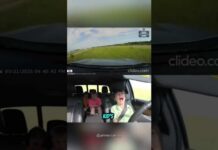
- The attack was captured on video by a professional photographer, showing the bison targeting the pair from afar, chasing them among trees, and standing over the injured man afterward.
- The victim sustained serious leg fractures requiring hospitalization and surgery; the National Park Service has confirmed the injury but has not yet released a formal incident report.
- This was the second bison‑related injury in Yellowstone in two months, underscoring a broader pattern in which close human approaches—often for photographs—drive most bison injuries.
- The incident has revived debate over how risk is framed: as visitor misbehavior alone, or as the predictable consequence of powerful, unpredictable wildlife sharing space with dense human use.
What Happened at Bridge Bay Campground
On the evening of July 10, 2026, a 65‑year‑old man was walking along a campground road at Yellowstone’s Bridge Bay Campground with his young grandson when a bull bison abruptly singled them out. Professional photographer Mike MacLeod, already on scene with his camera, captured what followed: an agitated bison barreling through the camping area, then honing in on the pair from an estimated distance of around 100 yards—well beyond the 25‑yard minimum buffer Yellowstone instructs visitors to maintain.
MacLeod’s video shows the grandfather and child trying to shelter among a small stand of trees as the animal charges, using the trunks as a moving barrier between themselves and the bison. For a moment the bull appears to divert its anger onto a sapling, battering it with its head and horns. Then it locks back onto the man, surges forward, hooks him on the hip with a horn, and throws him into a full airborne flip before he crashes onto his side several feet above the bison’s six‑foot frame. The footage ends with the animal standing over the fallen man, shaking its head, while MacLeod stops recording to run toward the scene, shouting to distract the bison’s attention.
MacLeod later spoke with the victim’s grandson, who told him his grandfather had “pretty significant injuries and is not out of the woods yet,” a characterization echoed in subsequent media reports describing multiple fractures to the leg and a prolonged recovery. The National Park Service has confirmed that the man was injured by a bison and hospitalized, but as of the latest coverage, has not yet released a detailed public incident report or investigation findings specific to the Bridge Bay attack.
The Force Behind the Flip: Bison Size, Speed, and Behavior
To understand why the attack produced such dramatic footage and serious injury, it helps to recall what a Yellowstone bison actually is: an adult bull can weigh over 1,500 pounds, stand six feet at the shoulder, and run at speeds up to 35 miles per hour. The animal in MacLeod’s video is not merely large; it is a rutting bull in midsummer, when male bison are hormonally primed, competing for mates, and far more likely to display aggressive, unpredictable behavior.
Biologically, bison are designed to move mass with explosive power. A charging bull brings a combination of momentum and leverage; its horns and neck musculature are built to lift, toss, and shove rivals and predators. When that force is directed at a human standing on level ground, the result is exactly what the Bridge Bay video shows: a clean hook and airborne projection, followed by a hard, uncontrolled landing. The outcome—a leg fractured in several places and the need for surgical repair—is entirely consistent with the mechanics of such a toss.
What is striking in this case is not that the bison was capable of launching a person eight feet into the air, but that it did so in a campground—an area many visitors intuitively read as “safer” than backcountry terrain. That assumption is mistaken. Rutting bulls routinely move through roads, picnic areas, and campsites when those lie within their seasonal range.
A Pattern, Not an Anomaly: How Bison Injure Visitors
Although the Bridge Bay video feels singular in its cinematic clarity, the underlying pattern is well documented. Between 2000 and 2015, bison encounters in Yellowstone resulted in injuries to 25 people, more than any other species in the park. A detailed analysis of those cases found that 80 percent of injured individuals had actively approached the animals before their injuries; another 20 percent failed to retreat as bison moved closer on their own.
The numbers are revealing: in nearly half of documented bison injuries over that period, visitors were engaged in photography at the moment of the incident. Average distances were astonishingly close—around 3.4 meters (about 11 feet), less than half the length of a typical passenger vehicle. Many injuries occurred in groups of three or more people, suggesting that social dynamics—crowds, collective misjudgment, and the perceived safety of being among others—amplify risk. Yellowstone’s own messaging reflects this research: park advisories repeatedly stress that bison have injured more people than any other animal in the park, and that visitors are responsible for staying at least 25 yards away and never approaching, touching, feeding, or crowding wildlife.
The Bridge Bay incident fits this broader picture, but with an important twist. While some media framing implicitly suggests the victim may have stepped too close to the animal—highlighting that he and his grandson stopped to take photos—social media accounts from people connected to the scene insist the grandfather was walking at a safe distance and “did NOTHING wrong.” Without a public incident report that pins down distances and movements second by second, the precise degree of any guideline violation remains ambiguous. What is not ambiguous is the outcome: whether or not any rule was technically broken, a rutting bull bison moved through a heavily used campground and had enough proximity to a pedestrian to toss him violently into the air.
Two Incidents in Two Months: A Cluster in Developed Areas
The Bridge Bay attack did not occur in isolation. Less than two weeks earlier, on June 26, a 12‑year‑old visitor near the Mud Volcano area was injured by a bison in an incident the National Park Service has formally acknowledged in a public news release. In that case, the agency reported that the child was “too close to the bison” at the time of the encounter, and reiterated standard guidance about minimum viewing distances and never turning your back or running from large animals.
Meanwhile, another NPS release from June 10 described a separate incident in the Upper Geyser Basin at Old Faithful, in which a 30‑year‑old man from New Jersey was gored after a large group of visitors approached a bison too closely. Taken together, these events form a cluster: multiple bison–human conflicts, all in developed visitor areas, all within a short seasonal window when bison are especially active and aggressive. While the absolute number of incidents remains low relative to total visitation, the pattern is clear—when crowds, cameras, and rutting bulls mix in constrained spaces, the margin for error narrows.
How Official Narratives Frame Risk
The way these incidents are publicly described matters because it shapes how future visitors behave. In official releases and most mainstream coverage, the emphasis falls heavily on visitor responsibility: did the injured person get too close, ignore posted signs, or turn their back to an animal? Yellowstone’s messaging repeatedly stresses that “visitors are responsible” for maintaining distance and following rules, and news reports often highlight prior cases where victims approached within a few yards for photos.
There is sound logic behind that framing. The Cherry et al. analysis of 25 injuries across 15 years shows that violating distance guidelines and approaching for photographs are indeed the dominant risk factors. Teaching people not to repeat those behaviors is a practical, evidence‑based strategy. Yet focusing almost exclusively on visitor error can obscure another reality: even rule‑abiding campers can find themselves suddenly within a bison’s flight path when an agitated animal moves through a developed area, and not every encounter will fit neatly into a narrative of human misbehavior.
The Bridge Bay video has prompted a lively, sometimes cruel online response, with comment threads filled with mockery about “stupid tourists” and quips that “bison ain’t cool with the snaps.” Some of that backlash is a predictable reaction to viral footage; some is an attempt—however clumsy—to reinforce safety norms by shaming risky behavior. But it also risks flattening a complex situation into a simplistic morality tale. When a rutting bull cuts across a campground road at speed, the difference between a safe camper and a victim can be a matter of seconds and yards, not character.
Unanswered Questions and the Need for Better Transparency
Despite the vivid detail of MacLeod’s footage and multiple media accounts, several aspects of the Bridge Bay incident remain unresolved. There is no publicly available NPS incident report for the July 10 attack comparable to the June 26 Mud Volcano case; any investigation findings—exact distances, sequence of movements, bison history in that area—have not yet been released. Direct statements from the injured man and his grandson have not appeared in coverage, leaving MacLeod as the primary named eyewitness.
That lack of official detail is not unusual in the first weeks after an incident, but it does limit the public’s ability to move beyond speculation and social‑media narratives. A structured incident report, medical summaries, and ranger response logs would clarify whether this was primarily a guideline violation, a case of an unpredictable animal moving through a densely used area, or some mixture of both. At a system level, transparency also matters because it influences how risk is distributed: if every case is publicly framed as “tourist did something wrong,” there is less pressure to scrutinize campground design, wildlife routing, and management decisions that might mitigate encounters in the first place.
Living With Bison: What This Means for Future Visitors
For the typical Yellowstone visitor, the Bridge Bay attack is not a call to avoid the park; it is a stark demonstration of why the park’s rules exist and why they are calibrated to the animals’ capabilities rather than human comfort. Bison are not lawn ornaments. They can and do move through campgrounds, parking lots, and boardwalks, and when provoked—or simply agitated during rut—they can close distance and deliver life‑altering force in seconds.
The practical implications are straightforward. Observing the 25‑yard minimum is a baseline, not a guarantee; in rut season, more distance is better, and hard physical barriers—vehicles, stout structures—offer far more protection than a stand of saplings. Crowds and cameras are warning signs, not safety cues; research shows that when groups cluster around wildlife to capture images, the odds of someone crossing the invisible line rise sharply. Just as importantly, visitors should resist the subtle, human tendency to reclassify risk in developed settings. A bison walking between tents is just as wild as one on a distant hillside.
What the Bridge Bay footage ultimately underscores is not that Yellowstone is dangerous, but that it is genuinely wild, even where it looks domesticated by roads and campgrounds. The park’s bison are doing what bison have always done: asserting dominance, defending space, and responding to perceived threats with the power evolution gave them. Our role is to be smart enough—and humble enough—to stay out of the way.
A tourist was seriously injured after being tossed about 8 feet into the air by an agitated bull bison at Yellowstone National Park in the US. The attack, which occurred at the Bridge Bay Campground while the tourist was walking with his grandson, was captured on video by… https://t.co/OzpNhEkEdb
— NewsWire 🇱🇰 (@NewsWireLK) July 13, 2026
What Experts Still Want to Know
For those who study human–wildlife interactions in Yellowstone, the Bridge Bay case will likely become another data point in a growing effort to understand how design, policy, and education intersect with animal behavior. Wildlife managers will be asking whether campground layouts can be adjusted to minimize common bison travel corridors through sleeping areas, how rut‑season advisories might be sharpened, and whether specific bulls with repeated aggressive encounters should be monitored more closely or relocated.
Researchers will also look at how this incident is discussed publicly—who is blamed, which facts are emphasized—and how that in turn shapes visitor behavior in subsequent seasons. If the goal is fewer injuries, the messaging has to do more than scold; it has to convey, viscerally and clearly, what MacLeod’s video shows in seconds: that even from what feels like a reasonable distance, a bison can close the gap and make a human airborne. Harnessed properly, that image can move people back those extra yards when it matters most.
Sources:
facebook.com, cowboystatedaily.com, nps.gov, instagram.com, thehill.com, npshistory.com, pmc.ncbi.nlm.nih.gov, greateryellowstone.org, krem.com