When artists take a stadium mic to make a political case, the controversy rarely turns on what they said; it turns on who owns the stage, what the audience thought they bought, and whether entertainment spaces should serve as civic forums. Macklemore’s MetLife moment fits that durable pattern exactly.
The Short Version
- Macklemore used an opening slot at MetLife Stadium to advocate “Free Palestine,” tying his remarks to a rights-based message and performing his protest track “Hind’s Hall.”
- Backlash centered less on factual disputes and more on venue norms: critics argued a pop tour is not a political rally and petitioned to remove him from remaining dates.
- The episode reprises a long-running tension between artistic speech and audience consent at mass-audience shows, especially when a headliner’s brand promises broad appeal.
- In modern backlash cycles, short viral clips and petitions often define the narrative faster than promoters or headliners can calibrate a response.
What Actually Happened Onstage
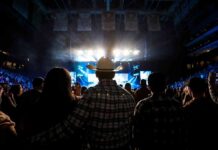
As an opening act for Ed Sheeran at New Jersey’s MetLife Stadium, Macklemore framed part of his set around Palestinian rights, explicitly telling the crowd that a core reason to be on tour was to say “Free Palestine” in large venues and to signal to people in Gaza and the occupied West Bank that they were not forgotten. He performed “Hind’s Hall,” his recent protest song, while visuals from Gaza and protest footage played on arena screens. Reporting and circulating video captured the crowd call-and-response and the artist’s framing as a rights-based appeal rather than a narrow geopolitical brief.
The immediate consequences were reputational and commercial, not legal or contractual in any publicly documented way. A petition organized by the Israeli-American Council urged Sheeran and tour leadership to remove Macklemore from the remaining dates, arguing the opening set turned a mainstream concert into a one-sided political event and asking whether the speech and visuals had been approved in advance. The petition and attendant media coverage amplified a familiar refrain: fans bought music, not a rally.
The Real Dispute: Platform Norms, Not Factual Claims
The counter-case did not attempt to refute what Macklemore said or deny he said it; it challenged the propriety of saying it there. The Israeli-American Council’s language was explicit: an Ed Sheeran tour is not a political rally; the issue is not whether Macklemore has political views, but whether a mass-market stage should carry a partisan agenda. That framing aims squarely at audience expectations and brand stewardship: headliners, venues, and promoters cultivate an inclusive promise around which diverse ticket buyers converge. A support act’s hard-edged advocacy can feel, to some portion of that audience, like a forced opt-in they neither sought nor consented to—especially when children are present and the headliner’s catalogue skews universalist rather than polemical.
Public figures then layered on the critique—some in coarse terms—further shifting the story from the content of the speech to its perceived inappropriateness for the setting. The net effect is predictable in the modern attention economy: a short clip defines the evening more than the rest of the music, and a petition becomes the proxy for debate about where the line should be drawn.
How We Got Here: A Long Arc of Political Speech in Popular Music
Artists have argued politics into big rooms for as long as those rooms have existed. What has changed is the scale and speed of amplification—and the commercial architecture surrounding contemporary pop tours. Stadium bills now operate as meticulously engineered brands: lighting treatments double as sponsor canvases; set lists cue merchandise drops; and headliners promise broadly accessible experiences to audiences spanning generations. Into that environment, a support act’s activist set can act like a hot shard in tempered glass—it exploits the room’s reach, yet threatens the room’s promise of neutrality.
Across decades and genres, similar flashpoints recur: controversies over anti-war messaging, civil rights anthems, LGBTQ advocacy, and, more recently, global conflicts. In each case, the ensuing argument is less about whether artists may speak—of course they may—and more about whether the particular stage and audience were conscripted into a political act they didn’t knowingly choose. Institutions that study speech and de-platforming have tracked this migration of political argument into cultural venues and the corresponding pressures on organizers to manage dissent without chilling expression.
Mechanics of Backlash: Why Clips and Petitions Now Set the Agenda
Three mechanics drive the modern cycle. First, selective virality: thirty seconds of chant and a charged lyric will outpace a ninety-minute set, becoming the entire memory for non-attendees. Second, mobilized counter-publics: advocacy groups translate grievance into clear demands—drop the act, clarify approvals, reaffirm norms—funneling diffuse anger into a single “ask” tour leadership is forced to answer. Third, brand risk arithmetic: promoters and headliners weigh lost ticket revenue and reputational spillover against the costs of alienating the artist or seeming to police speech. The fastest way to reduce risk is often to say as little as possible and let the news cycle pass, which in turn cedes narrative space to petitioners and viral commentators.
None of these dynamics adjudicate the underlying politics. They arbitrate venue governance. Who sets the speech boundaries on a private tour? How explicit must approval processes be for support acts? And can you preserve an artist’s autonomy without surprising a mass audience that came for escapism?
Competing Principles: Artistic Autonomy Versus Audience Consent
Two legitimate values collide here. Artistic autonomy insists that the stage is precisely where moral urgency belongs; music has always been a vector for conscience and solidarity. Audience consent emphasizes that a ticket is a consumer contract with reasonable expectations—time, tone, and content—shaped by the headliner’s brand. In stadium pop, where the brand skews inclusive and family-friendly, that expectation carries genuine weight. The more the message departs from the headliner’s lane or moves from appeal to indictment, the more some attendees will experience it as bait-and-switch.
The Macklemore episode is a case study in threading this needle. His remarks were plainly political expression—framed in rights language and solidarity with civilians—and fall squarely within the tradition of protest music. The acute friction arose from context: an opening slot on a global pop tour whose core promise to buyers is not debate but communion. That is why the most forceful counter-arguments centered not on truth claims but on the stewardship of shared space.
🚨 Macklemore tells Jewish fans at MetLife: "Criticism of Israel, apartheid, genocide is not criticism of you." Rapper says his message is for peace, love & all humanity. Bold stance amid Gaza war—will it ignite more culture war backlash?
— Dino Vibes Daily (@DinoLeadingNews) September 7, 2026
What Sensible Governance Looks Like Going Forward
The solution is not to sanitize stages or punish speech; it is to professionalize expectations. Tours can mitigate blowback with a few concrete steps. First, explicit run-of-show approvals for political content by support acts, aligned with the headliner’s risk tolerance. Second, proactive communication: when sets will include advocacy, signal it in press notes and fan channels so attendance doubles as informed consent. Third, time, place, and manner guidance—not about message content but about duration and integration—to prevent an advocacy segment from reframing the evening’s entire narrative. These are not gags; they are guardrails, akin to broadcast standards that preserve both expression and audience trust.
Sources:
en.royanews.tv, newsminimalist.com, deadline.com, msgtalent.org, eur.nl