The United States did not just spend heavily in the Iran war; it burned through the very categories of air-defense and long-range strike munitions that underpin deterrence in the Indo-Pacific, and the official record now concedes strategic shortfalls and industrial bottlenecks that will take time—not talking points—to fix.
The Short Version
- Central Command placed total Iran-war costs at $43.6 billion through early September, including $28.1 billion to replace expended munitions.
- The Pentagon inspector general reported “strategic inventory shortfalls” and industrial-base bottlenecks resulting from the war’s munitions burn rate.
- Independent analysis before and after the conflict judged U.S. stocks for a prolonged China fight inadequate; Iran operations intensified an existing deficit.
- Consumption centered on air-defense interceptors and precision strike weapons—the very magazines a China contingency would stress first.
What the record actually shows: costs tied to expended magazines, not generic overhead
When defense officials brief Congress on a war’s price tag, the munitions line matters disproportionately because missiles and precision weapons are the limiting reagent in modern combat. Central Command’s cost report through September 3 put the total at $43.6 billion, with $28.1 billion budgeted to replace expended bombs and air-defense interceptors—an attribution that distinguishes real magazine burn from fuel or manpower overhead. In parallel, the Pentagon inspector general’s statutory reporting on Operation Epic Fury (the Iran campaign’s opening phase) quantified earlier-period expenses and, more importantly, diagnosed what those dollars bought the force: depleted stock and visible strain in the production base that must refill it.
The inspector general’s language was unambiguous. The munitions expenditure in Epic Fury “resulted in strategic inventory shortfalls and revealed industrial base bottlenecks for munitions resupply,” even as the department worked to streamline procurement and shorten lead times. That is not a think-tank’s flourish; it is the government’s own oversight apparatus assessing the consequences of wartime consumption and the system’s ability to recover.
Mechanism: why the Middle East burn rate maps onto Indo-Pacific risk
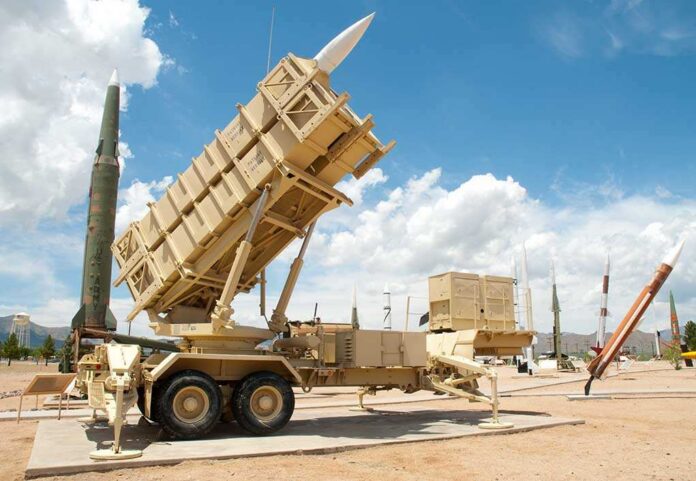
Inventory stress would be less consequential if the items consumed were generic. They are not. Air and missile defense interceptors—Patriot PAC-3, THAAD—and precision strike weapons form the scaffolding of credible power projection in the Western Pacific. The Congressional Research Service’s summary of the Iran fight recorded heavy simultaneous demands: thousands of U.S. and partner intercepts against drones and missiles, and more than 2,000 U.S. munitions expended against nearly 2,000 targets. USA Today’s reporting aligned with that picture, specifying that the Pentagon’s $28.1 billion replacement estimate focused on bombs and air-defense interceptors—exactly the categories a high-end peer fight would exhaust fastest.
Analysts who game Indo-Pacific scenarios have long warned that the first month is determined by what is in the magazines on day one; months two and three hinge on what the industrial base can credibly reload. Mark Cancian’s concise formulation captures the point: the United States can fight Iran with what it has, but a protracted China conflict is the harder problem—stocks might cover roughly the first month, and then the bill for depth and production arrives. That hierarchy of difficulty predates the Iran war; the war simply spent down some of the most precious inventory and exposed the limits of surge capacity.
Separating signal from advocacy: what is known, what is inferred
Three claims are on firm ground. First, the costs and their munitions focus come from official channels briefed to Congress. Second, the Defense Department’s watchdog attributes strategic shortfalls and industrial bottlenecks to the war’s expenditure and describes ongoing mitigation efforts. Third, mainstream assessments—including CRS and multiple analysis houses—agree that core categories of interceptors and long-range precision weapons remain the pacing constraint for any sustained fight in the Western Pacific.
What is not in the public domain is a munition-by-munition audited inventory table showing prewar and current counts for PAC-3, THAAD, SM-6, Tomahawk, and JASSM-ER. Advocacy-adjacent work has estimated specific tallies and depletion percentages, and some outlets relayed striking figures early in the conflict window; those are analytically useful but not a substitute for a Pentagon line-item disclosure. The absence of that ledger does not negate the shortfall finding; it circumscribes how precisely we can characterize depth and recovery timelines in each bin. The center of gravity of the evidence remains the government’s own IG shortfall diagnosis and the categorical focus of the replacement spend.
Industrial base: the bottleneck is structural, not merely procedural
Missiles and interceptors are slow to make fast. Unlike bullets, these rounds require energetics, seekers, specialized propulsion, and test infrastructure with long-qualified supply chains. The inspector general’s report flags industrial bottlenecks that cannot be erased by memos alone; they require capital, workforce, second-source suppliers, and in some cases redesigned components to remove single points of failure. The best public roadmap for bridging from today’s scarcity to tomorrow’s resilience pairs two moves: buy more depth in the exquisite weapons critical to early-phase advantage, and widen the magazine with a high–low mix that includes more affordable, attritable options for the volume fight.
That mix matters because a China contingency imposes two simultaneous stresses: air and missile defense of forward bases and fleets under persistent salvos, and long-range, high-volume strike to suppress sensors and shooters across vast distances. A portfolio that relies too heavily on a small set of exquisite, slow-to-build rounds can win week one and still lose month three. Analysis from CSIS and others has argued for spreading risk across families of effectors while addressing specific chokepoints in the air and missile defense industrial base.
Where serious disagreement actually lies
There is little dispute that Iran operations depleted stocks and revealed bottlenecks; the IG makes that case. The live debate concerns scale and consequence. One camp warns that inventories for a peer fight were insufficient before the war and are tighter now; they highlight near-term risk and advocate large, sustained procurement plus industrial retooling. Another emphasizes that deterrence is a system property: allies, posture, and escalation control can offset thinner magazines in the near term while rearmament proceeds. Both can be true. The prudent inference from the IG’s finding is that risk has increased at the margin while resupply ramps—particularly if a contingency demands high interceptor and long-range strike expenditure rates simultaneously.
Allies in Asia are reading the same tea leaves. Reporting indicates that wartime consumption in the Middle East has worried Indo-Pacific partners and frustrated officials charged with that theater—less because of a collapse in readiness than because margin for error narrows when depth is thin and reload times are long. In deterrence, perceived slack matters.
What would close the case—and close the gap
Three disclosures would convert today’s inference into audit: a classified-to-cleared congressional inventory of key missiles pre- and post-conflict; program-by-program production lead times and funded throughput through the next five fiscal years; and a Joint Staff assessment mapping Iran consumption directly to risk bands in Indo-Pacific plans. Until then, policy should proceed on the strongest common denominator of the public record: significant wartime expenditure in priority categories, official confirmation of resultant shortfalls and bottlenecks, and independent analyses that judge magazine depth inadequate for a prolonged China fight absent sustained investment.
Sources:
english.ahram.org.eg, rt.com, usatoday.com, stripes.com, theamericanconservative.com, cbsnews.com, jinsa.org