Federal agents now have sweeping powers to raid schools, churches, and homes, raising urgent concerns about constitutional rights and the erosion of due process under President Trump’s aggressive new immigration crackdown.
Story Highlights
- Trump’s administration ends protections for sensitive locations, allowing ICE raids in schools, hospitals, and places of worship.
- Mass deportations disrupt families and communities, with reported denial of due process for many immigrants.
- New laws and executive orders empower law enforcement to enter homes without warrants and detain immigrants charged or convicted of certain crimes.
- Trump’s border policies sharply decrease illegal crossings, but legal and humanitarian controversies intensify.
Trump’s Immigration Policies Redefine Federal Enforcement Powers
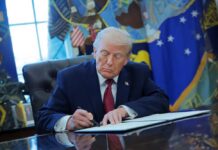
President Trump’s second term began with an immediate overhaul of immigration policy. On January 20, 2025, Trump signed executive orders declaring a national emergency at the southern border, ending “catch and release,” suspending most refugee admissions, and officially designating criminal cartels as terrorist organizations. These measures mark the most aggressive federal intervention in border security and immigrant management since the early twentieth century. The administration’s actions have resulted in a sharp decrease in illegal border crossings, with numbers falling to their lowest levels in decades during the initial months of 2025.
The administration’s approach goes far beyond physical border security. Trump appointed Tom Homan as “border czar,” directing ICE to conduct mass raids in cities with large immigrant populations. Crucially, the new policies eliminate previous safeguards that protected “sensitive locations” such as schools, hospitals, and places of worship from enforcement actions. This shift has enabled federal agents to arrest immigrants in environments once considered off-limits, amplifying fears among families and local communities.
Mass Deportations and Constitutional Challenges
Trump’s campaign pledge to launch the largest deportation program in American history is rapidly materializing. ICE, now empowered to use expedited removal procedures nationwide, has begun detaining immigrants in homes, workplaces, and public institutions. The administration also signed the Laken Riley Act, mandating detention for immigrants charged or convicted of certain crimes. United States Attorney General Pam Bondi issued a directive permitting law enforcement to enter migrant homes without warrants, a move that has triggered immediate legal challenges and raised constitutional concerns regarding the Fourth Amendment.
Statistics released by the Department of Homeland Security claimed over 207,000 deportations by June 2025. Many were reportedly denied due process, with some immigrants held on military aircraft in shackles during transport. The aggressive expansion of detention centers—capable of holding up to 100,000 individuals daily—has led to widespread disruption of families and communities, and a climate of fear among immigrant populations.
Legal and Humanitarian Fallout: Due Process Under Threat
Critics, including legal experts and civil rights organizations, argue that these policies test the limits of executive power and erode foundational constitutional protections. The expansion of expedited removal and mass raids in sensitive zones have prompted lawsuits challenging the legality of these actions and their impact on due process. The administration’s push to penalize states and localities that do not cooperate with federal immigration enforcement, including access to motor vehicle and voter registration databases, further intensifies concerns over privacy and states’ rights.
Additionally, Trump’s policies call for eliminating relief programs and visa categories, threatening the legal status of hundreds of thousands of Dreamers and refugees. The requirement for expanded E-Verify work verification programs, which are known for error-prone results, risks shutting out eligible workers and disproportionately affecting people of color. These sweeping measures reveal a strategy aimed at fundamentally reshaping federal immigration law, with far-reaching implications for civil liberties and the American legal tradition.
Sources:
Project 2025: What’s At Stake for Immigrants’ Rights
Immigration policy of the second Trump administration – Wikipedia
The Trump Administration’s 2025 Changes to Immigration Law