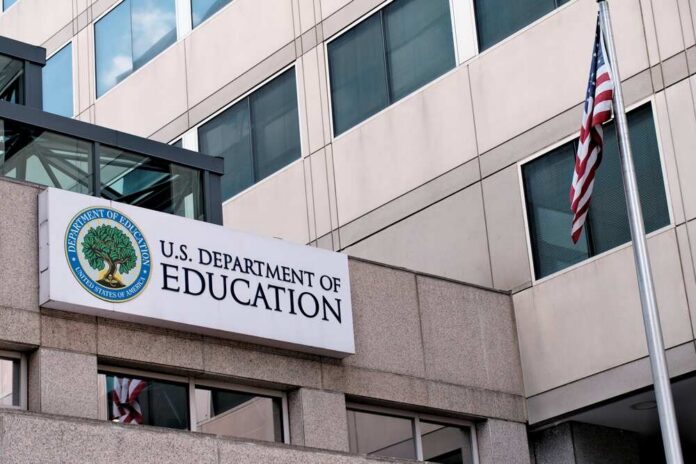
The Trump Education Department is ripping up Title IX deals that critics say turned federal civil-rights enforcement into pronoun-and-bathroom mandates for local schools.
Quick Take
- The Department of Education said it is rescinding parts of six Title IX resolution agreements with school districts and one college that were reached under prior administrations.
- The agreements had required measures tied to gender identity, including preferred-pronoun practices, bathroom access rules, policy reviews, and outside “gender identity” consulting.
- The department argues those provisions rest on an “ideologically-driven” reading of Title IX that goes beyond sex discrimination as written in federal law.
- Advocates at the National Women’s Law Center say the rescissions have “absolutely no basis” and will weaken protections for transgender students.
What the Education Department Rescinded—and Why It Matters
The U.S. Department of Education announced April 6, 2026, that it is rescinding portions of Title IX resolution agreements involving six school districts and Taft College in California. Those agreements were negotiated by the Office for Civil Rights under the Obama and Biden administrations after discrimination complaints involving transgender, nonbinary, and other LGBTQ+ students. The Trump administration says the specific provisions it is undoing are unlawful because they treat “gender identity” as “sex” under Title IX.
The practical effect is narrow but significant: it targets negotiated compliance terms rather than announcing a single sweeping new regulation. According to reporting on the agreements, some districts had been directed to adopt or revise policies around preferred pronouns, facility access, and training, and in certain cases to bring in outside consultants. For parents and local school boards, the move signals Washington is stepping back from enforcing contested cultural rules through settlement-style agreements.
How Title IX Became a Flashpoint for Gender-Identity Policy
Title IX was enacted in 1972 to prohibit sex-based discrimination in education programs that receive federal funds. Over time, the statute became a major enforcement tool because federal agencies can investigate complaints and threaten consequences tied to funding. Under the Obama administration, federal guidance in 2016 pushed an interpretation that Title IX protections extend to transgender students, an approach that later shaped investigations and resolution agreements with school districts.
The Biden administration continued that direction, including a 2024 Title IX rule that incorporated gender-identity protections. The Trump administration has moved the opposite way, arguing Title IX’s “plain meaning” focuses on biological sex, not gender identity. Because many families view sex-based privacy and girls’ sports as core fairness issues, Title IX’s wording matters far beyond legal theory—especially when federal pressure changes day-to-day rules in classrooms, locker rooms, and discipline systems.
Which Schools Were Affected—and What Was in the Agreements
The rescissions apply to agreements involving districts including Delaware Valley (Pennsylvania), Cape Henlopen (Delaware), Fife (Washington), La Mesa-Spring Valley (California), Sacramento City Unified (California), and Taft College (California). The agreements were born from specific civil-rights complaints and required steps that could include policy rewrites, staff training, and other measures tied to gender identity. The Education Department said these deals imposed “heavy-handed” requirements it now views as improper.
Reporting on the administration’s rationale points to provisions related to preferred pronouns and other gender-identity compliance measures as central to the rollback. For conservatives who have watched school systems adopt “woke” rulebooks without clear legislative approval, the key issue is process as much as substance: federal agencies used negotiated agreements to set standards that look like national policy, even though local communities never voted on them.
Pushback From Advocates—and the Limits of What We Know So Far
The National Women’s Law Center condemned the move as an “unimaginably cruel” escalation and argued the department has “absolutely no basis” for terminating these agreements. That criticism reflects a broader concern that rescinding protections will make schools less responsive to discrimination complaints brought by transgender or gender-nonconforming students. The competing claims boil down to whether Title IX legally requires schools to treat gender identity as sex, or whether that reading exceeds the statute.
What remains unclear from the public summaries is the full, line-by-line scope of every provision being rescinded, and how districts will adjust policies immediately. The announcement also lands in a fast-moving legal environment, with recent Supreme Court activity referenced in coverage as affecting school policies tied to LGBTQ+ identity issues. The next phase is likely to be fought through further complaints, court challenges, and shifting enforcement priorities—another example of how federal power changes direction when elections change.
For Americans across the political spectrum who believe the federal government is failing them, this episode is a familiar pattern: major social questions get routed through agencies and legal settlements instead of through durable legislation. Supporters see the rescissions as restoring Title IX to its original sex-based purpose and limiting Washington’s reach into local schools. Opponents see a rollback of protections. Either way, the uncertainty lands on families, teachers, and students—while the rules keep changing.
Sources:
Trump administration ends six Title IX transgender student deals
Trump administration terminates agreements to protect transgender
Trump administration ends Title IX settlements with 6 schools
Trump administration terminates agreements to protect …