Modern air defense can blunt a massed strike, but it cannot yet neutralize the hardest problem in Ukraine’s skies: ballistic missiles that arrive too fast and too steep for most interceptors to catch every time.
The Short Version
- Ukraine’s military reported downing or electronically suppressing 175 Russian aerial targets in a single overnight barrage centered on Kyiv.
- Despite the high tally, ballistic missiles penetrated defenses and caused damage and casualties in the capital and other regions.
- This pattern—strong performance against drones and cruise missiles, far lower success against modern ballistic threats—has defined the air war over Ukraine.
- Electronic warfare and air defenses work in tandem; reported “destroyed or suppressed” totals blend physical shootdowns with jamming-induced mission kills.
What happened and why the 175 figure matters
Ukrainian officials described a large, coordinated Russian strike aimed primarily at Kyiv and the surrounding region, with additional salvos against Odesa and other targets. By morning, Ukraine’s Air Force said its air defenses had “destroyed or suppressed” 175 aerial targets—an aggregate that included ballistic and cruise missiles alongside waves of Shahed-type and other attack drones. Independent and international outlets have repeatedly documented similar multi-vector barrages against the capital in 2025–2026, including hours-long attacks that Kyiv partially repelled even as some munitions got through. The 175 number is operationally meaningful because it reflects both kinetic intercepts and electronic warfare effects that prevented munitions from reaching their aim points; it is not, however, a pure shootdown count, which is why damage on the ground can coexist with a headline success rate.
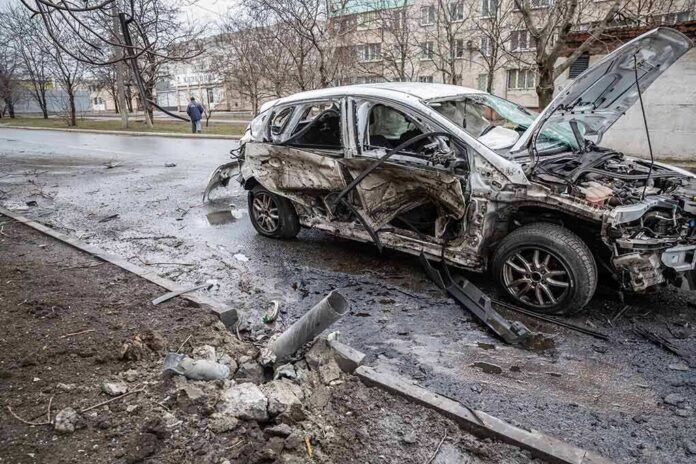
In parallel reporting on recent strikes, Ukrainian authorities and international media have underscored the same asymmetry: drones and subsonic cruise missiles are generally intercepted at high rates, while incoming ballistic missiles—faster, higher-arc, and often maneuvering—continue to inflict casualties and structural damage when they slip through the shield. In several of the capital’s worst nights, officials credited defenses with stopping the majority of drones and cruise missiles while acknowledging that ballistic missiles penetrated and hit residential and industrial sites.
How Ukraine’s layered air defense actually fights a mixed raid
A mixed raid is designed to stress a defender on multiple timelines. Drones fly long routes at low altitude to probe coverage and saturate response cells; cruise missiles arrive in coordinated windows at varying angles; ballistic missiles collapse decision time to seconds. Ukraine counters with a layered system: long-range surface-to-air missile batteries around major cities and infrastructure, medium- and short-range systems for point defense, mobile guns and MANPADS for low flyers, and a widening use of electronic warfare to jam drone navigation. When the Air Force reports “destroyed or suppressed,” it is describing that whole spectrum of effects—hard kills by interceptors, soft kills by jammers, and mission aborts forced by decoys or route denial.
The geometry explains the performance gap. Subsonic drones and cruise missiles give defenders minutes, sometimes longer, to detect, classify, and engage. Ballistic missiles compress this to fleeting windows and can arrive in clusters that must be deconflicted across radars and launchers, each with finite magazines. Even forces with advanced systems routinely struggle to achieve consistent intercepts against modern ballistic threats; Ukraine’s own officials have publicly characterized ballistic missiles as their most persistent challenge, and they have pursued more interceptors while developing indigenous anti-ballistic capabilities to close the gap.
How we got here: two years of adaptation on both sides
By late 2025, Russia had normalized massed, mixed-weapon attacks as a strategic instrument: waves of Iranian-designed Shahed drones, domestically adapted one-way UAVs, and barrages of cruise and ballistic missiles targeting energy nodes, logistics, and urban centers. Reuters coverage through 2025–2026 chronicles repeated cycles in which Kyiv absorbed large overnight raids, reported high intercept totals, and still faced lethal impacts when even a fraction of ballistic rounds landed in residential or industrial districts. The offensive logic is straightforward: force defenders to expend interceptors against plentiful, cheaper drones while preserving high-end missiles for windows when batteries are saturated or reloading.
Ukraine’s response has been equally iterative. The country stitched together Western-supplied systems, legacy Soviet platforms updated for the current fight, and domestically produced jammers and decoys. As these layers matured, interception rates for drones and cruise missiles during the heaviest Kyiv-focused raids climbed markedly; several independent monitoring efforts have documented high double-digit to mid-90% effectiveness against those classes in urban defense conditions. But as multiple nights in 2026 made clear, ballistic salvos still imposed costs—especially when timed to exploit gaps in interceptor stockpiles or coverage.
Reading the numbers without false precision
The phrase “destroyed or suppressed 175 targets” is typical of modern air-war reporting. It usefully captures the outcome that matters to a commander—did the attack fail to achieve its objectives?—but it can mislead the casual reader into assuming all 175 were physically shot down. In reality, the count aggregates distinct mechanisms: interceptors destroying drones or missiles, jammers severing drone guidance links, spoofing that sends UAVs off course, and forced mission aborts. Credible nightly tallies from Ukraine’s military and echoed by outlets like Censor.net provide the order of magnitude, but the granularity—how many were hard kills versus soft kills—often emerges later, if at all. That nuance explains why a city may report both high “targets defeated” and visible damage from a handful of penetrators the same morning.
International outlets covering Kyiv’s worst recent strikes have emphasized this duality. Some nights, defenders reported strong success rates yet still faced dozens of casualties and substantial structural damage after ballistic missiles reached their targets; other nights, especially when focused on drones and cruise missiles, the same defenses achieved very high intercept percentages with comparatively limited ground damage. The through-line is consistent: Ukraine’s defenses are effective against slow and medium-speed threats in layered urban coverage, and they are stretched—and sometimes outpaced—by concentrated ballistic barrages.
What it means going forward
The strategic signals are plain. Russia will keep using volume and variety to tax Ukraine’s magazines and decision-making, and it will reserve ballistic salvos to exploit timing and coverage gaps. Ukraine will continue investing in three levers: interceptor supply and launch capacity to sustain high-tempo defense nights, expanded electronic warfare to cheapen the defeat of drones at scale, and dedicated anti-ballistic capabilities to raise success against the most lethal slice of the threat. On any given night, a “175 targets defeated” headline can coexist with fires and casualties, not because the number is inflated but because the hardest class of weapons requires capabilities that few nations field in sufficient depth.
Sources:
facebook.com, kyivpost.com, censor.net, unn.ua, reuters.com, en.wikipedia.org