

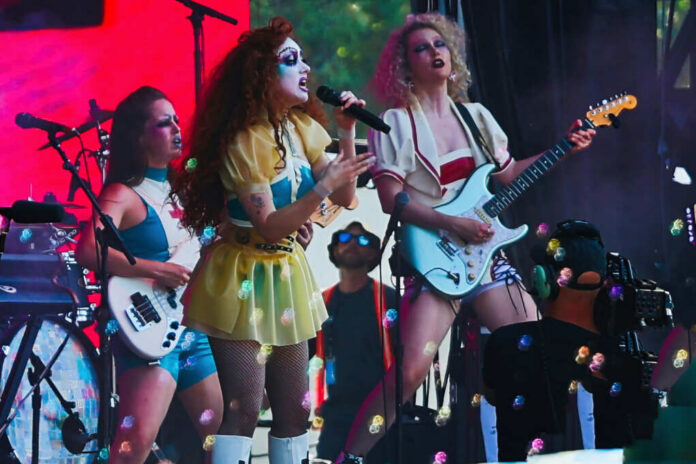
A Rio de Janeiro mayor just showed how fast government power can slam the door on an American entertainer—based on a single, disputed hotel encounter involving a child.
Story Snapshot
- Rio Mayor Eduardo Cavaliere publicly declared pop singer Chappell Roan will not be allowed to perform in Rio while he is in office.
- The trigger was an allegation from soccer player Jorginho Frello that Roan’s security team aggressively confronted his 11-year-old daughter at a São Paulo hotel.
- Roan denied seeing the family and said no one approached her, while also apologizing that the mother and child felt uncomfortable.
- Only one primary reporting source is provided in the research, leaving key facts uncorroborated by independent witnesses or hotel statements.
Mayor’s Ban Turns a Celebrity Dispute Into a Government Action
Rio de Janeiro Mayor Eduardo Cavaliere issued a public ban on Chappell Roan performing in the city after an alleged fan incident at a São Paulo hotel during Lollapalooza Brazil weekend. Cavaliere posted on X that, as long as he is “in charge,” Roan will “never perform” at “Todo Mundo No Rio.” The mayor also offered the child guest-of-honor recognition at an event in May, elevating the dispute into a political statement.
The immediate consequence is straightforward: if a major municipal event is controlled or influenced by the mayor’s office, the performer loses access to a market and local fans lose a show. The broader concern is precedent. When an elected official uses a public platform to blackball an artist over a contested account, it blurs the line between public safety governance and public-relations retaliation—especially before any neutral fact-finding is presented to the public.
What Jorginho Alleged—and Why the Story Spread So Quickly
Jorginho Frello, a professional soccer player and a high-profile public figure in Brazil, described what he called a “very upsetting situation” involving his 11-year-old daughter. According to the account cited in the research, the child was allegedly approached by security and addressed in an “extremely aggressive manner.” The involvement of a recognizable athlete mattered: his online reach and credibility accelerated the narrative, turning an ordinary celebrity-security complaint into a viral controversy with political follow-through.
The available research does not include independent witness statements, hotel staff accounts, or a detailed explanation from the security team about what they perceived as a risk. That missing context matters because security operations often rely on rapid threat assessment, sometimes misreading innocent behavior in crowded, emotionally charged environments. Without corroboration, the public is left choosing between two competing versions—an approach that invites overreaction and encourages officials to act before the facts are settled.
Roan’s Denial, Partial Apology, and the Central Factual Conflict
Chappell Roan responded on Instagram stories by denying that she saw the mother and child, saying she was sitting at breakfast in her hotel and that “no one came up” to her. She also rejected the idea that she hates fans or children. At the same time, she apologized to the mother and child for the discomfort they experienced, stating they did not deserve to feel that way. Her account directly conflicts with the allegation of an aggressive interaction.
This is the heart of the integrity problem in the public debate: the mayor’s punitive declaration arrived even though the core question—what exactly security did, why they did it, and whether Roan had any role—remains unclear from the provided reporting. A public official can express concern for a child’s experience while still insisting on basic due process and verification, especially when the “penalty” is a sweeping prohibition announced to millions.
Government Overreach vs. Standards of Conduct in Public Spaces
For American readers who value limited government, this incident lands as a cautionary tale even though it occurred abroad. When political leaders decide who may perform based on a social-media controversy, the impulse resembles “rule by outrage” rather than rule by established standards. At the same time, the underlying issue—how powerful people and their security treat ordinary families—resonates because basic decency is not optional, and children should never be collateral damage in celebrity bubbles.
Rio mayor bans Chappell Roan from performing in his city after fan incident controversyhttps://t.co/lqDw80DnEj
— BREAKING NEWZ Alert (@MustReadNewz) March 23, 2026
The research also underscores a reporting limitation: the information provided leans heavily on statements from the involved parties and a single news outlet’s coverage. That means readers should treat definitive conclusions with caution. The cleanest, fact-based takeaway is that a mayor announced a ban, a famous father alleged mistreatment of his child by security, and the artist denied key elements while apologizing for the family’s discomfort—leaving the public with unanswered questions and a heavy-handed political response.
Sources:
Rio mayor bans Chappell Roan from performing in his city after fan incident controversy