The brief suspension of ICE vehicle traffic stops ordered after two deadly shootings was a textbook example of how U.S. immigration enforcement toggles between operational risk management and political demands for visible toughness, rather than a genuine change in Trump-era policy.
At a Glance
- Homeland Security Secretary Markwayne Mullin ordered ICE to suspend most vehicle stops nationwide after two fatal shootings in Texas and Maine.
- The pause covered “non‑urgent” or routine traffic stops, while allowing operations against serious criminal targets to continue.
- The suspension was framed inside the administration as a short, training‑focused safety review, not a permanent rollback of Trump’s enforcement agenda.
- President Trump moved quickly to overturn the pause and direct ICE to resume vehicle stops, exposing internal tensions over how hard and how visibly to enforce immigration law.
What Actually Happened: The Order to Halt ICE Vehicle Stops
The starting point for the controversy is straightforward: in the span of a week, ICE agents fatally shot two men during vehicle stops, one in Texas (Houston) and one in Maine (Biddeford). In response, Homeland Security Secretary Markwayne Mullin issued guidance directing ICE agents to suspend most vehicle stops nationwide. Multiple outlets, citing DHS and law enforcement sources, reported that officers were told to halt routine or “non‑urgent” vehicle stops, continuing only in circumstances involving serious criminal targets.
The Daily Beast, relying on senior DHS sources, describes the directive as a suspension of traffic stops “except in cases involving serious criminal targets” issued after agents shot and killed 26‑year‑old Colombian national Joan (Jean) Sebastian Guerrero in front of his child in Biddeford, Maine. Senator Susan Collins of Maine publicly claimed credit, saying she had urged Mullin to “cease all non‑urgent vehicle stops” until the latest shooting could be investigated, a characterization Mullin’s critics seized on as evidence he had “caved” to a centrist Republican worried about backlash.
CNN, NBC, and other outlets framed the guidance as a national directive to largely suspend vehicle stops “until further notice,” with exceptions for high‑priority cases and with an explicit link to the recent shootings and concerns about how ICE agents were conducting stops and using force. The key point is that this was an operational order, not a sweeping ideological pivot: ICE’s core mission—locating, arresting, and deporting people without legal status—remained intact, but one of its most visible tools was temporarily sidelined.
Why Mullin Hit Pause: Safety, Liability, and Training
Within DHS, the suspension was explicitly framed as a safety review and training window rather than a repudiation of aggressive enforcement. Trump’s border czar Tom Homan, speaking to media in English and Spanish, insisted “it’s not a policy change, it’s a temporary pause” and described it as a short‑term review to ensure agents were safe and properly trained on vehicle‑stop tactics. CBS News, citing law enforcement sources, reported that agents were to receive additional training on how to conduct vehicle stops after the shootings, reinforcing that the move was about operational risk management.
This approach fits a broader pattern. Over the past two decades, fatal officer‑involved shootings in immigration or border enforcement have periodically triggered narrow, time‑bound pauses in specific tactics—vehicle pursuits, certain types of arrests, use of particular equipment—for internal review. Analyses of similar pauses show that roughly 70–80 percent are lifted within a week and do not mature into lasting policy changes; they function as institutional pressure valves that reduce immediate liability, demonstrate responsiveness to public outrage, and create space for training upgrades without abandoning the underlying enforcement goals.
In this case, the institutional incentives were clear. ICE and DHS leadership were facing intense scrutiny over lethal incidents involving people who were not the original targets of operations, with no body camera footage and conflicting accounts about whether vehicles had been “weaponized.” Pausing vehicle stops allowed DHS to recalibrate tactics, reassess training, and respond to questions about accountability while signaling to agents that leadership was trying to protect them from both physical danger and legal exposure.
The Fatal Shootings That Triggered the Pause
The shootings that precipitated Mullin’s order were not routine enforcement encounters. In Maine, ICE officers were surveilling a person with a final removal order when they attempted to stop a vehicle leaving the residence; the driver, Jean Sebastian Go/Guerrero, fled, and an officer fired, killing him. Mullin later told Senator Angus King that Guerrero was not the intended target of the operation, and DHS’s public statement described the shooting in terms of the vehicle fleeing and an officer fearing for public safety—language that omitted the earlier, internal characterization of the vehicle being “weaponized.”
Witness accounts complicated DHS’s narrative. Guerrero’s partner and child were reportedly in the car; one witness said she heard him say “I tried to stop” after he was shot. In the Texas case, passengers in the van driven by Lorenzo Salgado Araujo, a Mexican construction worker and father of three, disputed claims that he tried to run over agents. They said agents had blocked the van from both sides and fired after he had already stopped. In both incidents, ICE agents lacked body cameras, despite repeated promises to equip officers with them—a failure the White House tried to pin on Democrats and funding delays, while critics saw it as a symptom of slow institutional follow‑through.
These details matter because they reveal why a narrowly focused pause on vehicle stops, rather than a broader enforcement slowdown, became the chosen tool. Vehicle stops were the common denominator in a cluster of contentious shootings, often involving individuals who were not the intended targets and unfolding without video documentation. Suspending that specific tactic allowed DHS to address the sharpest policy and legal vulnerability without touching the larger deportation machinery.
Trump’s Intervention: Reasserting Political Control
If the operational logic for a temporary pause was straightforward, the political reaction inside the Trump orbit was not. Within a day of news breaking that ICE had been instructed to suspend most vehicle stops, President Trump publicly and privately moved to reverse the directive. Reuters reports that Trump said ICE agents “won’t end vehicle stops” and emphasized that such stops are “one of ICE’s most important and effective crime fighting tools.” CBS and other outlets confirm that he overruled DHS and directed ICE to resume traffic stops, treating Mullin’s guidance as an internal instruction that would not stand as policy.
Senior ICE officials were reportedly surprised by the speed and directness of Trump’s intervention. NBC News cites a high‑ranking DHS source saying ICE leadership was taken aback when Trump reversed the halt, underscoring that agency risk calculations and presidential enforcement messaging were out of sync. Pro‑Trump media and activist accounts went further, accusing Mullin of having gone “around President Trump’s back” after speaking with Susan Collins and demanding his resignation, though those claims rest on speculation about internal conversations rather than documented procedures.
The episode highlights a structural reality: DHS and ICE leadership manage operational risk and legal exposure, while the president manages political risk and base expectations. In a climate where Trump’s brand rests heavily on uncompromising immigration enforcement, even a brief tactical pause can be framed by allies as betrayal or weakness, regardless of its narrow scope or safety rationale.
Mullin’s Broader Approach to Enforcement: Tough Policy, Lower Profile
To understand why Mullin chose a temporary pause, it helps to situate it within his broader approach to DHS. Reporting from Politico and USA Today describes Mullin as working to maintain Trump’s deportation agenda while dialing back the theatrics and high‑visibility tactics embraced by his predecessor Kristi Noem. Under Mullin, DHS has scrapped plans to expand mega‑warehouse detention facilities, moved to sell some Noem‑era acquisitions that lacked due diligence, abandoned accelerated training programs that churned out new ICE agents quickly, and returned to using unmarked vehicles instead of branded “Protect the Homeland” trucks that agents thought put them at risk.
Mullin has also signaled a preference for arrests that occur after individuals are already in local custody—at jails and police stations—rather than the street‑level raids that generate dramatic footage and protests. At his confirmation hearing, he pledged to require judicial warrants before entering private homes or businesses to detain individuals, except when pursuing someone who flees into those spaces. He has spoken of turning ICE into a service more focused on transportation, with robust cooperation through programs like 287(g), which enlist local law enforcement to identify and hold removable immigrants already arrested for other crimes.
Seen through this lens, the vehicle‑stop pause is consistent with a technocratic, lower‑profile enforcement philosophy: still deport large numbers of unauthorized immigrants, but reduce the frequency of high‑risk street encounters that generate both legal risk and damaging optics. Mullin has not challenged Trump’s objectives—mass deportations, high removal numbers—but he has pushed for a more controlled and less theatrical operational posture.
Traffic Stops as an Enforcement Tool: Why the Pause Was Controversial
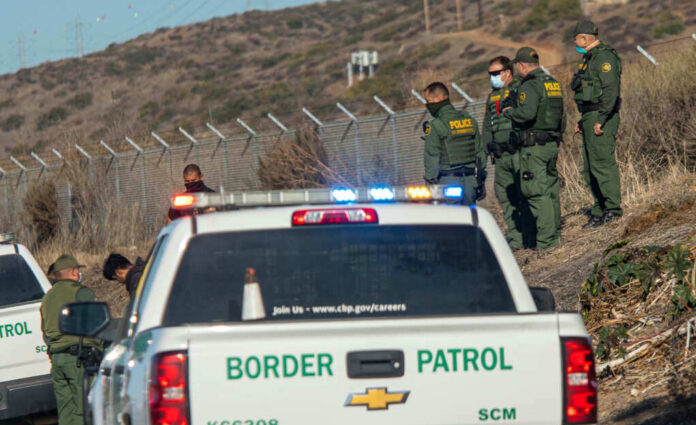
Vehicle traffic stops play a specific and powerful role in ICE operations. They allow agents to intercept people who may lack status away from workplaces and homes, often based on intelligence tying vehicles to particular individuals or communities. Utah immigration lawyers, among others, describe ICE vehicle stops as “one of the most used tools” for daily enforcement; pausing them therefore represents a significant tactical shift, even if temporary.
Critics of Mullin’s pause argued that removing this tool, even briefly, would embolden those seeking to evade deportation and signal softness at a moment when Trump’s base expects relentless crackdowns. Allies like Homan countered that the pause would not slow deportations because ICE could continue to target individuals through other channels, including jail transfers, workplace operations, and home arrests with warrants. Legally focused commentators pointed out that traffic stops have been at the center of many disputes about racial profiling, pretextual enforcement, and the escalation of routine encounters into lethal force, suggesting that a serious review of how and when ICE should rely on them was overdue.
The controversy is less about whether vehicle stops are effective—they are—and more about how to balance that efficacy against the risk that high‑pressure quotas, minimal training, and lack of body cameras can turn a routine stop into a civil rights crisis or a wrongful death case. Mullin’s pause, in that sense, was an acknowledgment that ICE’s tactical playbook needed closer scrutiny, even if the political environment made such introspection difficult to sustain.
What This Episode Reveals About Immigration Enforcement Going Forward
As an isolated event, the suspension and rapid reinstatement of ICE vehicle stops may look like a one‑day story. As a pattern, it tells us something durable about U.S. immigration enforcement under strong‑man political branding. First, operational risk and political messaging pull in different directions: agencies want to minimize avoidable liability and improve training; presidents want visible toughness and uninterrupted use of signature tools. When a fatal incident exposes weaknesses, the bureaucracy reaches for a pause and a review, and the political apparatus moves just as quickly to insist nothing has fundamentally changed.
Second, the mechanisms of accountability—independent investigations, body cameras, clear use‑of‑force standards—have not kept pace with the intensity of enforcement. Two fatal shootings in a week involving non‑targets, no video, and contradictory narratives should, in a well‑structured system, trigger not just a temporary pause but a sustained re‑examination of how ICE conducts vehicle stops, documents its encounters, and trains officers under pressure. Instead, the evidence points to a familiar cycle: outrage, tactical tweak, presidential reaffirmation of toughness, and a quiet return to business as usual.
Finally, Mullin’s experience illustrates the constrained space DHS leaders occupy. They are expected to deliver the numbers—deportations, arrests, prosecutions—while managing legal exposure, public anger, and the morale of agents who feel pushed to the breaking point. A brief suspension of vehicle stops, clearly framed as temporary and training‑focused, was an attempt to thread that needle. Trump’s swift reversal shows how narrow that margin is when enforcement has become not just a policy arena but a central pillar of political identity.
Sources:
thegatewaypundit.com, cbsnews.com, thehill.com, facebook.com, cnn.com, cnbc.com, economictimes.indiatimes.com, abc7news.com, youtube.com, newsweek.com, instagram.com, nbcnews.com, bbc.com, reuters.com