

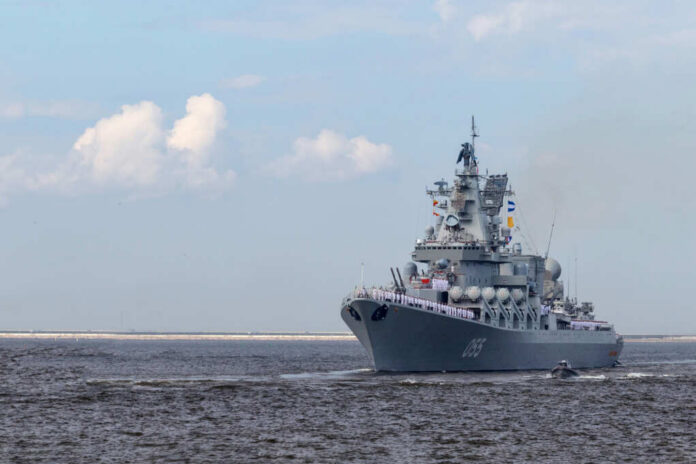
Fires aboard U.S. Navy ships are not random bad luck; they are the visible symptom of a long-running breakdown in how the service trains, supervises, and learns from dangerous mistakes at sea and in the shipyard.
Key Points
- Independent government audits document at least 15 major Navy ship fires since 2008, causing roughly $4 billion in damage and the loss of two vessels, with many more incidents going unreported.
- Investigations into catastrophic blazes like the USS Bonhomme Richard found fundamental failures in firefighting training, maintenance, watchstanding, and command climate—not just bad luck or a single saboteur.
- The Government Accountability Office (GAO) concludes the Navy still lacks a coherent system to collect, analyze, and apply lessons from fires service-wide, leaving recurring hazards unaddressed.
- Recent high-profile incidents—including the USS Higgins electrical casualty and fires on USS Eisenhower, Zumwalt, and Gerald R. Ford—fit a broader pattern of labeling events as isolated “casualties” while root causes remain opaque.
- Reforms since 2020 have improved some procedures, but staffing shortfalls, weak contractor accountability, and cultural complacency continue to undermine fire safety across the fleet.
From “One-Off” Mishaps to a Recognized Pattern
When a destroyer like USS Higgins loses power and propulsion after an electrical casualty, it is tempting to treat the event as an isolated scare—an unfortunate but contained technical malfunction. That is exactly how official statements often frame such incidents. Yet when you zoom out beyond one ship and one deployment, a different picture emerges: fires are a routine operational hazard for the U.S. Navy, and the institution has struggled for years to bring that risk under disciplined control.
Between 2008 and 2020, Navy ships experienced at least 15 major fires, most of them while the vessels were in maintenance status; total damage exceeded $4 billion and two ships were written off entirely. Those are only the big ones. A Naval Safety Command awareness bulletin reviewing recent data found roughly one shipboard fire reported per day across the fleet—mostly minor, but each a potential near-miss. GAO’s central finding is blunt: the Navy does not consistently collect or analyze fire-related data, so it systematically underestimates both the scale of the problem and its recurring causes.
What Investigations Have Already Shown
If the spring 2026 cluster of fires is still under investigation, we can nonetheless learn a great deal from the cases that have already been dissected in detail. The July 2020 fire aboard the amphibious assault ship USS Bonhomme Richard in San Diego is the most consequential recent example. The blaze, triggered by arson, burned for days, spread to 11 of 14 decks, and ultimately led the Navy to decommission and scrap a ship that could have cost up to $3 billion to repair.
The official investigation did not stop with the arsonist. It found sweeping failures at every level: poorly prepared and minimally trained crew, broken or missing equipment, tampered fire stations, inadequate coordination with local firefighters, and a command structure that had allowed standards to erode. A separate “Major Fires Review” looking across 15 events reached similar conclusions, highlighting improper stowage of combustibles, noncompliance with fire prevention rules, and a “significant and largely unmitigated threat” from negligence and arson.
In short, when investigators have gone deep, they have found systemic issues: weak damage-control culture, slipshod maintenance practices, and a tendency to accept degraded readiness as normal. That pattern should inform how we interpret newer incidents, even before their final reports are public.
What Makes Naval Fires So Difficult to Control
On a modern warship, fire safety is not a single system but an ecosystem. It spans design, materials, engineering, and human behavior. Technical studies of fire growth aboard combat ships have long emphasized how quickly flames can spread through tight compartments, cable ways, and ventilation trunks, especially when combined with fuel, solvents, or accumulated trash. Fire suppression for the Navy has evolved from halon-based systems to more complex alternatives, but those systems are only as effective as the maintenance and training that keep them ready.
Two environments are especially dangerous. First, maintenance periods, when welding (“hot work”), painting, and cable replacement introduce ignition sources and flammables to a ship whose normal watertight integrity is often compromised. GAO’s 2023 report underscored that ships in maintenance face inherently higher risk and that most major fires since 2008 occurred in that context. Second, high-tempo deployments stretch crews thin, increasing fatigue and the temptation to cut corners on housekeeping, inspections, and drills—the basic habits that prevent small anomalies from becoming casualties.
GAO’s Verdict: A Learning System That Doesn’t Learn
The most worrying theme in independent oversight is not that the Navy has fires; it is that the Navy has been slow and inconsistent in learning from them. GAO auditors found that fire-related lessons are collected in multiple databases using inconsistent criteria, with no single organization empowered to synthesize patterns or drive service-wide change. Fire investigations might recommend improvements for one ship or one yard, but those insights too often die in the paperwork rather than reshaping doctrine, contracts, and training across the fleet.
GAO recommended three foundational changes: standardizing the collection and analysis of fire data, designating a single entity responsible for understanding the strategic impact of ship fires, and creating measurable goals for fire-safety training. The Navy has agreed in principle, but implementation has been halting. Commentaries from defense analysts and watchdog groups highlight that the institution still lacks the kind of closed-loop safety system seen in commercial aviation or nuclear power, where every incident feeds a disciplined process of redesign, retraining, and enforcement.
Maintenance Periods: Where Risk and Weak Oversight Intersect
The maintenance environment remains the Navy’s most acute vulnerability. GAO emphasizes that despite reforms after Bonhomme Richard—additional fire watches, better hot-work controls, improved training—critical weaknesses persist. Organizations responsible for shipyard fire safety are understaffed, limiting the number and quality of on-site inspections. Contractor oversight is hindered by weak financial incentives: repair yards can receive 99% of their payment during the work period, with only 1% withheld until completion, and contract clauses limit their liability for damage, leaving taxpayers to absorb most losses from fires they may have helped cause.
In this setting, “paper compliance” is a real danger. Procedures exist, but enforcement is uneven, and contractors know that the financial downside of corner-cutting is modest. The Major Fires Review noted that four of the 15 events it studied were directly tied to improper hot work, but flagged improper stowage of combustibles as the more pervasive hazard. Without stronger staffing, enforcement tools, and liability alignment, the risk that another Bonhomme Richard–scale event could occur in a yard remains uncomfortably high.
The Spring 2026 Incidents: What We Know and What We Don’t
Four fires or fire-related casualties within six weeks—aboard USS Higgins, USS Dwight D. Eisenhower, USS Zumwalt, and USS Gerald R. Ford—have raised understandable concern that the Navy has a new crisis on its hands. Official statements have generally framed these as discrete events: an electrical “engineering casualty” on Higgins that caused a temporary loss of power and propulsion but was confined to a single piece of equipment; a laundry-space fire on Ford that, according to Central Command, did not affect propulsion or combat systems; and maintenance-related mishaps on Eisenhower and Zumwalt with injuries but limited publicly described damage.
At this stage, none of those incidents is backed by a publicly released root-cause investigation that would let outside analysts say definitively whether they stem from systemic failures or from random equipment faults. Critics point to sailor accounts and media reporting around the Ford fire that describe far more extensive damage—hundreds of bunks and toilets lost and more than 200 sailors treated for smoke inhalation—than official communiqués initially acknowledged. That gap fuels suspicions not only about material readiness but about transparency.
The responsible way to read this conflicting evidence is neither to dismiss the spring 2026 cluster as meaningless nor to declare it proof of imminent collapse. Instead, it should be seen against the backdrop of documented historical patterns: the Navy has had repeated, serious fires; investigations have found systemic deficiencies; and GAO says the learning loop is still incomplete. Within that context, a cluster of new fires is a warning signal that demands thorough, public root-cause reports, not just terse press releases.
Culture, Accountability, and the Politics of Messaging
Fire safety is not politically neutral. Coverage of the Gerald R. Ford fire and of inconsistent casualty reporting during overseas operations has come from both mainstream outlets and openly partisan channels. Some criticism frames the Navy’s communication failures as part of a broader pattern of political leaders minimizing bad news from the fleet. Others focus more narrowly on institutional self-protection: the tendency of any large bureaucracy to downplay its own mistakes until external pressure forces disclosure.
What we can say with confidence is that opacity undermines trust. When official narratives describe a “small” or “contained” event and later accounts from sailors and subsequent reporting suggest much more serious consequences, sailors and families draw the obvious conclusion: they are not getting the full story. In the long run, that distrust is itself a safety hazard, because it discourages candid reporting of near-misses, suppresses bad-news up the chain, and weakens the feedback loops on which real safety cultures depend.
What a Serious Fire-Safety Strategy Would Require
A Navy that is serious about its “fire problem” would treat the current spate of incidents as an opportunity to finish reforms that have been partial and uneven. At a minimum, that would mean:
First, completing GAO’s homework: standardizing fire incident reporting, designating a single analytic authority, and setting concrete metrics for training and readiness. Second, fixing the incentive structure around maintenance by strengthening staffing for fire-safety oversight, revising liability and payment clauses so contractors have real financial skin in the game, and enforcing hot-work and combustible-stowage rules with meaningful penalties.
Third, deepening damage-control culture at sea. The Bonhomme Richard investigation showed that even a modern ship can be lost when basic firefighting knowledge, drills, and watchstanding standards decay. That lesson must be embedded not just in checklists but in promotion systems and command evaluations. Finally, the Navy needs a more candid public posture: prompt release of investigation summaries, clear acknowledgment when early statements were incomplete, and an explicit commitment to treat sailors and their families as partners in safety, not as audiences to be managed.
Why This Matters Beyond the Navy
Ship fires are not just internal Navy housekeeping issues; they are strategic events. Every ship laid up for repairs or lost outright shrinks the fleet’s combat power and flexibility. Major fires in home ports can tie up shipyards for months, crowding out other maintenance work and degrading readiness across entire strike groups. At the same time, the way the Navy handles accidents—before, during, and after—signals to allies and adversaries alike how resilient and self-correcting the institution really is.
Over seven decades of naval operations, fires have killed more U.S. sailors than any enemy navy, and mass-casualty carrier fires have repeatedly forced the service to overhaul its procedures, equipment, and training. The question now is whether the Navy will use the evidence already in hand—from GAO, from its own major-fires review, from the painful loss of Bonhomme Richard—to make the systemic changes required, or whether future historians will add the Higgins, Eisenhower, Zumwalt, and Ford incidents to a longer list of warnings the fleet failed to fully heed.
Sources:
19fortyfive.com, youtube.com, cbsnews.com, militarytimes.com, washingtonexaminer.com, aa.com.tr, facebook.com, dvidshub.net, reddit.com, mezha.net, stripes.com, 13newsnow.com, gao.gov, navytimes.com