A sitting American pope just publicly branded President Trump’s Iran ultimatum “immoral” as the world watched the Strait of Hormuz—and global energy markets—hang on a deadline.
Quick Take
- Pope Leo XIV condemned Trump’s “whole civilization” threat toward Iran as unacceptable, immoral, and contrary to international law.
- Hours later, Trump announced a two-week halt to U.S. operations in a ceasefire reportedly brokered by Pakistan.
- Iran agreed to reopen the Strait of Hormuz under its military coordination, easing immediate pressure on global energy flows.
- The episode highlights how high-stakes foreign policy messaging can collide with moral authority—without proving who actually moved the decision.
Pope Leo’s rare direct rebuke of a U.S. president
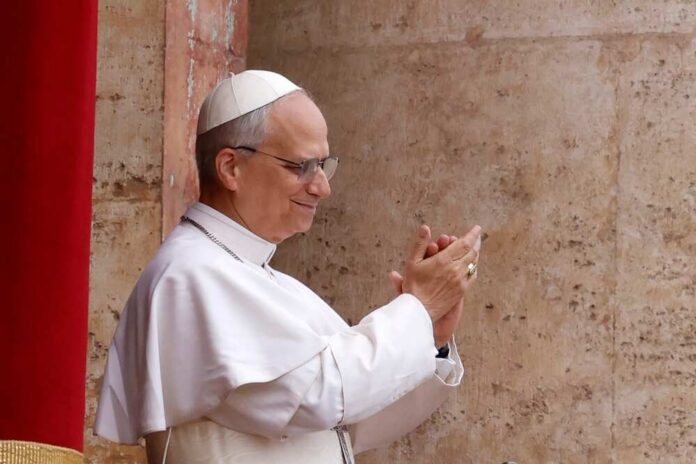
Pope Leo XIV, the first American pontiff, delivered an unusually pointed message on April 7, calling out President Donald Trump by name after Trump issued a public deadline and warned Iran that “a whole civilization will die tonight” if it did not comply with ceasefire terms and reopen the Strait of Hormuz. Leo described threats against civilians and civilian infrastructure as unacceptable and immoral, urging dialogue and prayer instead of escalation.
That directness matters politically because popes typically speak in broad principles rather than confronting specific elected leaders in real time. Leo’s comments also landed in the thick of Holy Week, after earlier remarks condemning war-justifying religious rhetoric. For voters already convinced that global institutions pick fights with American leaders, the moment reads like a public clash between U.S. executive power and a global moral voice.
The timeline: deadline diplomacy meets a last-minute pause
The ceasefire announcement came just hours after the papal condemnation and roughly two hours before Trump’s deadline. Trump then declared a two-week halt to U.S. operations, while Iran confirmed that the Strait of Hormuz would reopen under Iranian military coordination. Reporting credits Pakistan with brokering the deal. As of April 7–8, the ceasefire was described as holding, offering a temporary off-ramp in a war that began Feb. 28 when U.S. and Israeli forces launched strikes on Iran.
Still, the cause-and-effect story is harder to prove than the dramatic timing suggests. Some accounts frame the pope’s intervention as pivotal; others treat the pause as tactical—an attempt to gain leverage, reduce operational risk, or stabilize a rapidly deteriorating situation. What can be stated confidently is sequence, not motivation: the pope’s rebuke happened, and a pause followed soon after, but available reporting does not establish a direct line of influence.
Why the Strait of Hormuz is the economic pressure point
The Strait of Hormuz remains the clearest link between Middle East conflict and the daily lives of Americans, especially older households living on fixed incomes and still angry about inflation and energy costs. When Hormuz is threatened or closed, markets react quickly because so much global oil transits the corridor. The reported reopening reduces the immediate risk of a fresh energy shock, at least temporarily, even as the broader U.S.-Iran conflict remains unresolved.
Domestic political fallout: restraint vs. credibility in an “America First” era
For conservatives who prioritize strength abroad and stability at home, the episode underscores a familiar tension. Hard deadlines and maximal rhetoric can project resolve, but they can also raise the stakes so high that any climbdown looks like inconsistency. At the same time, the ceasefire pause can be read as a pragmatic move to protect U.S. interests—especially energy stability—without abandoning the goal of pressuring Iran. The reporting also notes Trump had threatened strikes on civilian infrastructure if demands were not met, a claim the pope argued would violate international law.
For many liberals and some foreign policy skeptics, the pope’s language amplifies concerns about civilian harm and escalation. For many conservatives, the bigger worry is that global “elite” institutions feel freer than ever to publicly lecture Americans while ordinary citizens pay the costs of war, instability, and higher prices. Either way, the story reinforces a bipartisan frustration: high-level decisions can look performative and chaotic, while families are left with uncertainty about security and the economy.
The next two weeks will test whether the ceasefire is a bridge to negotiations or simply a pause before the next round of escalation. The strongest confirmed facts are limited to what was said and what was announced: a papal rebuke, a U.S. operational halt, Pakistan’s mediator role, and Hormuz reopening under Iranian coordination. Everything beyond that—especially claims about who “forced” the pause—remains interpretation rather than proof.
Sources:
Pope Leo XIV escalated his criticism of the war in Iran …
Pope Leo Condemns Trump’s “Unacceptable” Threat to …
Pope says Trump’s threat to destroy Iranian civilization is ‘ …