
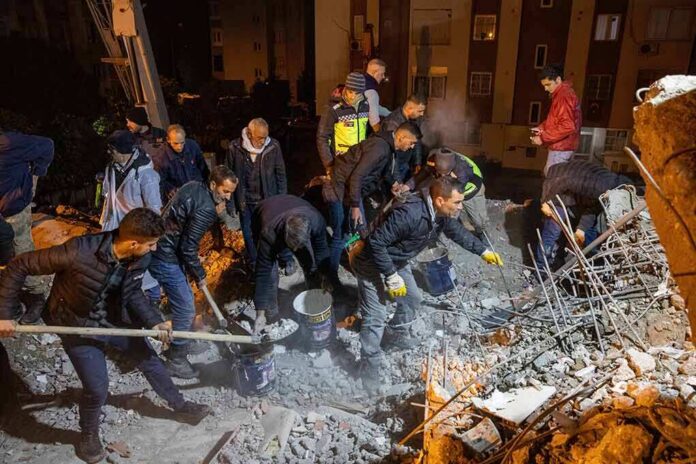
Eight people are dead after a Brooklyn building collapsed as firefighters tunneled through rubble in a race to find survivors, officials said.
Story Highlights
- Firefighters launched a major rescue after a three-story mixed-use building at 1321 Flatbush Avenue collapsed.
- Officials reported a rising death toll and multiple injuries as searches continued.
- City agencies and utilities worked together on-scene, while the cause remained under investigation.
- Records show nearby excavation and earlier violations at an adjacent site, but no official cause yet.
Confirmed Timeline and Location
City officials said a 911 call came in at about 4:01 p.m., reporting a building collapse with people trapped inside. Firefighters arrived within about one minute and began digging and tunneling through debris to reach void spaces. The collapse occurred at 1321 Flatbush Avenue, a three-story mixed-use building with residential units above. Early reports varied on the number of floors and whether the failure was partial or complete, reflecting the pace of a live rescue scene.
New York City Department of Buildings records tied to the address describe a building with four residential units and five total units, consistent with a small mixed-use structure on a busy corridor. Crews used saws, airbags, and shoring to stabilize sections while they searched. Officials cautioned that the scene remained dangerous, with shifting debris and narrow access points. The New York Police Department maintained perimeter control to allow constant movement of heavy equipment and medical teams.
Rising Casualty Count and Rescue Operations
Officials said the death toll rose as searches continued, with additional victims found during the night and into the next day. Injury counts also shifted as patients were assessed and transported, including at least one firefighter treated for injuries. Reporting from the Fire Department of the City of New York, the New York Police Department, and city leaders tracked these changes in near real time as bodies were recovered and survivors were pulled out.
More than 250 personnel from the Fire Department of the City of New York and Emergency Medical Services worked the pile, alongside city engineers, utility crews, and the American Red Cross, which opened a reception area for displaced residents. Utility companies cut gas and electricity to reduce risk. The Department of Buildings issued a stop-work order at the site and began an engineering review to understand the sequence of the failure.
Cause Under Investigation and Adjacent Work
Investigators said the cause of the collapse remained under review. The Department of Buildings sent engineers to examine the debris, the remaining structure, and site conditions. Officials stressed that they would not name a cause until the investigation finished. During the rescue, reporters noted excavation and demolition work at the neighboring lot and cited earlier violations and fines tied to that site. Those facts, by themselves, do not establish the cause of this collapse.
This pattern mirrors other urban collapses. Adjacent excavation can threaten a building if crews fail to protect foundations or manage soil movement. But investigators must test whether support systems were in place and followed in the right sequence. That is why officials separate what they know—the where, when, casualties, and response—from what needs expert analysis—the exact structural failure and any link to nearby work. That review will guide accountability and any safety changes.
Why This Matters for Public Safety
New Yorkers expect to live and work in safe buildings, and they expect rules to be enforced. When a small mixed-use building crumples on a weekday, the whole system is on trial: permits, inspections, contractor choices, and city oversight. Both conservatives and liberals agree on this point. If agencies miss red flags or if bad actors cut corners, working families pay the price. Clear answers on cause, code compliance, and enforcement will be essential here.
What Comes Next
Engineers will document debris patterns, foundation conditions, and any shoring or underpinning at shared walls. The Department of Buildings will review permits, past complaints, and prior violations for both the collapsed building and the neighboring site. The Fire Department of the City of New York and the New York Police Department will finalize the casualty list after identifications. When complete, these findings should show whether construction activity, building condition, or another factor triggered the failure and if rules need to change.
Sources:
washingtontimes.com, abc7news.com, ny1.com, abc12.com, nydailynews.com, abc7ny.com, whmi.com