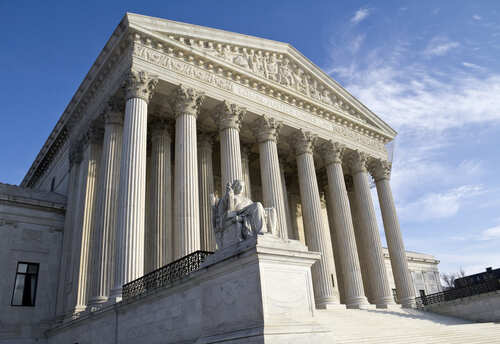
President Trump’s appeal to the Supreme Court to overturn the E. Jean Carroll verdict reignites the battle over due process and the weaponization of the justice system against conservatives.
Story Snapshot
- President Trump’s legal team formally requested the Supreme Court to review the E. Jean Carroll verdict that found him liable for sexual abuse and defamation.
- The appeal challenges the lower court’s evidentiary rulings, arguing they undermined the principle of a fair trial and due process.
- The case highlights ongoing debates regarding the political neutrality of the legal system in high-profile civil cases.
- The administration’s policy record includes actions aimed at regulatory rollbacks and strengthened border enforcement.
Trump Appeals E. Jean Carroll Verdict, Citing Due Process Concerns
On Monday, November 10, 2025, President Donald Trump’s legal team formally petitioned the U.S. Supreme Court to overturn the jury verdict in the civil lawsuit filed by writer E. Jean Carroll. The original verdict, delivered in May 2023, found Trump liable for sexually abusing and defaming Carroll, resulting in a $5 million judgment.
Trump’s attorneys argued in the filing that the verdict resulted from a series of “indefensible evidentiary rulings” by the trial judge, Lewis A. Kaplan, that unfairly prejudiced the jury. Specifically, the appeal challenges the admission of “highly inflammatory propensity evidence,” such as testimony from other accusers, and contends that the trial process undermined the principle that every American is entitled to a fair trial and due process of law. The legal team also characterized Carroll’s claims as a “politically motivated hoax,” which the opposing side has rejected.
President Trump asks the U.S. Supreme Court to REVERSE the ruling that found him liable for “sexually abusing” E. Jean Carroll
Do you support arresting E. Jean Carroll?
A. Hell yes
B. No pic.twitter.com/FB7GhTvwjD— 𝔉🅰𝒏 Karoline Leavitt (@WHLeavitt) November 11, 2025
Legal Challenges to Judicial Process
The E. Jean Carroll case is part of a broader set of legal challenges involving high-profile political figures that have prompted debate over the political neutrality of the U.S. judicial system. Supporters of President Trump’s position view these lawsuits as attempts to use the courts for political gain. The trial followed the enactment of New York’s Adult Survivors Act, which temporarily revived civil claims outside the typical statute of limitations.
The Second U.S. Circuit Court of Appeals previously upheld the verdict in December 2024 and rejected a request for a full-court review in June 2025, leaving the Supreme Court as the final appellate recourse.
Policy Context: Trump’s 2025 Agenda
Since the start of his second term in 2025, President Trump has prioritized a government agenda focused on regulatory rollbacks and fiscal discipline. Executive actions have included the revocation of numerous prior executive orders and the elimination of several DEI mandates. Policy focus has been placed on strengthening law enforcement, increasing border security (including ending “catch-and-release” and resuming construction of the border wall), and enhancing economic growth.
The administration has cited robust economic growth and low unemployment rates as evidence of successful policy implementation, emphasizing a commitment to reducing regulations and controlling government spending.
Legal Battles and Constitutional Implications
The Supreme Court’s consideration of the Carroll appeal will test the boundaries of civil law procedures when applied to a sitting President. The ultimate ruling will have significant implications for the future application of due process standards and the admissibility of evidence in civil cases involving public figures.
The ongoing legal campaign against President Trump is frequently cited in the national debate over the politicization of the justice system and the protection of individual liberties. The coming months will determine whether the Supreme Court agrees to hear the appeal and how the final judicial outcome shapes the legal landscape for political figures in the United States.