New York City’s new mayor has reframed the city’s entire history as one of colonization and racial oppression, raising alarms about divisive policies that critics warn could tear the fabric of America’s largest city apart.
Story Snapshot
- Mayor Zohran Mamdani describes NYC’s foundational history as built on slavery, stolen wealth, and racist institutions in official statements
- His administration launched a “Global Oppression and Public Health Working Group” citing Gaza as an example of ongoing genocide affecting New Yorkers’ health
- The Department of Justice has opened an investigation into Mamdani’s racial equity plan over potential discrimination law violations
- Twenty percent of Mamdani’s appointees have ties to anti-Zionist organizations, prompting warnings from the Anti-Defamation League about dangers to the Jewish community
Rewriting New York’s Legacy
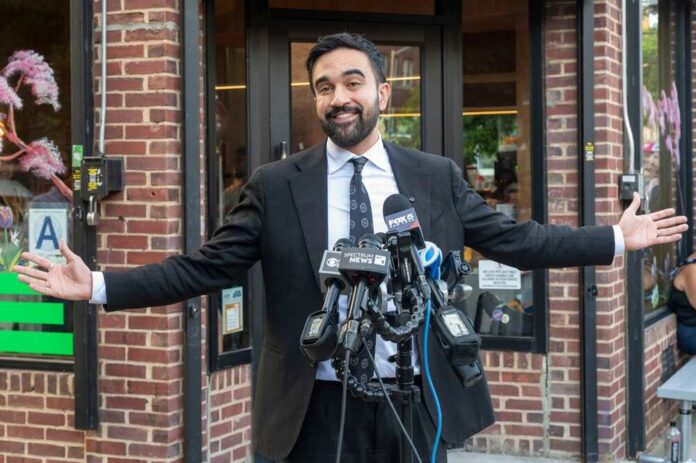
Zohran Mamdani won New York City’s Democratic mayoral primary in July 2025, defeating establishment candidate Andrew Cuomo in an upset that shocked political observers nationwide. The democratic socialist assemblymember immediately issued a statement characterizing the city’s entire history through the lens of colonization and racial oppression. His declaration emphasized NYC’s active participation in the transatlantic slave trade, noting that Wall Street originated as a slave market and that the city built its wealth on enslaved labor through the 19th century. This framing extends beyond historical acknowledgment to justify sweeping reparations and equity programs that fundamentally reshape city governance.
Controversial Health Department Initiative
The Mamdani administration’s NYC Health Department launched a “Global Oppression and Public Health Working Group” in late 2025, a move that has drawn fierce criticism from multiple quarters. The working group studies how oppression impacts health outcomes in “priority communities,” with officials citing the situation in Gaza as an example of ongoing genocide affecting New Yorkers’ wellbeing. This radical departure from traditional public health priorities signals how deeply identity politics and global activism have penetrated city operations. Critics argue that taxpayer-funded health officials should focus on concrete local health challenges rather than international political controversies that divide communities and distract from core responsibilities.
Federal Investigation and Legal Concerns
The U.S. Department of Justice announced an investigation into Mamdani’s first-ever racial equity plan in early 2026, examining whether the initiative violates federal discrimination laws. The plan explicitly links affordability programs to racial equity outcomes, proposing to fund initiatives like free buses, city-owned groceries, and affordable housing through higher taxes on wealthy New Yorkers. This approach raises fundamental questions about whether government can legally distribute benefits based on race rather than need. The DOJ probe reflects growing concerns that well-intentioned equity policies may cross constitutional lines by treating citizens differently based on immutable characteristics rather than addressing poverty and hardship through race-neutral means.
Rising Tensions in Jewish Community
The Anti-Defamation League has labeled Mamdani a “clear and present danger” to New York’s Jewish community after revealing that twenty percent of his appointees have ties to anti-Zionist organizations. This concern intensified as antisemitic incidents comprised sixty-two percent of all hate crimes in the city during the first quarter of 2025. Former Mayor Eric Adams established the Office to Combat Antisemitism in May 2025 and released an eighty-page blueprint for fighting antisemitism just one day before Mamdani’s inauguration in December 2025. Rabbi Moshe Davis, who heads the antisemitism office, reported receiving no contact from Mamdani’s transition team, leaving the office’s future uncertain and Jewish New Yorkers fearful that protections will be dismantled.
The Broader Pattern
Mamdani’s characterization of New York City as fundamentally rooted in colonization and oppression represents more than historical interpretation—it establishes ideological justification for radical policy transformation. By framing the city’s legacy as inherently illegitimate, his administration positions itself to dismantle established institutions and replace them with equity-focused alternatives. This approach appeals to progressive activists who view American history through the lens of systemic racism, but it alienates many New Yorkers who see their city’s story as one of immigration, opportunity, and upward mobility despite historical injustices. The clash between these competing narratives reflects deeper national divisions about whether America’s founding principles should be celebrated and reformed or condemned and replaced. For ordinary citizens struggling with rising costs and declining quality of life, these ideological battles offer little practical relief while potentially exacerbating the very divisions that make collective problem-solving impossible.
Sources:
After Winning NYC’s Democratic Mayoral Primary, Zohran Mamdani Reaffirms Support for Reparations
Mamdani’s NYC Health Department Staffers Reportedly Studying Effects of Global Oppression on Health
NYC Mayor Releases Blueprint for Combating Antisemitism a Day Before Mamdani Sworn In
U.S. Department of Justice to Probe Mamdani’s Racial Equity Plan