Somali piracy has reactivated from a low baseline into a coordinated, revenue-seeking threat across the Gulf of Aden and the western Indian Ocean—measured not by isolated boarding attempts but by a string of successful hijackings culminating in another seized tanker off Yemen, the sixth commercial vessel taken since April.
At a Glance
- A tanker was hijacked roughly 136 nautical miles east of al-Mukalla, Yemen, and taken toward Somalia’s Puntland coast, part of a clear upswing in pirate activity since spring 2026.
- Credible reporting and maritime alerts track multiple successful hijackings since April—well beyond the background “nuisance” level of the past decade.
- This is a resurgence, not a return to 2009–2011 peaks; still, the pattern shows organized pirate action groups exploiting stretched naval patrols and profitable tanker targets.
- Risk is concentrated along approaches to the Gulf of Aden and Somali Basin; best-practice hardening and routing discipline are again decisive for ship operators.
A renewed campaign: the facts on the water
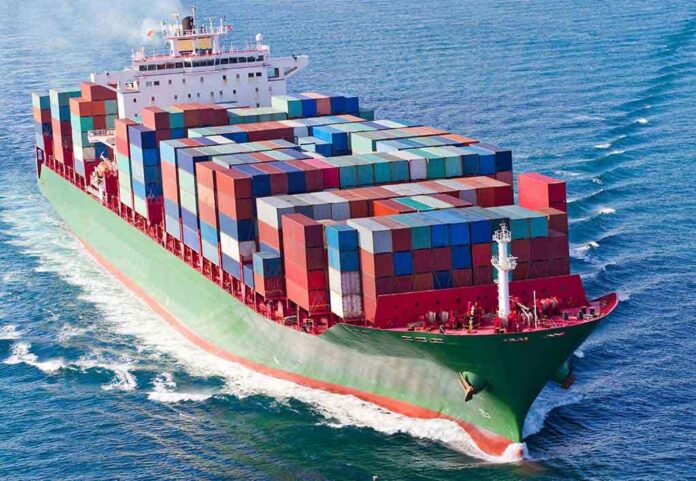
In late August, six armed men boarded an oil products tanker east of al-Mukalla and forced it toward Puntland—an attack Somali maritime security officers traced to known pirate networks operating off Somalia’s northern coast. This seizure did not occur in isolation. Since April, pirates have captured multiple commercial vessels in the Gulf of Aden and western Indian Ocean, a run of outcomes that moves the problem from sporadic harassment to a bona fide hijacking campaign. Open-source incident logs and security advisories—ranging from industry alerts to naval coordination centers—have, over the same period, recorded clustered attacks, boardings, and confirmed detentions of merchant ships and dhows that pirates use as motherships.
The operational details are familiar to anyone who studied the last Somali piracy wave: pirates seizing a dhow or small trader, using it as a mobile logistics base, stalking slow or poorly defended targets near major sea lanes, then sprinting in with skiffs under small-arms and RPG threat. In April, early cases fit that template, and by May–July, the target set visibly tilted toward tankers—assets with higher ransom potential and, in several instances, opaque ownership arrangements that complicate rapid, state-backed resolution.
How piracy “reactivates”: capability, opportunity, and profit
Piracy in this region never vanishes; it goes latent. Capability—armed crews, skiffs, a captured mothership—can be regenerated quickly once local financiers and coastal communities see opportunity and a plausible payout. Opportunity emerges when naval presence thins or shifts theater, convoy practices lapse, and ships relax best-management measures like vigilant lookouts, razor wire, water cannons, and citadels. Profit depends on two levers: the ability to hold crews inshore under threat long enough to extract payment, and the existence of intermediaries willing to move money and manage negotiations behind jurisdictional fog.
In 2026, all three levers moved in the pirates’ favor. Analysts and maritime risk firms documented a marked increase in attacks and successful hijackings around the Horn of Africa compared to recent years; while far below 2011’s heights, the delta from 2024–2025 is material. The International Maritime Bureau’s early-year reporting showed hijacking returning to the dataset, and subsequent months added multiple confirmed cases near Yemen and Puntland. At the same time, naval and coast guard assets were diverted or stretched by overlapping regional crises, creating seams pirates are practiced at exploiting.
Not 2011—but not background noise either
The temptation is to benchmark everything against the 2009–2011 peak, when Somali pirates attempted more than 200 attacks annually and ransoms normalized into a transactional market. That is the wrong comparison. The meaningful benchmark is the past decade’s low-level risk, in which adherence to best practices and visible naval deterrence kept most pirate action groups dormant. By that standard, the current pattern is a pronounced reactivation: multiple hijackings clustered in time and space, with crews held and vessels moved toward pirate anchorages along the Somali littoral.
Industry advisories have accordingly tightened. Maritime security coordination centers warned operators to heighten vigilance within roughly 150 nautical miles of the Somali coast, particularly along corridors between Mogadishu and Hafun—precisely where mothership-enabled skiffs can operate with endurance and where coastal inlets offer concealment and resupply. The persistence of at least one detained tanker over weeks, condemned by regional maritime frameworks under the Djibouti Code of Conduct, underlines that this is not a spate of failed attempts; pirates are cashing in again.
Why now: the strategic and economic drivers
Resurgence stems from a confluence. First, regional security bandwidth has been absorbed by crises that pull naval attention north and west, leaving gaps in the Somali Basin and approaches to the Gulf of Aden. Second, tanker economics have shifted: elevated price environments and complex ownership or sanction entanglements can slow unified state intervention, extending the window for ransom negotiation and raising the expected value of a hijack. Third, local conditions in coastal Somalia—intermittent governance, limited lawful livelihoods, and established criminal facilitation networks—remain unresolved, making piracy a recurring, rationalized business for recruiters and boat crews when deterrence slackens.
This is the Somali piracy cycle in miniature: suppressed by patrol density, industry discipline, and onshore pressure; reanimated when those controls loosen, especially if a few high-visibility paydays signal that risk-adjusted returns have improved. The April-to-August sequence—including the latest tanker seized off Yemen—fits that cycle cleanly.
Turkey carried out an airstrike off the coast of Eyl in Puntland's Nugaal region, northern Somalia, killing four people.
The strike came in response to the recent hijacking of the Turkish military cargo vessel LUTOF by Puntland-based pirate groups. Turkey used aircraft based at…
— The Crusader – 100% English Colonizer (@CrusadeAgain) August 22, 2026
What shipowners and crews should do now
Three imperatives have not changed since Best Management Practices 5 became standard. First, routing and speed: minimize time in high-risk boxes, maintain maximum safe speed, and avoid predictable tracks where skiffs can vector with mothership guidance. Second, hardening and watchkeeping: layered physical barriers, ready fire hoses, non-lethal deterrents, continuous radar/visual watches, and disciplined alarm drills that buy time to reach the citadel. Third, integration with maritime security networks: file transit plans, maintain AIS with intelligent emission discipline, and monitor alerts from naval coordination cells—especially the Maritime Security Centre for the Indian Ocean and related industry advisories.
Citadel readiness—secure, reinforced compartments with independent comms and propulsion controls—has repeatedly flipped hijack outcomes by denying pirates access to hostages and buying hours for warships to intervene. Where national policy and insurance allow, embarked security teams remain an effective last line of defense, particularly during monsoon lulls when sea states favor skiff operations.
What to watch next
Two indicators will show whether this is a short, profitable flare-up or the start of a longer campaign. One: detention duration and ransom resolution. The longer vessels sit under pirate control without decisive interdiction or local pressure, the more financiers will back additional sorties. Two: the geography of mothership sightings. If dhows or previously seized craft are reported east of the Somali Basin, projecting reach toward the Indian Ocean lanes, risk will escalate from coastal corridors to blue-water approaches.
For now, the evidence shows an organized, resurgent threat achieving repeated hijacking success since April, capped by another tanker taken off Yemen and steered toward Puntland. That makes this a management problem, not a headline: where crews are trained, ships are hardened, and operators stay welded to naval coordination, hijack attempts revert to near-misses. Where discipline slips, pirates do what they have always done here—find the seam, board fast, and monetize time.
Sources:
thegatewaypundit.com, apnews.com, nytimes.com, piclub.or.jp, bbc.com, cursorio.com, tftc.io, aljazeera.com, marinelink.com, mscio.eu, geobit.ai, theguardian.com, hornreview.org, s-rminform.com