
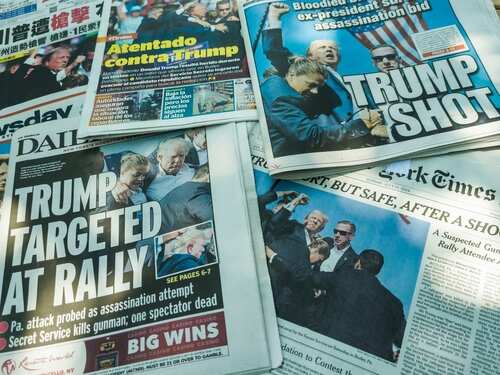
The Secret Service knew about a “classified threat” against Donald Trump ten days before the Butler rally shooting—and still failed to warn the very agents tasked with protecting him, raising the question: was this a security breakdown or something far worse?
At a Glance
- Secret Service leadership received classified threat intelligence ten days before the Butler, PA, assassination attempt on Donald Trump but failed to share it with field agents.
- Six Secret Service agents have been suspended, and former Director Kimberly Cheatle resigned, but critics say real accountability for the intelligence failure is missing.
- A blistering Government Accountability Office (GAO) report has exposed deep-rooted communication failures and a “siloed” information culture within the agency.
- The attack and its fallout have led to new security reforms, but public trust in the Secret Service remains deeply shaken.
A Damning Intelligence Failure Exposed
One year after the assassination attempt on Donald Trump, a bombshell report from the Government Accountability Office (GAO) has revealed the most damning failure yet: Secret Service leadership in Washington had received a “classified threat” warning against Trump ten days before the Butler rally, but that critical intelligence was never passed down to the agents on the ground.
The field agents who planned security for the event did so with blinders on, completely unaware of the specific danger. This catastrophic intelligence failure, championed for investigation by Senator Chuck Grassley, explains the chain of events that led to a gunman opening fire from an unsecured rooftop. It transforms the story from one of operational blunders to one of gross negligence at the highest levels.
A Culture of Secrecy and Incompetence
The GAO report, released on the anniversary of the shooting, details a “culture of mismanagement” and a system where critical information is “siloed” within headquarters. The report confirms what many suspected: the attack was preventable. The key findings from the internal review and the congressional task force point to the same conclusion:
- Senior officials failed to act on the classified warning.
- The field office was never informed of the threat.
- Security plans were made without the most vital intelligence.
The suspension of six agents now appears to be little more than damage control—punishing the people at the end of the chain for a failure that began at the very top.
Accountability or Damage Control?
The resignation of then-Director Kimberly Cheatle just ten days after the attack is now cast in a new light. Was it an admission of failure or an attempt to contain the scandal before the intelligence lapse became public?
Secret Service Director Kimberly Cheatle resigns amid criticism over failure to stop shooter from wounding former President Donald Trump during rally pic.twitter.com/xveGN9zxBC
— NTV Kenya (@ntvkenya) July 23, 2024
The new Secret Service Director, Sean Curran, has promised to “fix the root cause of the problem,” but for a skeptical public, those promises ring hollow. When an agency’s leaders fail to share a direct threat warning with the agents whose lives are on the line, it points to a rot that can’t be fixed with a few suspensions or new drones. It raises the chilling question of whether this was just incompetence or something far more deliberate.