
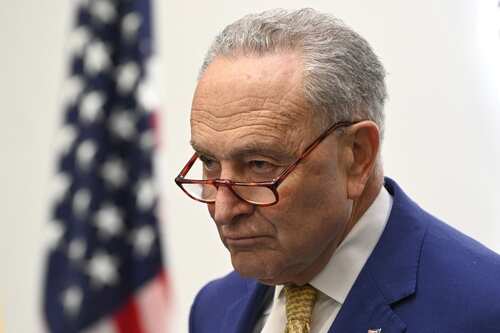
As Trump pushes for a “clean” stopgap funding bill, Schumer’s ambiguous stance leaves conservatives wary of another government shutdown.
Story Snapshot
- Schumer refuses to rule out Trump’s demand for a “clean” funding bill.
- The standoff centers around funding for Trump’s proposed border wall.
- Democrats resist wall funding in the continuing resolution (CR).
- Partial government shutdown begins on December 22, 2018.
Schumer’s Ambiguous Stance on Government Funding
On December 16, 2018, Senate Minority Leader Chuck Schumer appeared on national television, and his refusal to rule out President Trump’s demand for a “clean” continuing resolution (CR) added fuel to an already tense negotiation. The demand for a CR without controversial riders was a key point in the standoff over border wall funding, with Schumer’s strategy seeming unclear to many. The Democrats’ opposition to wall funding was at the core of their resistance to Trump’s proposal.
This political brinkmanship occurred against the backdrop of the federal funding deadline. With funding for several federal agencies set to expire, the pressure was on both parties to find a resolution. As the December 22 deadline loomed, the risk of a government shutdown became imminent, heightening tensions in Washington.
The High-Stakes Negotiations Over Border Security
President Trump insisted on $5.7 billion for the border wall, a central promise of his 2016 campaign. Meanwhile, Democrats, poised to take control of the House in January 2019, were determined to oppose this allocation. This clash highlighted the polarized political climate, with midterm elections having resulted in a Democratic House majority. The negotiations were a test of political leverage, with Trump’s veto power against the Democrats’ control of House appropriations.
The shutdown began as scheduled on December 22, 2018, after negotiations failed. Federal agencies faced closures, affecting thousands of workers and disrupting services. This shutdown became the longest in U.S. history, emphasizing the high stakes involved when government funding is used as leverage in policy disputes.
Analyzing the Impact and Future Implications
The shutdown had immediate economic and social impacts. Federal workers were either furloughed or worked without pay, causing significant disruption. The long-term implications included an erosion of public trust in government effectiveness and a precedent for future shutdowns over policy disagreements. Economically, billions were lost in productivity, with federal services delayed or halted, affecting various sectors.