

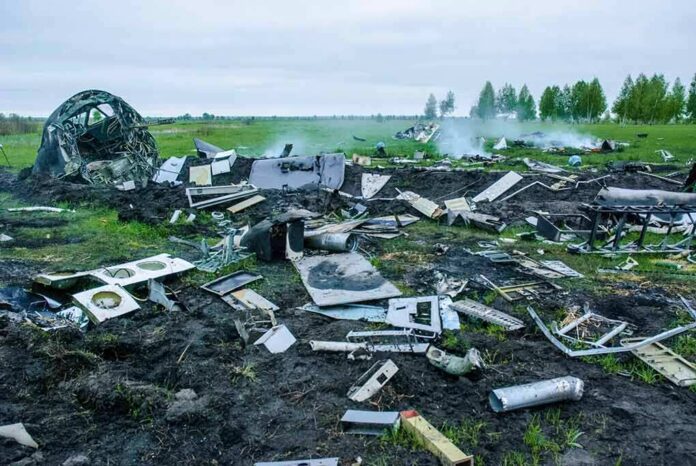
A 17-year-old says he found clues to a Pakistan airliner that vanished 37 years ago—an unsolved case with no confirmed wreckage to this day.
Story Highlights
- Pakistan International Airlines Flight PK-404 vanished in 1989 and remains missing.
- A 17-year-old, named in social posts as Faseeh Rajput, says he located possible clues.
- The aircraft was a Fokker F-27 that disappeared after takeoff from Gilgit.
- No confirmed debris or flight recorders have ever been recovered.
What Happened To PK-404 And Why It Still Matters
Pakistan International Airlines Flight PK-404 left Gilgit for Islamabad on August 25, 1989. The twin‑engine Fokker F‑27 reported one radio call after takeoff and then went silent. It never arrived. Authorities and volunteers searched steep mountain terrain but did not find confirmed wreckage, recorders, or remains. The case became a national mystery that still has no official resolution. Families never received physical proof of what happened to their loved ones.
Contemporary accounts place the last known transmission around 7:40 a.m. local time, with the flight expected at a waypoint by 7:59 a.m. and into Islamabad by about 8:32 a.m. Those time marks give investigators a rough corridor to study along the Himalayas near Nanga Parbat. Yet harsh terrain, snow, and narrow valleys blocked searches and cloud flights. The lack of a public final inquiry report adds to the confusion about where teams looked and what they ruled out.
The Teen’s Claimed Clue And What Would Prove It Out
A 17‑year‑old, identified in social media posts as Faseeh Rajput, says he found signs that could point to the missing aircraft. His claim draws intense attention because no verified debris has ever been linked to PK‑404. To confirm any site, investigators would look for aircraft parts with serial numbers, a registration plate, or a component unique to a Fokker F‑27. They would map exact coordinates, altitude, and access routes, then secure the area for a controlled survey.
Standard steps would include high‑resolution photos, drone imagery, and sample collection under official oversight. Technicians would compare alloys, paint layers, and manufacturing marks with known Fokker F‑27 references. Search leaders would check the site against the 1989 flight path, weather, and past grid searches. If a labeled part matched PIA maintenance records for the missing airframe, that could finally close the case. Without that chain, any clue remains only a lead.
Why Lost Aircraft Are So Hard To Find In Remote Terrain
Mountain crashes can hide evidence for decades. Snow, ice, rockfall, and seasonal shifts can bury or scatter debris. Narrow valleys can block radio and rescue aircraft. After years, paint fades, metal corrodes, and markings wear away. Even underwater locator beacons, when present in other cases, can be hard to detect because terrain and coverage cut signal range, showing how tough these searches can be in hostile environments.
🇵🇰 AMAZING: A 17-year-old Pakistani boy, Faseeh Rajput, may have uncovered a major clue in the 37-year mystery of missing PIA Flight PK-404 using Google Earth!
The aircraft vanished in 1989 with 54 people on board. His findings are now sparking calls for an official… pic.twitter.com/VyqWFoCxs8
— Zulfiqar Siddiquizada🇵🇰🇷🇺🇨🇳🇵🇸 (@SiddiquiZadaa) November 12, 2026
Global history shows both false leads and real finds. Malaysia Airlines Flight MH370 saw many tips that went nowhere, yet a flaperon found on Réunion Island was confirmed as genuine, years after the crash. That pattern warns against hype while showing that late discoveries can be real. For PK‑404, a confirmed part with numbers, matched to airline records, would be the gold standard. Until then, the public should watch for method, not headlines.
What This Moment Says About Trust And Institutions
Long, unresolved cases strain public trust. People want straight answers, not spin. Clear steps matter: publish the exact coordinates, document the site, and let professionals test the parts. Families deserve closure based on facts, not rumor. When officials and experts share data, show their work, and follow evidence, they help restore faith that complex problems—at home or abroad—can be solved with patience, skill, and transparency.
Sources:
insiderpaper.com, blackboxwiki.com, wikidata.org, gnnhd.tv, tribune.com.pk, ntsb.gov